
On 14 October 2026, the French Biodiversity Agency (OFB) published its latest report on the state of brown bears in the Pyrenees. The findings point to strong breeding activity, while also highlighting the population's genetic vulnerability. Indeed, after several decades of reintroduction efforts, the number of bears in the region is approaching 130 individuals – an encouraging figure that nonetheless masks some crucial issues.
Encouraging breeding figures in 2026
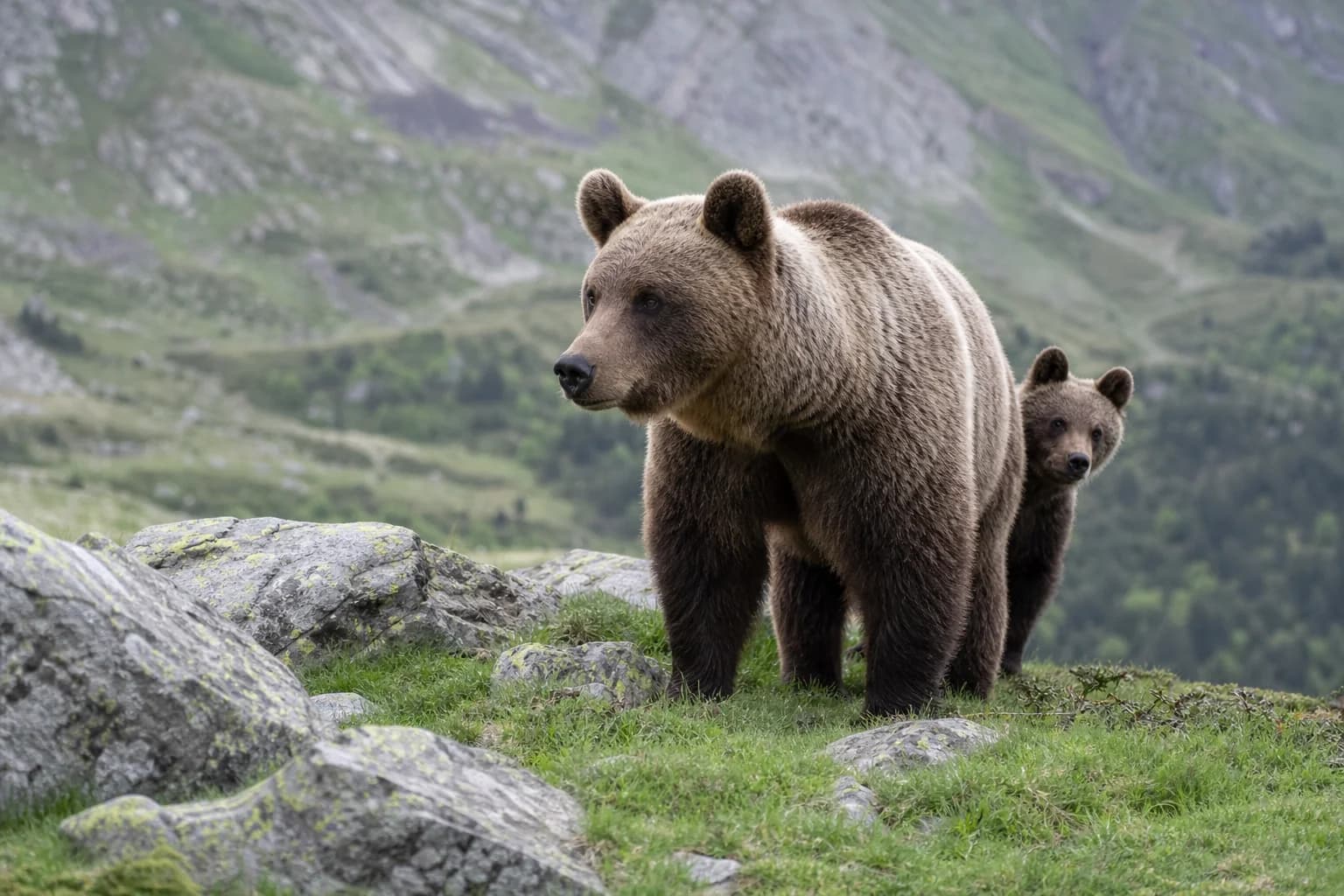
This year's data is promising: at least nine litters have been observed, totalling 16 cubs. These births were mainly recorded in the Central Pyrenees, one of the two population strongholds alongside Béarn. Automatic cameras captured some valuable footage, including a female bear with her three cubs, filmed at Melles in Haute-Garonne. Further sightings of cubs with their mothers were reported at the Pic du Gar and at Fos, reinforcing the sense that conditions in the region are favourable for bears.
The challenge of inbreeding
However, these births are not without risk. Inbreeding, which results from breeding between closely related individuals, poses a threat to the population's genetic diversity. This genetic uniformity can leave bears more vulnerable to disease and environmental change. The situation is all the more concerning given that, despite its growth, the population remains geographically isolated. The two strongholds exchange very few individuals, limiting the genetic mixing that is needed.
The stakes around genetic diversity
With close to 130 bears now identified, the situation might appear reassuring. Yet OFB biologists stress that a high number of individuals does not in itself guarantee good genetic health. The population's long-term survival will depend on the introduction of new individuals to diversify its gene pool. Past experience, notably the release of Slovenian bears in the 1990s, showed positive results in terms of population dynamics. The question thus arises: is it necessary to consider fresh genetic input to avoid excessive genetic uniformity?
The reintroduction debate
Bear advocates argue that urgent action is needed to protect this emblematic species of the Pyrenees. They are calling for initiatives to strengthen the population through controlled reintroductions. This view, however, is far from unanimous. Opponents of reintroduction raise concerns that new releases could disrupt the current ecological balance. The debate therefore remains open, and future decisions will prove decisive for the fate of bears in the region.
In conclusion, while the bear population in the Pyrenees shows signs of recovery, the challenges posed by inbreeding and genetic diversity remain significant. The species' future will depend on the action taken to secure its survival and prosperity in an ever-changing environment.