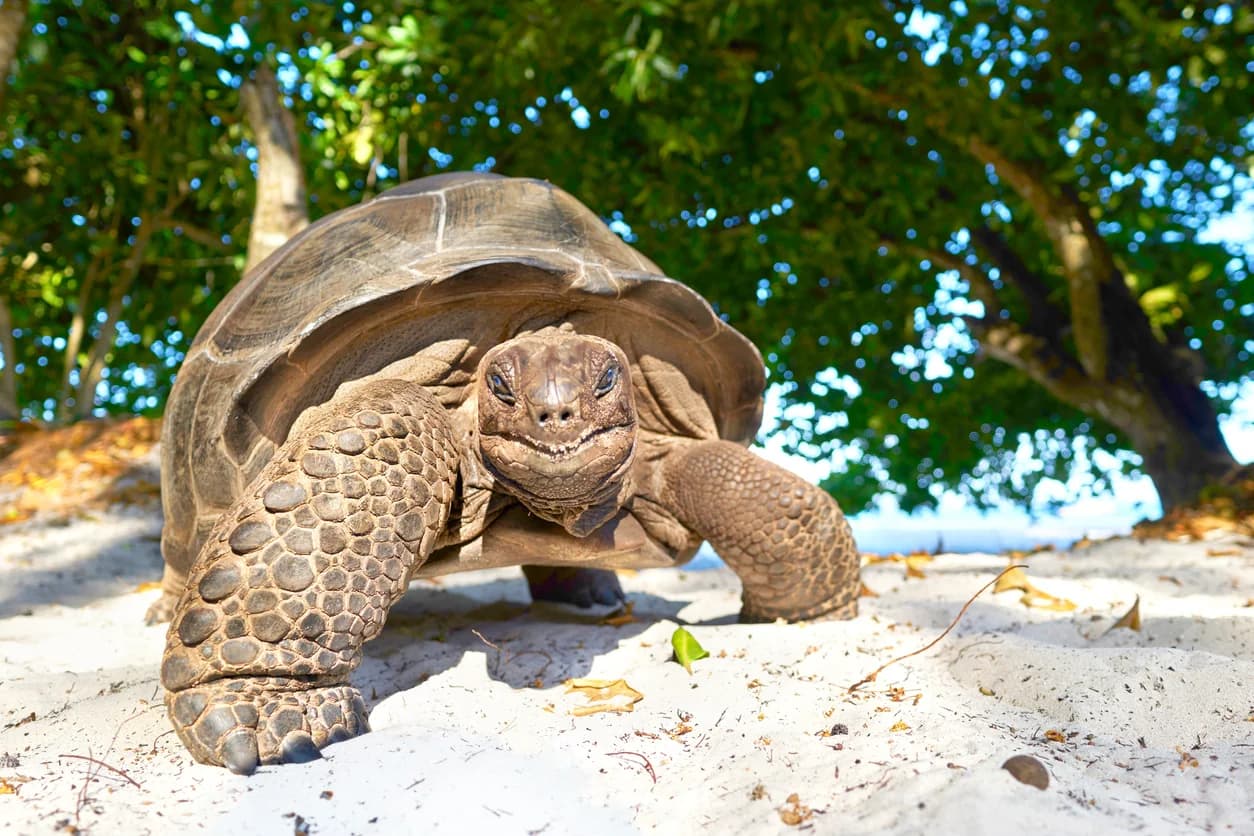
The rehabilitation of Aride Island, through the reintroduction of Aldabra giant tortoises, was led by researchers from Spain's Consejo Superior de Investigaciones Científicas (CSIC) in collaboration with the University of Exeter in the UK. These specialists set out to understand how long it would take for ecological functions to recover following the arrival of these iconic reptiles.
An unexpectedly swift comeback
The results of the study proved remarkable. Just six months after the tortoises were reintroduced, significant changes in the ecosystem had already been observed. One of the most striking aspects was seed dispersal, which bounced back with surprising speed.
In the first two months after their release, the ten tortoises dispersed more than 11,000 seeds across the island. Almost 89.5% of these seeds came from native plant species, a crucial factor in revitalising the local flora. This happens naturally as the tortoises eat fruit and excrete the seeds elsewhere, helping native species spread.
An ally against invaders
Besides their role in seed dispersal, the giant tortoises have also played a key part in controlling invasive plant species. Researchers documented the tortoises feeding on 54 species of invasive plants, which is essential for preserving the island's ecological balance. By grazing on these species, the reptiles help reduce competition facing native plants, making it easier for them to regenerate.
The research also highlighted a third ecological function restored thanks to the tortoises' presence. By ingesting dry leaves, fallen fruit and other plant debris, these animals actively contribute to recycling organic matter, which improves soil fertility and creates favourable conditions for new plant growth.
Not all tortoises contribute equally
One fascinating finding from the study is that not all the tortoises contribute equally to the ecosystem. In fact, just three of the ten released tortoises were responsible for more than 80% of the native seed dispersal observed in the first few months. Through detailed observation, dung analysis and genetic identification techniques, the researchers were able to determine which species each tortoise fed on and assess its individual impact on ecosystem restoration.
Among the tortoises monitored, the individual designated T08 stood out for its ability to disperse native seeds while also efficiently feeding on invasive species. By contrast, another specimen, T11, made a far smaller contribution to the ecological functions measured. These findings underline how individual traits and feeding behaviour can significantly influence the success of reintroduction projects.
A lesson for the future of conservation
This experience on Aride Island shows that the restoration of ecological processes can happen far more quickly than expected once key species are reintroduced into a habitat. Historically, restoration efforts have often focused on recovering habitats and vegetation, overlooking the fundamental role wildlife plays in these ecosystems. The giant tortoises have proven to be true ecological engineers, helping to re-establish processes essential to the forest's natural regeneration.
The results of this initiative underline the importance of reintroduction programmes within modern conservation strategies. When habitat conditions are favourable, the return of species once lost, such as the Aldabra giant tortoise, can not only restore animal populations but also re-establish ecological functions crucial to the overall health of the ecosystem. More than 180 years after they vanished from the island, these tortoises are once again playing a central role in Aride's natural world, proving that with proper planning and scientific support, it is possible to revitalise ecosystems deeply affected by human activity.