
Small garden animals don't fight the frost: they simply give way to it. The hedgehog lets its body temperature plummet, the frog produces its own antifreeze, bees huddle together in a warm cluster, and the blue tit puffs up its feathers. Four different tactics, one single goal: making it through winter alive.
The hedgehog all but switches off its engine
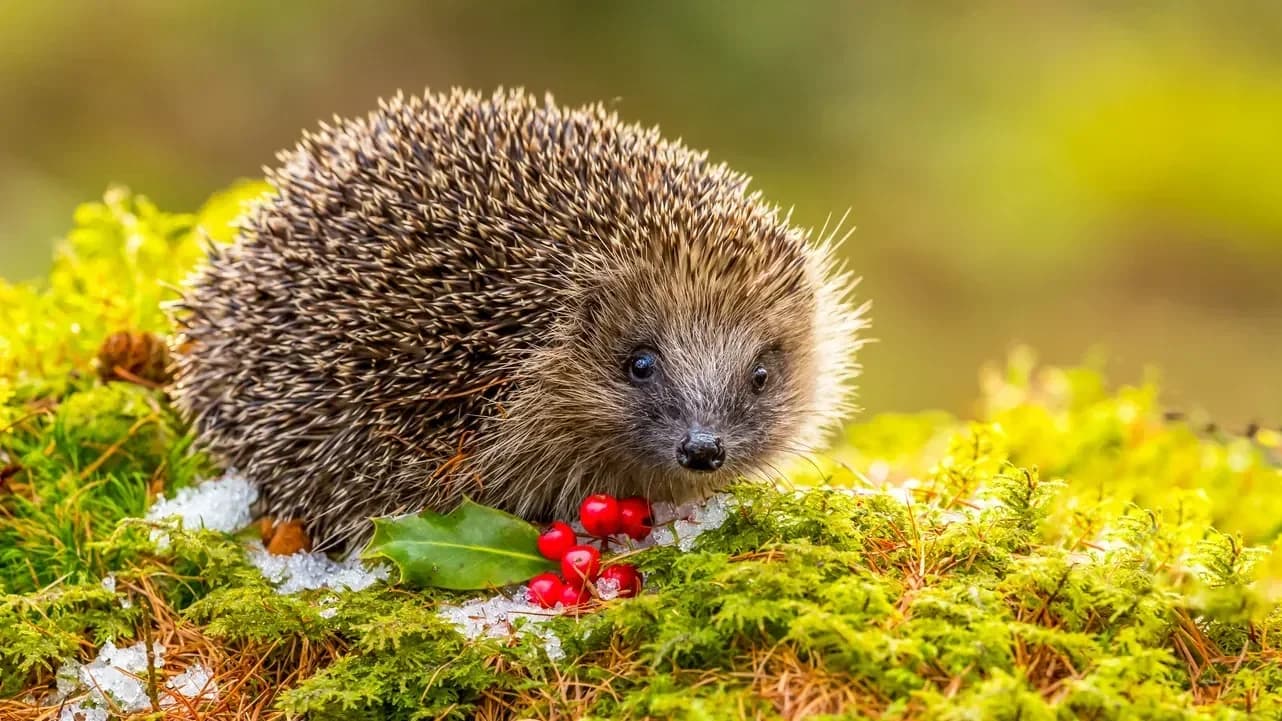
The hedgehog curls up at the bottom of a woodpile from late September onwards and slips into hibernation. Its metabolism all but shuts down: according to the LPO, its body temperature drops from 35.4°C to 4°C and its heart beats just a few times a minute. It then lives off its fat reserves, without eating, until milder weather returns.
The frog makes its own antifreeze
Some frogs can tolerate partial freezing without dying. Their liver releases glycerol into the bloodstream, a molecule that lowers the freezing point of the body's fluids, explains Futura-Sciences. A few species can withstand temperatures as low as -8°C for nearly three days as a result. Garden insects play the same trick, storing cryoprotectants equivalent to a fifth of their body weight. This cold-weather chemistry is reminiscent of other survival champions throughout the ages.
Bees form a heating cluster
Bees don't migrate and don't really hibernate either. When the temperature drops below 15°C, they gather into a warm cluster around the queen. The worker bees vibrate their muscles to generate heat: the CARI measures 32 to 37°C at the heart of the cluster, while the surface stays close to 10°C. At the slightest mild spell, the cluster loosens up and gets some air.
The blue tit puffs up its feathers for the night
Faced with the cold, birds rely on insulation and conserving energy. The blue tit ruffles its plumage to trap a layer of warm air against its skin, a principle described by Futura-Sciences. On the harshest nights, it enters torpor and deliberately lowers its body temperature by a few degrees to burn less energy. Wet feathers, on the other hand, flatten and lose all their insulating power.
The leaf pile: the garden's winter hotel
A garden that's too tidy is an empty garden in winter. Piles of dead leaves and deadwood provide a dry shelter for hedgehogs and insects alike, the LPO points out: ladybirds, ground beetles and butterflies tuck themselves away there until spring. Leave a wild corner, a few hollow stems, a stack of logs against the hedge. This discreet wildlife lives right on your doorstep, sometimes just a few steps from the patio.
Helping them without ever waking them
Supporting them comes down to a few simple gestures. Put out a dish of unfrozen water for the birds, leave a gap under the fence for hedgehogs, and check for any hornet nests spotted in autumn before taking any action. One rule matters above all others: before mowing, digging or burning a pile, check that no animal is sleeping inside it. A hedgehog roused from hibernation in the depths of winter uses up its reserves and can die as a result, so never disturb one in winter.
Your questions, our answers
At what temperature does the hedgehog go into hibernation?
The European hedgehog goes into hibernation once the cold sets in, usually from late September onwards. According to the LPO, its body temperature then drops from around 35°C to 4°C and its heart rate plummets. It stops feeding and lives off its fat reserves until spring. An animal that's too thin going into winter risks not making it through, which is why a welcoming garden in autumn matters, with a corner of leaves it can tuck itself into.
How do frogs survive the frost?
Several frog species can tolerate partial freezing without dying. Their bodies release glycerol into the bloodstream, a natural antifreeze that lowers the freezing point of the body's fluids. According to Futura-Sciences, some can withstand temperatures as low as -8°C for nearly three days as a result. Ice crystals form between the cells rather than inside them, which protects the organs. Once it warms up, the animal thaws out and carries on as if nothing happened, ready for the next season.
Should you feed garden animals in winter?
For birds, putting out fatty seeds and a dish of unfrozen water really helps during cold spells, especially when the ground is frozen hard. Hedgehogs, on the other hand, hibernate and should never be fed or woken up. The best support is still a slightly wild garden: leaf piles, deadwood and an untamed corner provide shelter and natural food. Before mowing or burning a pile, always check that no animal is sleeping inside it.