
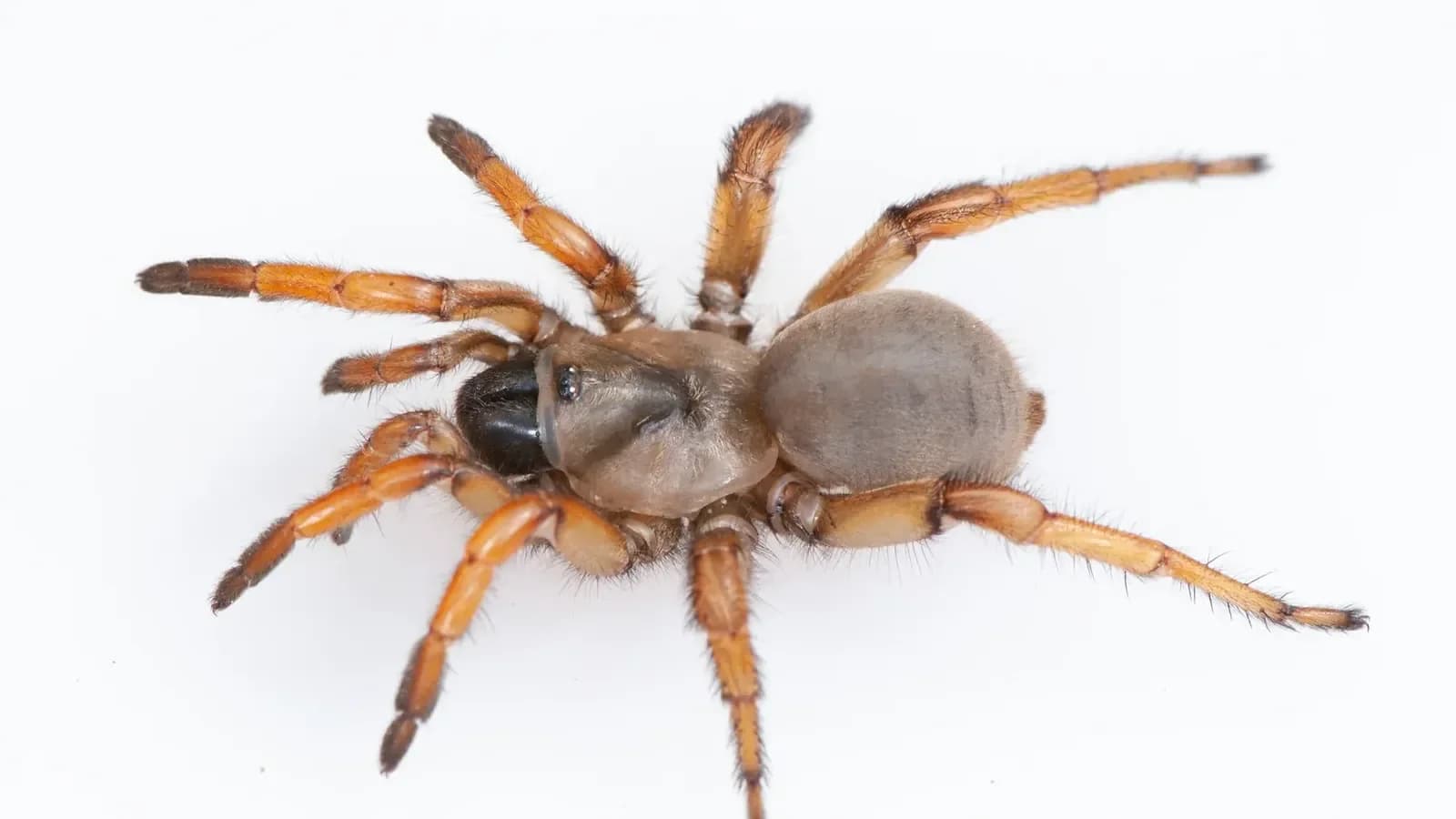
A small Californian trapdoor spider, Aptostichus stephencolberti, has a genome of around 4.6 billion base pairs, nearly 50% more than the human genome. Researchers at the University of California have just sequenced it. No bigger than a 25-cent coin, it owes its name to American comedian Stephen Colbert.
A genome bigger than ours
The figure is enough to raise eyebrows. This spider's genome contains around 4.6 billion DNA base pairs, compared with just over 3 billion in humans. It also has 52 chromosomes, where we have 46. A bigger genome doesn't mean more genes: nearly 77% of it is made up of repetitive sequences, DNA that repeats itself without coding for proteins. Researchers see this as a valuable key to understanding how genomes evolve and diversify across the whole animal kingdom.
A spider that lives behind a trapdoor
There's nothing to be scared of, though. Aptostichus stephencolberti is a trapdoor spider: it digs a burrow that it seals with a hinged door of silk and soil, lying in wait for its prey. No bigger than a coin, it lives hidden in the coastal dunes of California, from San Francisco Bay down to Monterey. Discreet and harmless to humans, it shares Californian beaches with sunbathers without anyone ever noticing it.
Why it's named after Stephen Colbert
The story is a delight. In 2008, American comedian Stephen Colbert learned that biologist Jason Bond had named a spider after singer Neil Young. Feigning outrage, he publicly demanded, on his show, to be honoured in the same way. The scientist agreed, and a spider from the Californian dunes became Aptostichus stephencolberti. Eighteen years on, it's the one his team chose to sequence first within its family.
A fragile species in need of protection
Behind the fun anecdote lies a serious issue. This spider lives along a narrow strip of coastline, on the front line against rising sea levels and invasive species. Its sequencing is part of a broad Californian genomic conservation programme, which maps the DNA of local species to protect them more effectively. Knowing its genome helps identify distinct populations and target conservation efforts before it's too late.
Small creatures with hidden superpowers
This unassuming spider is a reminder: nature hides remarkable feats where we least expect them. Spider chromosomes evolve faster than those of vertebrates, and their venoms, still little studied, could one day inspire new medicines. Nature loves a good surprise, much like these crocodiles that survived the extinction of the dinosaurs. It's enough to make you look differently at the wildlife in our animal parks, and at the tiny life teeming in the heart of nature.