

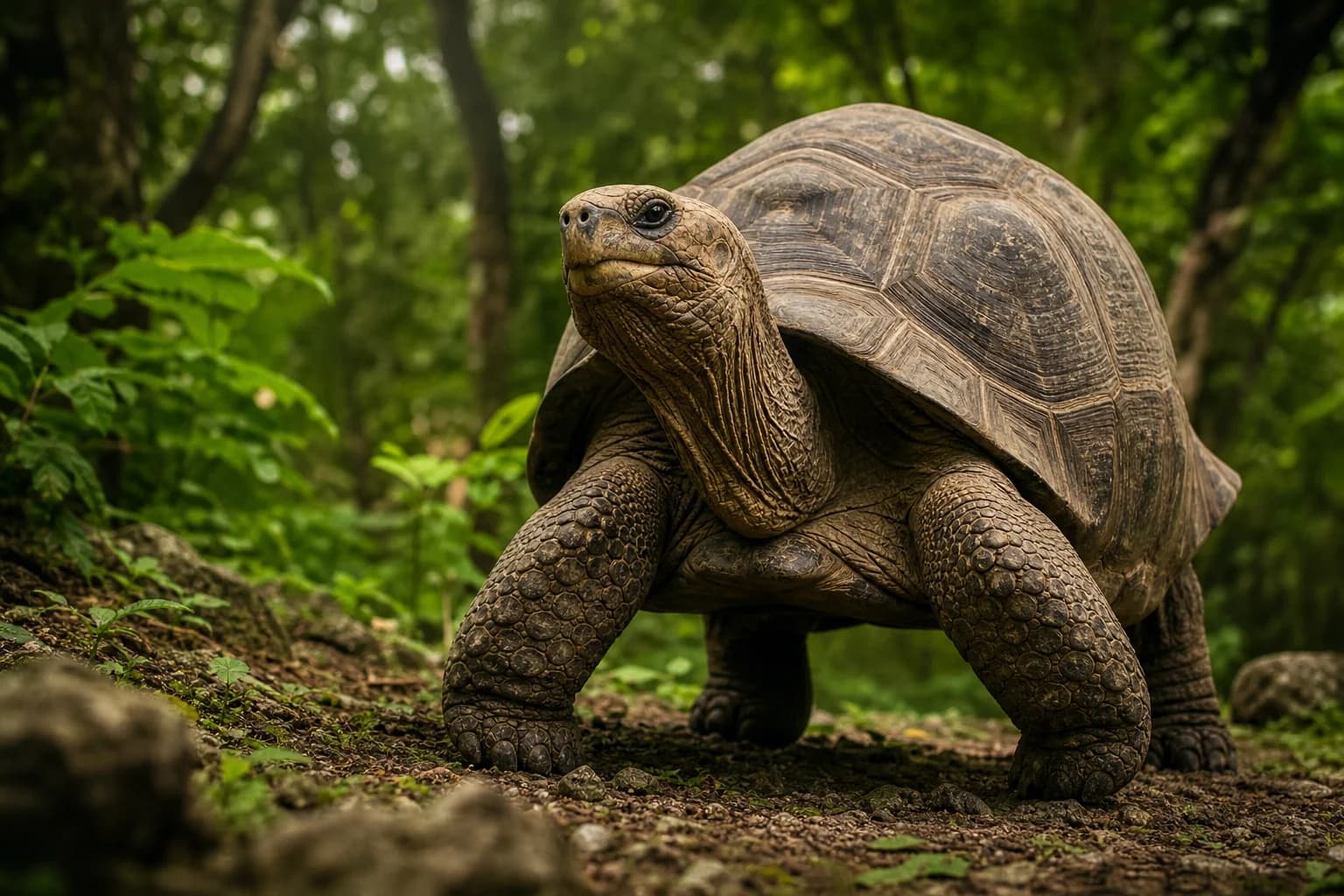
Jonathan the giant tortoise is a true symbol of longevity, having reached the impressive age of 194. He is recognised as the oldest living reptile on Earth. Scientists have studied his fascinating case in an attempt to understand the reasons behind his exceptional resilience over the decades. The findings of their research could offer fresh insights into ageing, according to sciencedaily.com
Fascinating genetic discoveries
A recent study published in the journal Science Advances revealed 287 distinct genetic variants in Jonathan, linked to essential biological processes. These variants play a crucial role in repairing damaged DNA, regulating inflammation, controlling insulin and suppressing cancerous cells. These findings suggest that Jonathan's longevity is not simply the result of favourable genetics, but also of resistance to certain genetic changes that commonly occur with age.
Remarkable epigenetic stability
A particularly surprising aspect of the research was the examination of Jonathan's epigenome. This, which includes the chemical markers that regulate gene expression, shows impressive stability over the years. By comparing Jonathan's epigenome with that of younger giant tortoises of the same species, scientists found that the regulatory mechanisms linked to DNA repair and metabolism have remained remarkably constant. As a result, despite his advanced age, Jonathan displays genetic characteristics similar to those of much younger members of his species.
A pioneering study of the giant tortoise epigenome
This research marks the first analysis of the epigenome in giant tortoises, carried out by Kallel, an American non-profit organisation dedicated to the study of longevity. Scientists hope that exploring the biology of animals capable of living for several centuries could provide valuable clues about the mechanisms behind extreme longevity. According to Dr Justin Gerlach, a researcher at the University of Cambridge, the genetic regulators associated with energy production and DNA repair have remained incredibly stable in Jonathan, which could explain his resistance to ageing.
Implications for research into human longevity
Researchers believe that Jonathan's genetic characteristics could one day lead to the development of new strategies for slowing age-related decline in humans and preventing chronic disease. By identifying the biological systems that allow certain species to remain healthy over long periods, they hope to uncover protective mechanisms that could inspire future medical treatments. According to Stephen Clark, MD, PhD, founder of Kallel, Jonathan's DNA could serve as a model for understanding cellular resilience and, potentially, for developing treatments accessible to everyone.
A life on the island of Saint Helena
Jonathan has spent most of his life on the island of Saint Helena, a British Overseas Territory in the South Atlantic Ocean. He lives on the grounds of Plantation House, the official residence of the island's governor. His arrival on Saint Helena 144 years ago, as a gift to the governor, is testament to his great age, as he was already an adult at the time. The giant tortoises of the Galápagos Islands and the Seychelles, of which Jonathan is one, are among the last survivors of a group of giant reptiles that once played a major ecological role on many islands around the world.
A study model for the biology of ageing
Giant tortoises, as a species, offer scientists a unique opportunity to explore how evolution has allowed certain animals to withstand the effects of time. Jonathan's remarkably stable genetic regulation offers a fascinating window into the biology of ageing and the possibilities for extending healthy lifespan. This research could also contribute to innovative approaches for improving the quality of life of older people.
Towards new discoveries
While these findings open up exciting questions about longevity, it is essential to note that translating these discoveries into treatments suitable for humans will require further in-depth research. Exploring Jonathan's genetic secrets could well inspire significant advances in the fields of regenerative medicine and healthy ageing.
Conclusion: a promising future
Jonathan, with his impressive age and unique genetic characteristics, continues to fascinate researchers and nature enthusiasts alike. His secrets could not only shed light on our understanding of ageing, but also offer ways to improve the health and quality of life of future generations. As scientists continue their studies of this centenarian tortoise, the hope of a better understanding of the mechanisms of human longevity has never been more promising.