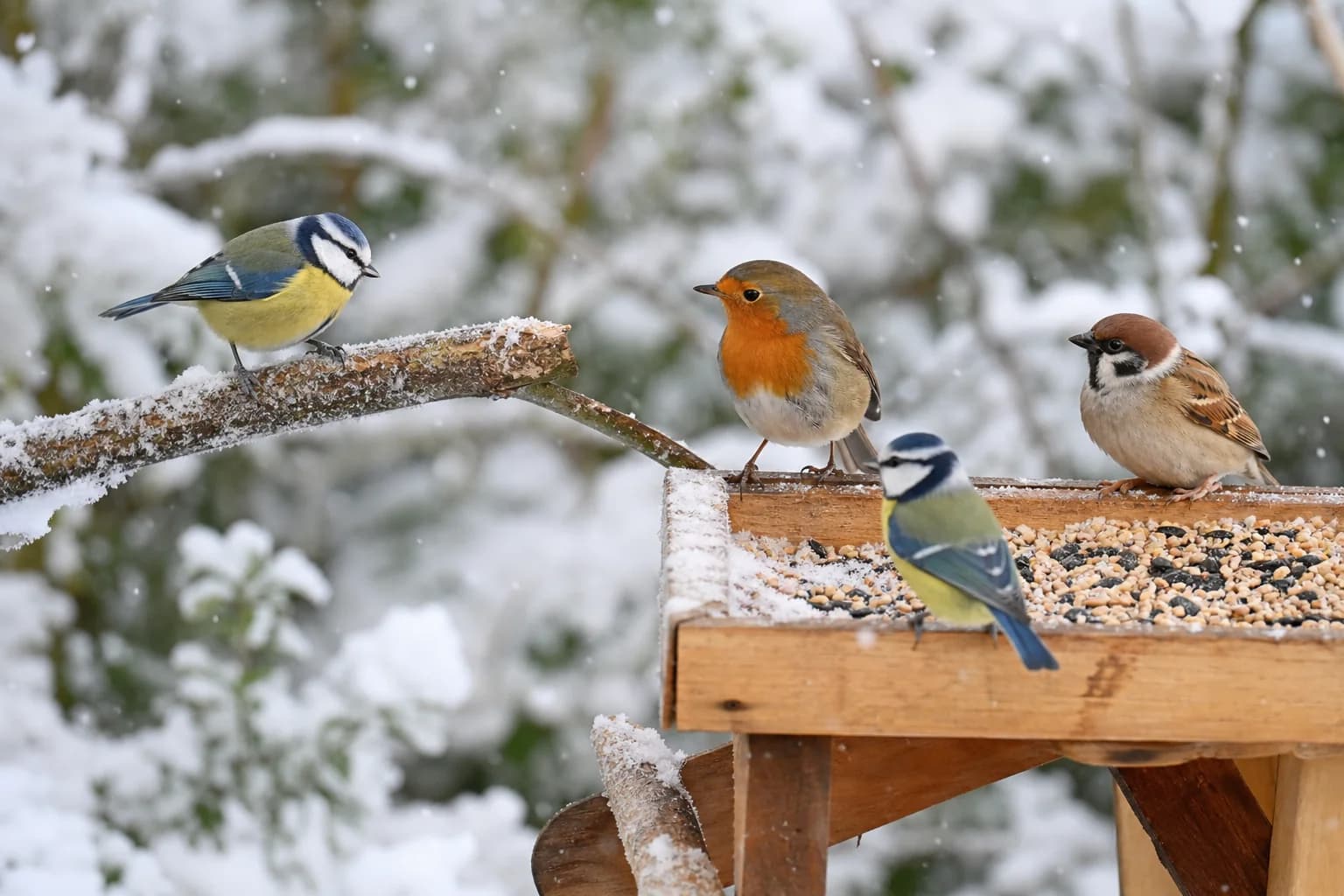
Yes, feeding garden birds really helps during a freeze, provided you follow a few rules. The LPO recommends giving them a hand from mid-November to the end of March, with fatty seeds and unfrozen water. Bread, milk and salty foods, however, should be avoided altogether.
Sunflower seeds yes, bread never
Go for fatty, energy-rich seeds. Black sunflower seeds, vegetable fat balls and unsalted peanuts give tits and robins the calories they burn in bitter cold. Add a source of unfrozen water too, topped up daily so they can drink and bathe.
When it comes to what's off-limits, be strict. Bread swells in the stomach and its salt content can be fatal, while milk is simply indigestible for birds. Also steer clear of salty foods such as crisps, cured meats or cheese rinds, which are far too harsh for such small bodies.
Feeding garden birds: when's the right time?
The LPO advises feeding from mid-November to March, once the first frosts make insects and berries scarce. Before then, your visitors can find food on their own: feeding them too early makes them dependent on your feeder.
When spring arrives, don't stop abruptly. Reduce the quantities over about ten days, giving the birds time to return to natural food sources and switch back to an insect-based diet to feed their chicks.
Where to put the feeder to outwit cats
One lurking cat, and the feast turns into a trap. Place the feeder in a clear, open spot, up high, away from bushes where a predator could hide. That way your birds can spot danger coming and fly off in time.
Also keep an eye on nearby windows, which cause many collisions. A good location protects better than anything else, just as it does for other autumn garden visitors.
A clean feeder, or nothing at all
A clean feeder protects your visitors better than any seed ever could. Wash it every week in hot water, scraping off droppings and damp leftovers that go mouldy fast. Salmonellosis, common around feeding spots, spreads from bird to bird on a dirty perch.
This small bit of upkeep makes it all the more enjoyable to watch wildlife from your window, from the first frost through to the thaw.
The most common winter mistake
The most common mistake? Filling a feeder and never cleaning it. It turns into a breeding ground for bacteria, drawing dozens of birds to the same contaminated edge. If you spot a bird looking poorly, listless or ruffled, stop feeding, remove the water and disinfect everything before starting again.
This habit matters just as much as choosing the right seeds. For more seasonal know-how, see what you're allowed to collect in the forest in winter.