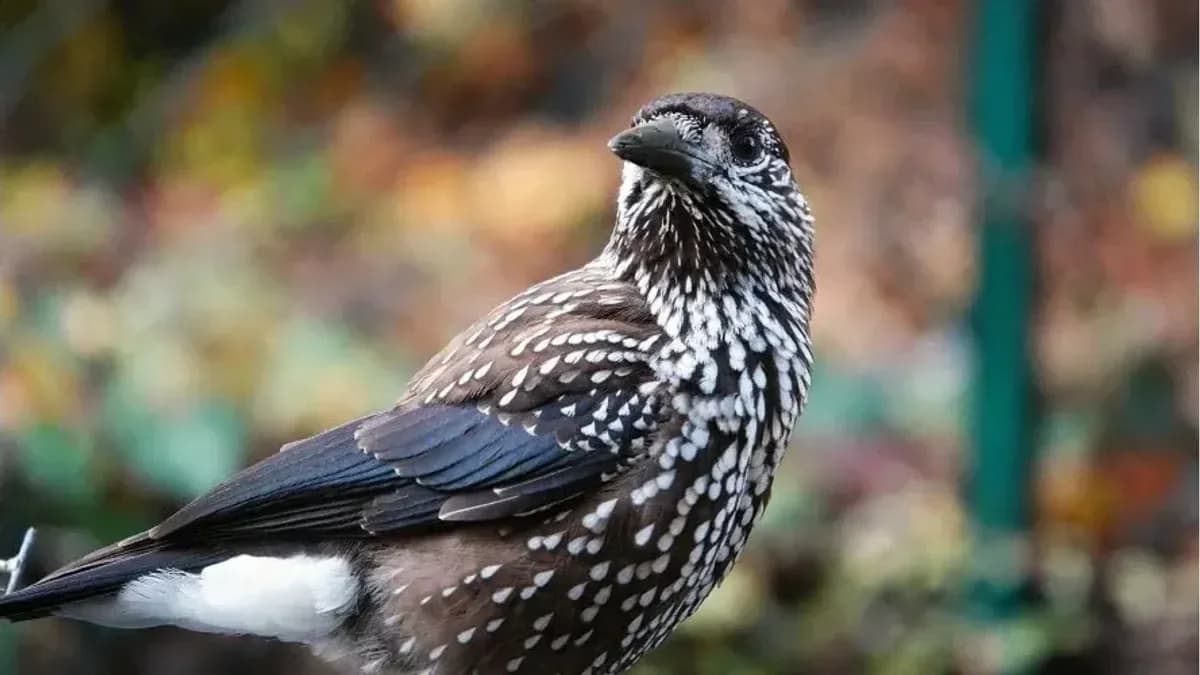
On 2 November, Michel Glotoff, a resident of Talant, was surprised to come across a migratory bird in his garden, in the Filotte neighbourhood. Not recognising the bird, he watched as it landed several times to drink, giving Michel the chance to photograph it.
A remarkable discovery
After doing some research, Michel identified the bird as a Siberian spotted nutcracker. He then shared his discovery on the Faune BFC platform, which confirmed that this was the first sighting of the species in Côte-d'Or in at least six decades.
A rare and fascinating phenomenon
Antoine Rougeron, a researcher and nature educator at the Ligue pour la protection des oiseaux (LPO) in Burgundy, pointed out that this rare species is currently experiencing an irruption across Western Europe and France. He explained that the Siberian spotted nutcracker is a close relative of the European spotted nutcracker, which is found in France's high-altitude forests, particularly in the Alps and the Jura. According to him, the appearance of this bird is an exceptional event, occurring only once or twice a century, with the last recorded sighting dating back to the winter of 1968-1969.
A call for vigilance
Antoine Rougeron also noted that this sighting could be just the beginning of a wider series of appearances. Siberian spotted nutcrackers may soon be spotted near bird feeders, especially if hazelnuts or walnuts — their favourite food — are on offer. Bird enthusiasts are therefore encouraged to stay alert and report any sightings to the LPO. They can contact the association on 03 80 56 27 02, by email at [email protected], or log their observations on the online database.
What the bird looks like
The Siberian spotted nutcracker is slightly larger than a blackbird, though roughly comparable in size to a jay. It has a long, black, pointed beak, while its plumage features black wings and tail with a white tip. The top of its head is brown, while the rest of its body is brown speckled with white, with a white lower belly. The bird is also known for showing little wariness of humans.