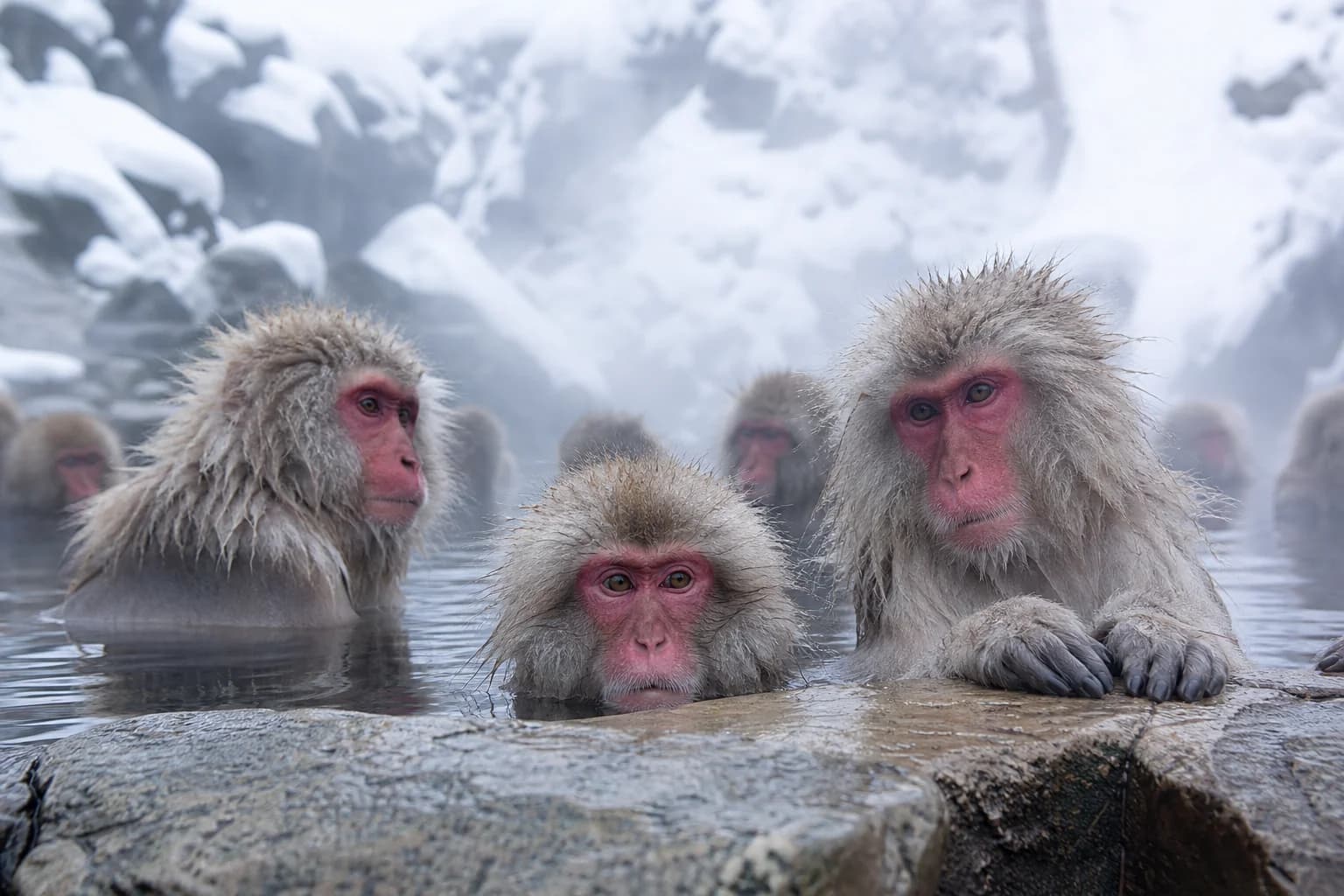
At the heart of Jigokudani, Japanese macaques engage in an activity that has captivated visitors: bathing in hot water. While snow blankets the landscape, these monkeys seem to relish the comfort of warm water, but this habit has fascinating origins and real implications for their wellbeing.
- The return of elk to Kentucky: a successful reintroduction
- Fiona, star hippo at Cincinnati Zoo, rushed into emergency care after swallowing a visitor's beanie
- Common cranes: thousands of birds are crossing French skies right now – here's where to watch them for free
A tradition born of a chance discovery
This behaviour is not ingrained in the culture of all Japanese macaques. The story of this practice dates back to 1963, when a young macaque was spotted bathing in a local hotel's pool. This first foray prompted other members of the troop to follow suit. To stop the macaques disturbing hotel guests, a specially designed pool fed by a hot spring was created for them. The macaques, which live in the wild, come regularly to collect food distributed by staff, and it was in this setting that the custom spread, although not all the monkeys take part.
Relief from winter stress
For macaques, surviving winter is about more than just coping with the snow. Their bodies must expend a significant amount of energy to maintain their temperature in cold conditions. Could hot water ease this burden? To answer this question, a study was carried out on twelve adult females at Jigokudani, observed in spring and then between October and December. Researchers analysed their bathing behaviour as well as their droppings, which contain hormonal markers linked to stress, notably glucocorticoids, whose levels rise under harsh conditions. Published in 2018 in the journal Primates, the study found that females bathed more often during the coldest periods. The results also showed that concentrations of these hormones were lower during weeks when they had access to the baths, compared with weeks when they did not visit them. This effect was less pronounced in spring, reinforcing the idea that the baths offer a genuine benefit during winter.
Social hierarchy at play
Access to these hot baths is also shaped by the social dynamics within the troop. Dominant females enjoy privileged access to the hot water and spend more time there. However, this position of power comes with more frequent conflicts, especially in winter, which leads to higher stress levels. So even in this seemingly tranquil setting, hierarchy-related tensions persist. The baths, while providing a degree of comfort, are not enough to ease the social challenges these monkeys face. In short, behind this image of serenity lie complex issues of survival and social relationships.