This story begins on the Isle of Wight, off the south coast of England. In 1924, a dinosaur skull fragment was added to the collections of the Natural History Museum in London. For almost a century, the specimen remained largely unexamined, until a recent analysis revealed that it belonged to a previously unrecorded species of predator.
Invictibellatrix amberina: a little-known predator
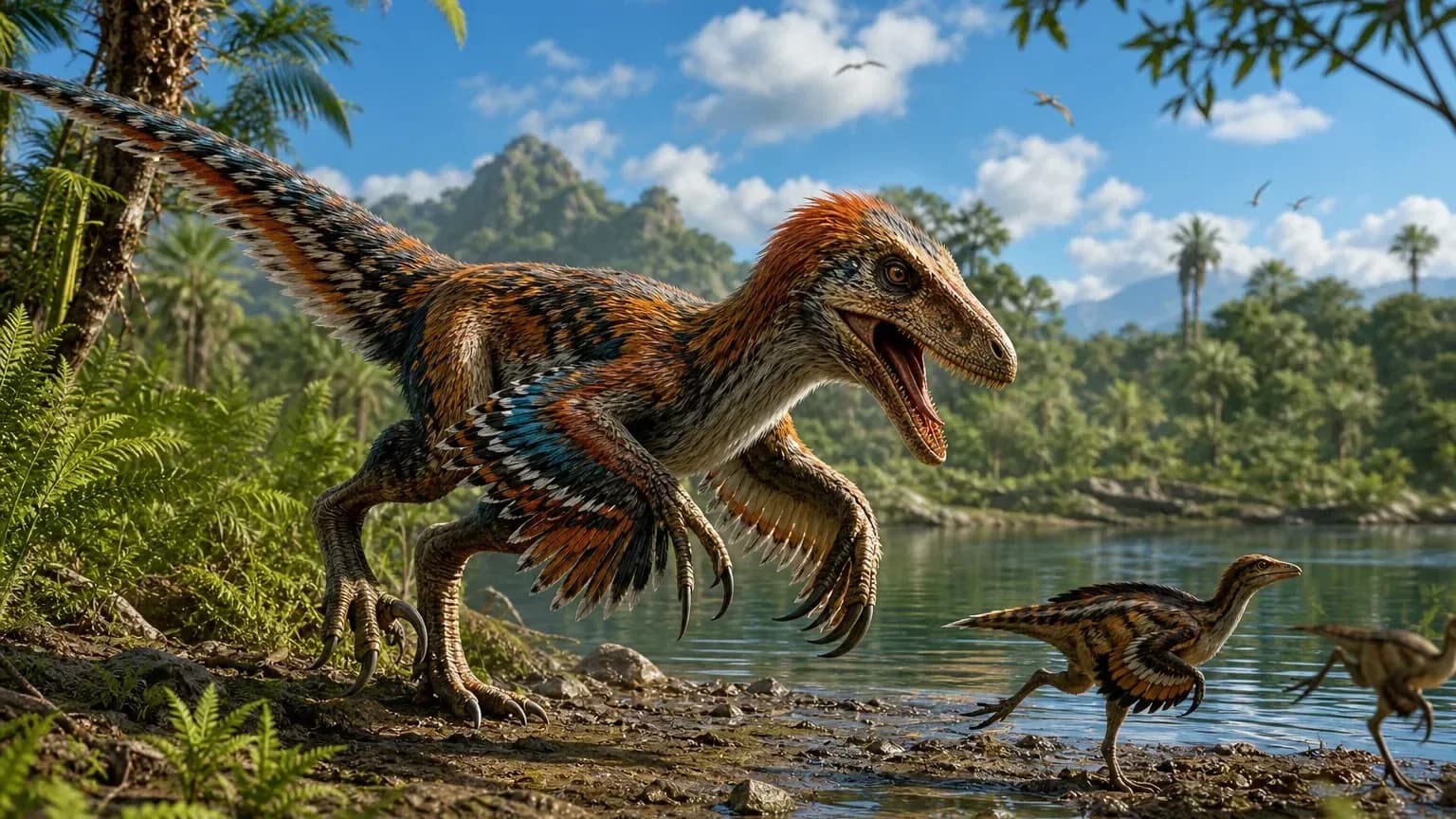
Researchers have named this dinosaur Invictibellatrix amberina. It lived around 120 million years ago, at a time when the Isle of Wight was characterised by vast plains and rivers. Based on estimates derived from its close relatives, it measured between three and four metres long and stood around a metre and a half tall.
Unlike the imposing bulk of the Tyrannosaurus, this dinosaur moved on two legs, had an agile build, and was probably covered in feathers. Its arms, equipped with long curved claws, were adapted for catching prey, which included small dinosaurs, lizards and mammals.
An innovative method of analysis
How can a new species be identified from a single skull fragment? Scientists used a scanner to examine the internal structure of the bone, then compared its shape with that of other carnivorous dinosaurs. Certain specific features, particularly around the opening for the spinal cord, caught their attention.
The analysis allowed the fossil to be classified among the megaraptorans, a group of predatory dinosaurs known for their large claws. This marks the first identification of a member of this group in Europe, whereas previously discovered fossils had mainly been found in other parts of the world.
A new perspective on species migration
This discovery also sheds light on the migration of these creatures. Researchers believe these dinosaurs may have emerged in Asia, then spread to Europe before reaching the southern continents. Later, some of their descendants became formidable predators. This fossil represents one of the oldest and smallest known forms of the group, suggesting that these dinosaurs were already widespread across the planet at the start of the Cretaceous, before their lineages diversified.
For palaeontologists, this discovery is a reminder that exploring new sites isn't always necessary. Museums hold millions of fossils, and some of them are still waiting for a fresh pair of eyes to bring them back to life and reveal their fascinating story.