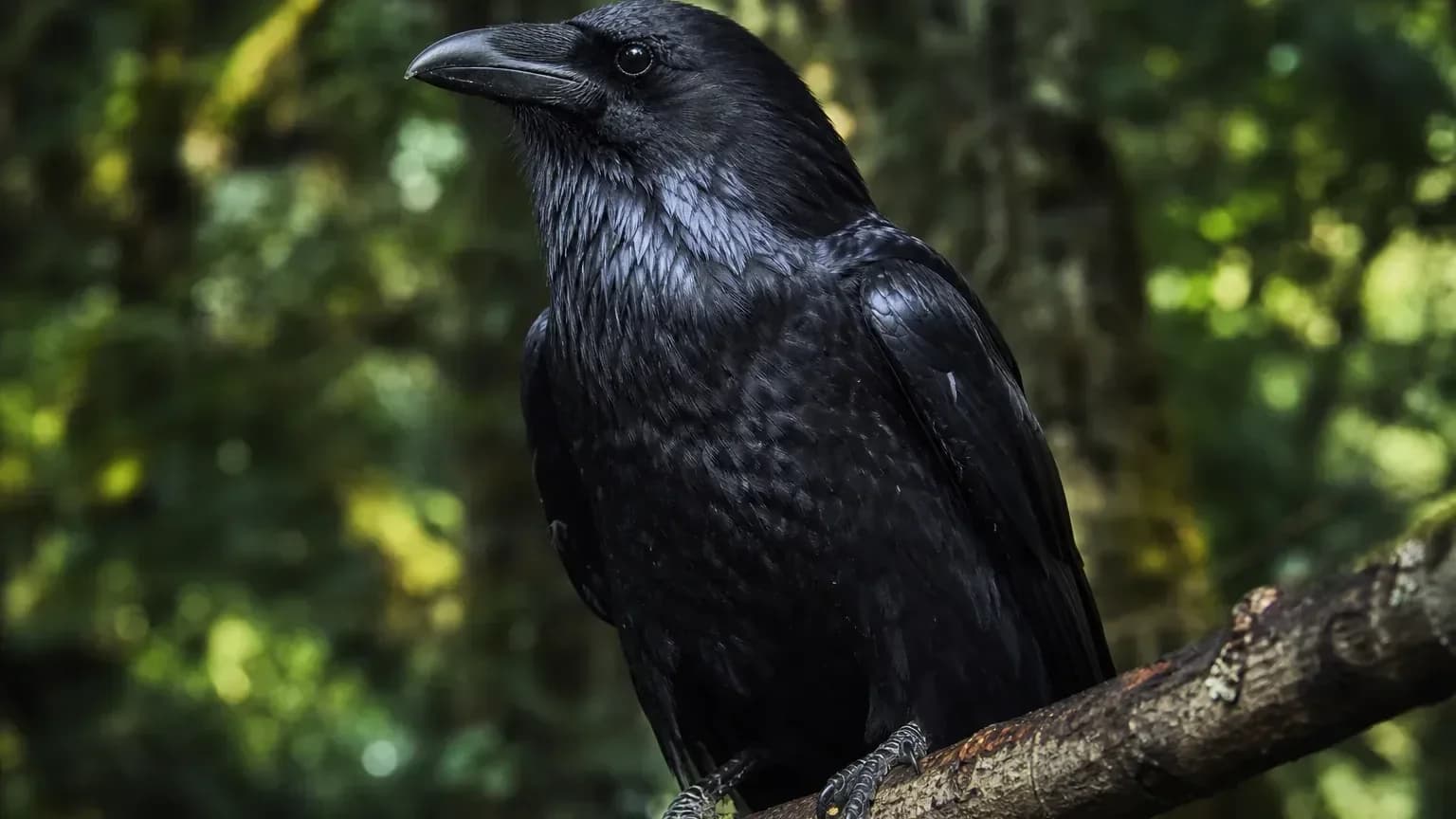
Researchers at the University of Tübingen have discovered that crows can make visual decisions twice as fast as humans and monkeys. In experiments carried out with two crows, the birds took an average of just 235 milliseconds to work out the direction of a cluster of moving dots, all while maintaining remarkable accuracy.
Impressive performance in decision-making tests
To test the crows' decision-making abilities, the researchers used a touchscreen displaying moving dots. The birds had to indicate whether the majority of the dots were moving to the left or the right by pecking the symbol matching their choice. The results were astonishing, even when the direction of movement was hard to make out. According to Philipp Schmidbauer, one of the researchers, the crows' decisions were better than random choices, reaching near-100% accuracy when the signals were clear.
Remarkably fast processing
The findings, published in the journal Science, shed new light on how bird brains process information and make decisions. The researchers analysed the crows' neural activity while they carried out the task. They found that the crows' brains began processing the visual information just 70 milliseconds after the moving dots appeared.
Recordings showed that neurons associated with the different choice options displayed distinct activity patterns almost immediately. These signals emerged well before the birds reacted physically, pointing to a rapid evaluation of the visual information.
Neural mechanisms similar to those in humans
One of the most interesting findings of this research is that crows appear to use neural processes similar to those seen in humans and other primates when making decisions, despite having a very different brain structure. Andreas Nieder, one of the researchers, pointed out that these results show that the neural dynamics of the avian brain are consistent with established decision-making models in humans and non-human primates.
Unlike mammals, birds do not have a cerebral cortex organised into layers, yet their brains appear able to apply similarly fundamental principles to weigh up evidence and make decisions. In this visual task, the crows carried out this process twice as fast as primates.
An evolution shaped by specific needs
The researchers suggest that this exceptional speed may be linked to the evolutionary demands faced by birds. Quickly interpreting visual information and reacting with precision is essential for animals capable of flight, which often need to use their beaks to interact with their surroundings. Nieder explained that birds rely on their vision to carry out precise, rapid manoeuvres in flight, as well as to guide their beaks towards objects when foraging for food.
Questions remain over the biological mechanisms
However, the biological mechanisms that allow crows to make decisions so quickly have yet to be fully understood. Further studies will be needed to work out how their differently structured brains manage to make visual choices so much faster than those of humans and monkeys.
In conclusion, this study on crows sheds light on the fascinating intelligence of these birds. Their ability to make fast, accurate decisions opens the door to further research into animal intelligence and how different brains process information. Crows, often seen as ordinary animals, reveal cognitive skills that deserve further exploration.