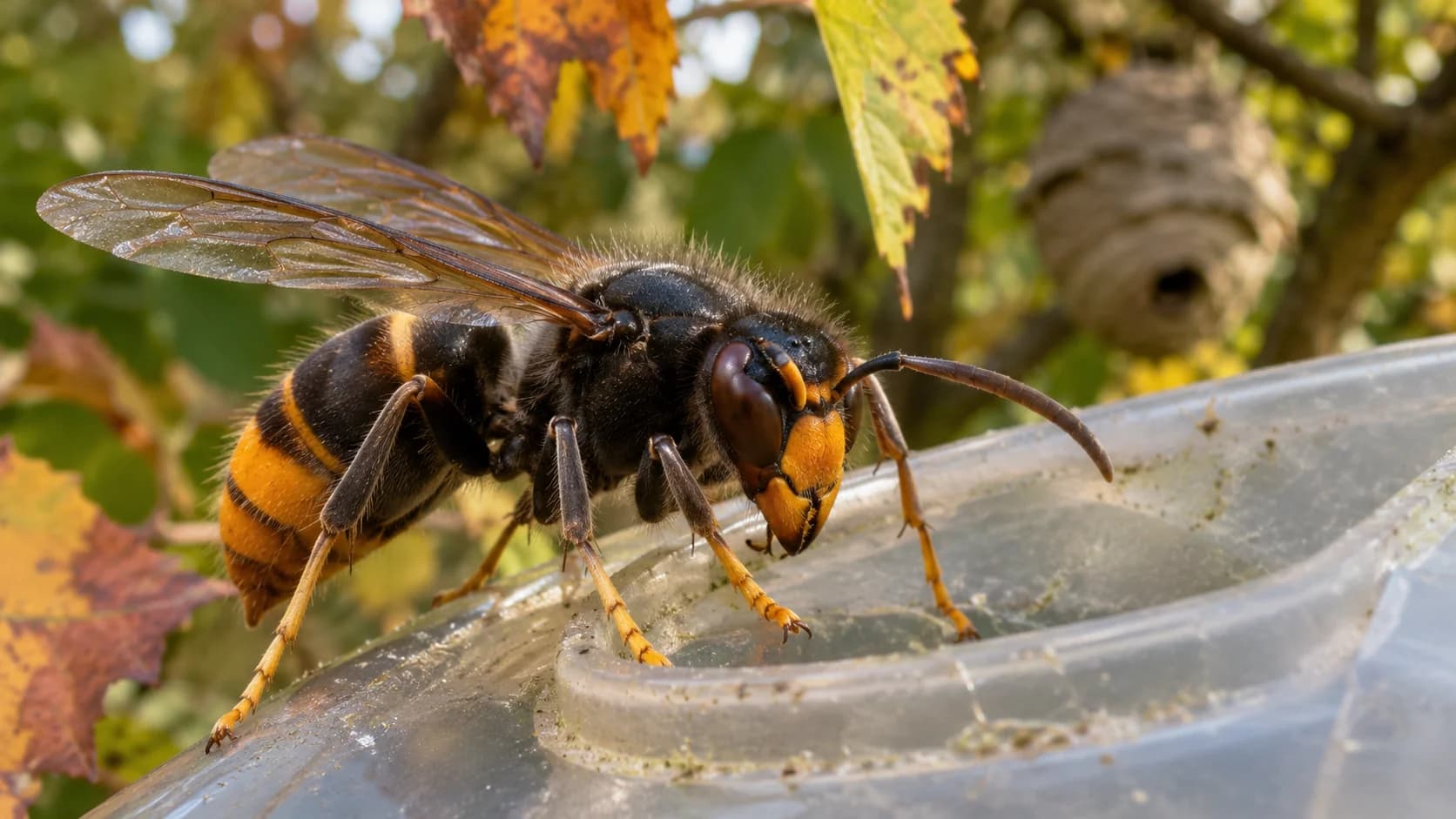
What if artificial intelligence could help get rid of Asian hornets? That's the idea behind a project by students at VUB (Vrije Universiteit Brussel), who have developed a trap based on the Trojan horse principle. They will present it this weekend at iGEM, the international synthetic biology competition in Paris.
- The return of elk to Kentucky: a successful reintroduction
- Fiona, star hippo at Cincinnati Zoo, rushed into emergency care after swallowing a visitor's beanie
- Common cranes: thousands of birds are crossing French skies right now – here's where to watch them for free
AI, eco-friendly insecticide and strategy
The invention combines artificial intelligence, an eco-friendly insecticide and strategy. It starts with a physical trap, linked to an AI-powered detection system capable of recognising, with over 99% accuracy, whether a hornet is caught inside. The aim: to stop useful insects, such as bees, from coming into contact with the agent.
A biological "sticker" powered by fungus
Once spotted, the hornet is covered with a biological "sticker" made of a network of protein nanofibres fitted with chitin-binding domains, ensuring optimal adhesion to the insect's exoskeleton. This sticker contains a natural pesticide well known in agriculture: the soil fungus Beauveria bassiana.
The nest destroyed from within
Once released, the tagged hornet will unwittingly do the job itself, returning to its colony and infecting it with the insecticidal fungus. "This way, the whole nest is wiped out from the inside, with no side effects for the environment," the team explains. The project, designed to be modular, could be adapted to target other invasive or pest species.