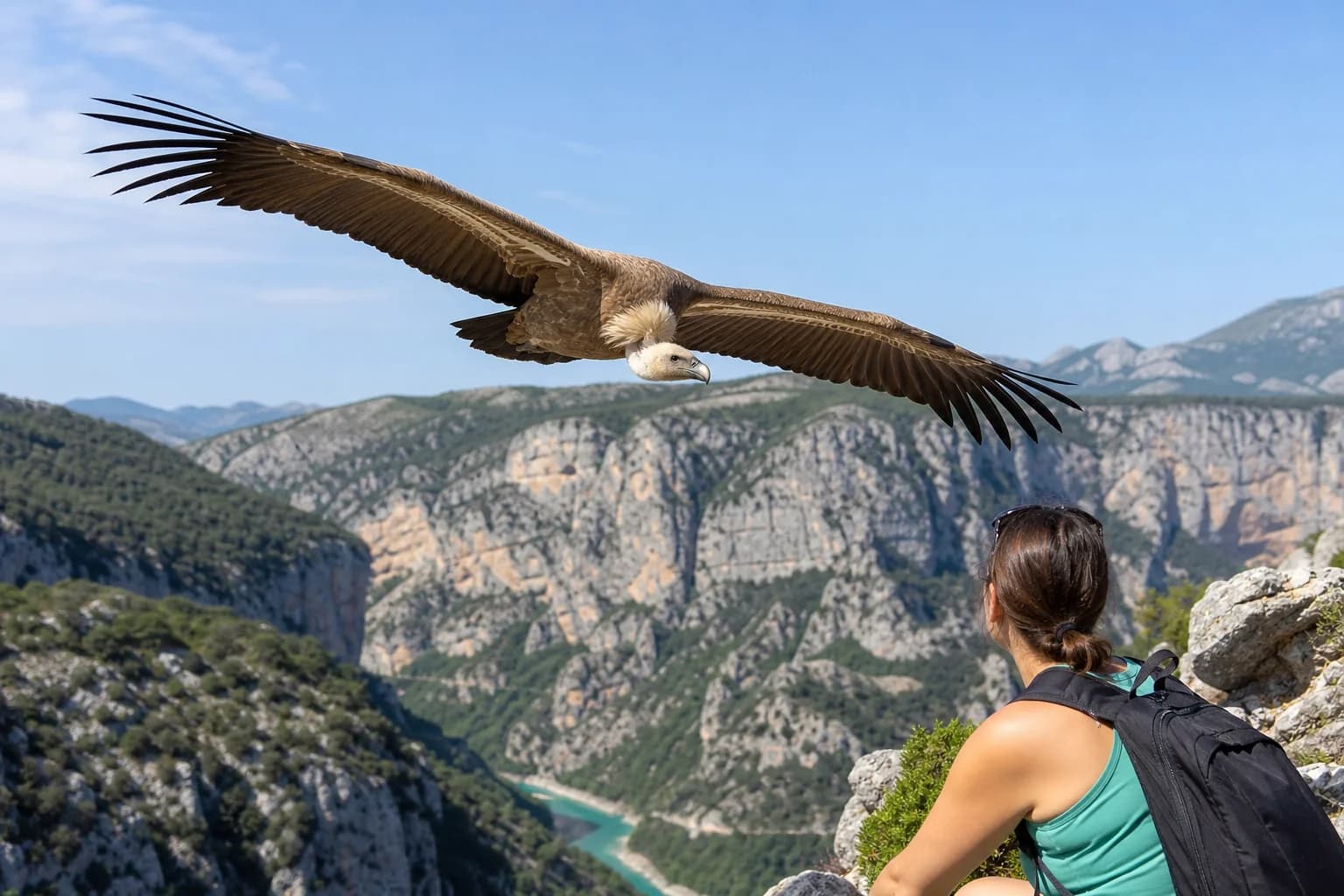
Four species of vulture once again soar over the Grands Causses, led by the griffon vulture. You can watch them from the Belvédère des Vautours, in the Gorges de la Jonte, thanks to a reintroduction programme launched in 1981 - a model of species recovery in France.
Four vulture species on the cliff ledges
The griffon vulture leads the way: with a wingspan of up to 2.80 metres, it glides for hours without a single wingbeat, often in groups. Around it live three quite distinct cousins. The black vulture, dark and massive, is among the largest birds of prey in Europe. The Egyptian vulture, noticeably smaller, is the only migratory species of the group and heads south again each autumn. The bearded vulture, huge in size, feasts on the bones the others leave behind. Such a quartet of vultures together remains rare in France.
Cleaners that do farmers a favour
Vultures don't hunt: they feed on animals that have already died. Within a few hours, a flock can make a dead sheep's carcass disappear, limiting the spread of disease within flocks. Shepherds of the Causses speak of natural rendering. This free service, provided for centuries, explains why the LPO and the parks fought to bring the birds back. Observing this wildlife roaming free means watching an ecosystem at work right before your eyes.
The comeback that began in 1981
The griffon vulture had vanished from the Gorges de la Jonte by the mid-20th century, a victim of poison and shooting. The reintroduction programme began in 1981, led by the Rapaces mission of the LPO and the Cévennes National Park. Between 1981 and 1986, 58 griffon vultures took to the Causses skies once more. The colony has grown ever since: the LPO counted 820 breeding pairs in 2021. The black vulture followed from 1992, the bearded vulture since 2012, and the Egyptian vulture returned of its own accord.
The Belvédère des Vautours, the best seat in the house
To see them up close, head for the Belvédère des Vautours, now known as the Maison des Vautours, in Saint-Pierre-des-Tripiers, in Lozère. The site overlooks the Gorges de la Jonte, on the road between Le Rozier and Meyrueis. From the terrace, equipped with telescopes, you can follow the birds of prey flying free, with no fencing in sight. Cameras trained on the nests broadcast the lives of breeding pairs live, with commentary from the site's guides. A rare glimpse into the private lives of these birds.
When and how to make the most of your visit
Vultures take off mainly once the sun has warmed the cliffs and created rising air currents, so aim for the middle of the day, in clear weather. The Belvédère is open from April to early November, but check the opening times before setting off. Expect to pay around €8 for an adult ticket in 2025. Extend your visit with a walk along the Jonte cliff edges, where the vultures sometimes skim the ridgetops. Don't forget your binoculars, and browse more ideas for nature outings to fill the weekend.
Your questions, our answers
Which vulture species can be seen in the Grands Causses?
Four species share the skies above the Gorges de la Jonte: the griffon vulture, by far the most numerous, the black vulture, the bearded vulture, reintroduced since 2012, and the Egyptian vulture, the only migratory species of the group. The griffon vulture remains the easiest to spot, with its large silhouette gliding effortlessly over the Causses, often in groups.
Where can you watch the vultures of the Grands Causses?
The best vantage point is the Belvédère des Vautours, now the Maison des Vautours, in Saint-Pierre-des-Tripiers, in Lozère, overlooking the Gorges de la Jonte. Its terrace offers telescopes and cameras trained on the nests. The cliff paths along the Jonte, accessible on foot, also let you cross paths with the birds flying free, sometimes right along the ridgetops.
Why were vultures reintroduced in the Causses?
The griffon vulture had disappeared from the gorges by around the mid-20th century, a victim of poison and shooting. The LPO and the Cévennes National Park launched its reintroduction in 1981 to restore a missing link in the ecosystem: these scavengers clean up livestock carcasses and limit the spread of disease. Between 1981 and 1986, 58 birds were released into the Jonte.