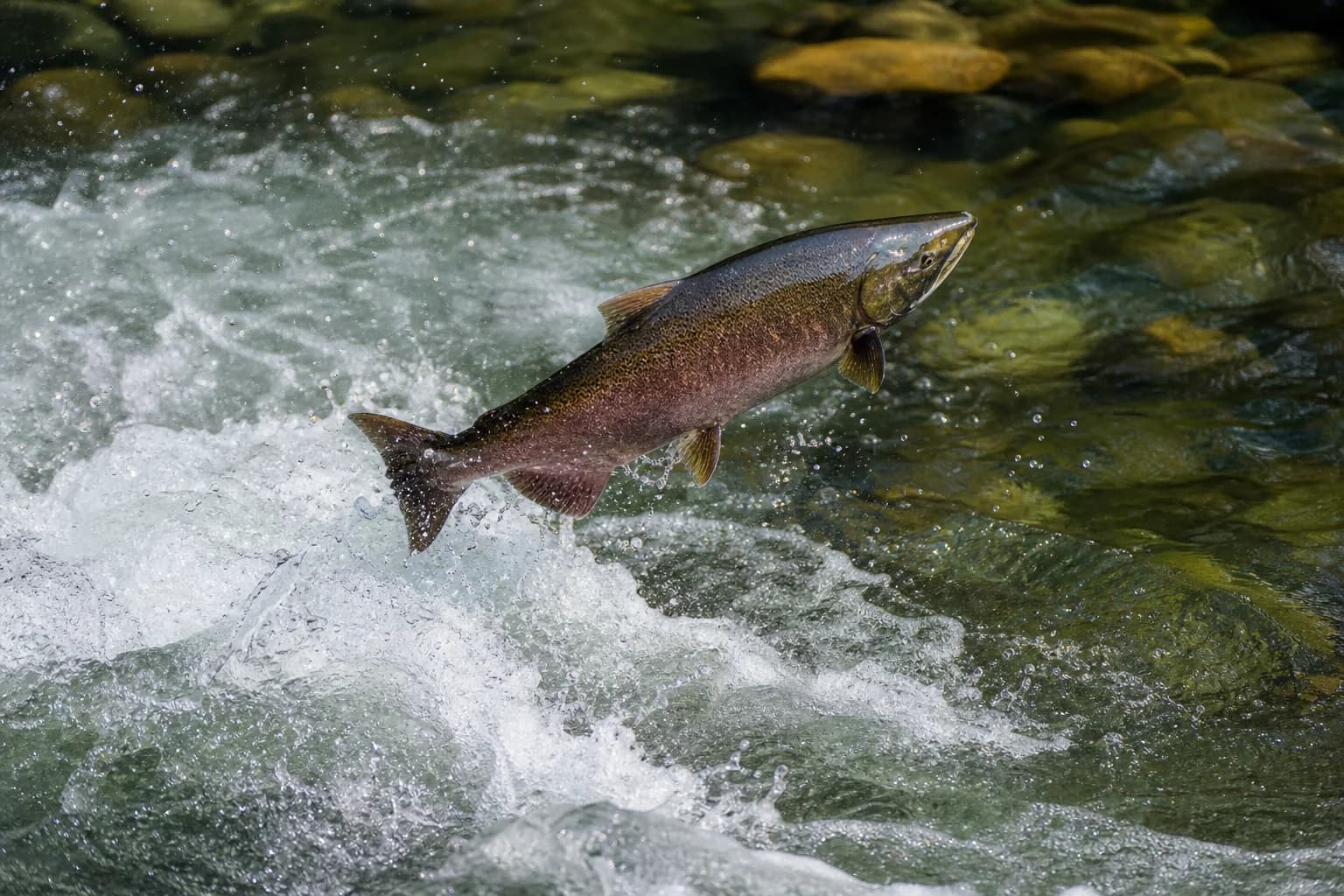
The wild salmon of the Loire-Allier river system travels nearly 900 km between the Atlantic Ocean and the source of the Allier, in Haute-Loire, to reach its spawning grounds. It's one of the longest freshwater Atlantic salmon migrations in Europe. The run is concentrated into just a few months, from winter through spring.
900 km from the ocean to the source of the Allier
The journey begins at sea. After one to three years spent growing in the North Atlantic, the adult salmon heads back to the river where it was born. For the Loire-Allier system, that means swimming up the Loire, then the Allier, all the way to the spawning grounds in the upper valley. One fish tracked by radio telemetry covered 920 km from the estuary, clearing 21 obstacles along the way. Throughout the run, the fish stops feeding altogether, living off its own reserves.
A journey blocked by dams
Two structures long stood in the way: the Vichy and Poutès-Monistrol dams. The new Poutès dam, brought into service in spring 2022, had its reservoir lowered from 20 to 7 metres to let fish pass during migration. The water itself also works against them. The fish need sufficient temperature and flow to swim upstream, which narrows the window fast: the run lasts only a few months, from winter into early spring, when conditions line up.
Where and when to watch the run
The run is more often sensed than seen. Since 1996, LOGRAMI has filmed every passage at the Vichy video-counting station and published the figures online. To get close to the fish in person, head for the Conservatoire national du saumon sauvage in Chanteuges, Haute-Loire: open since 2001, it tells the story of the salmon's life through guided tours in July and August. The run itself plays out mainly from winter to early spring.
48 salmon in 2025: a fragile treasure
The count is worrying. In 2025, only 48 spawners were estimated on the Allier's spawning grounds based on passages recorded at Vichy — the second-worst year on record, just behind 2024. The historical average sits at around 320 fish. Since 2024, the International Union for Conservation of Nature has classified this population as endangered. The Conservatoire supports numbers through restocking, though this effort is now under strain from debate and budget cuts.
Follow the Allier on foot or by canoe
You don't need to spot a salmon to fall for the Allier. The river carves out wild gorges in Haute-Loire, perfect for a canoeing trip or a hike along the water. Take the time to read the living river: kingfishers, beavers and otters all frequent these Auvergne waters. Our outdoor adventure ideas follow the course of these rivers, where the great traveller stubbornly returns every winter.
Your questions, answered
Why does the Allier salmon swim so far upstream?
The salmon of the Loire-Allier system returns to spawn in the river where it was born, deep in the upper Allier valley in Haute-Loire. These spawning grounds lie nearly 900 km from the Atlantic Ocean. It's one of the longest freshwater Atlantic salmon migrations in Europe.
Where can you watch the salmon run on the Allier?
The run is mainly tracked via the Vichy video-counting station, run by LOGRAMI, which publishes the figures online. To get close to the species, the Conservatoire national du saumon sauvage in Chanteuges, Haute-Loire, offers guided tours in July and August.
How many wild salmon are left on the Allier?
In 2025, LOGRAMI estimated 48 spawners on the Allier's spawning grounds, the second-worst year on record, just behind 2024. The historical average is around 320 fish. Since 2024, this population has been classified as endangered by the IUCN.