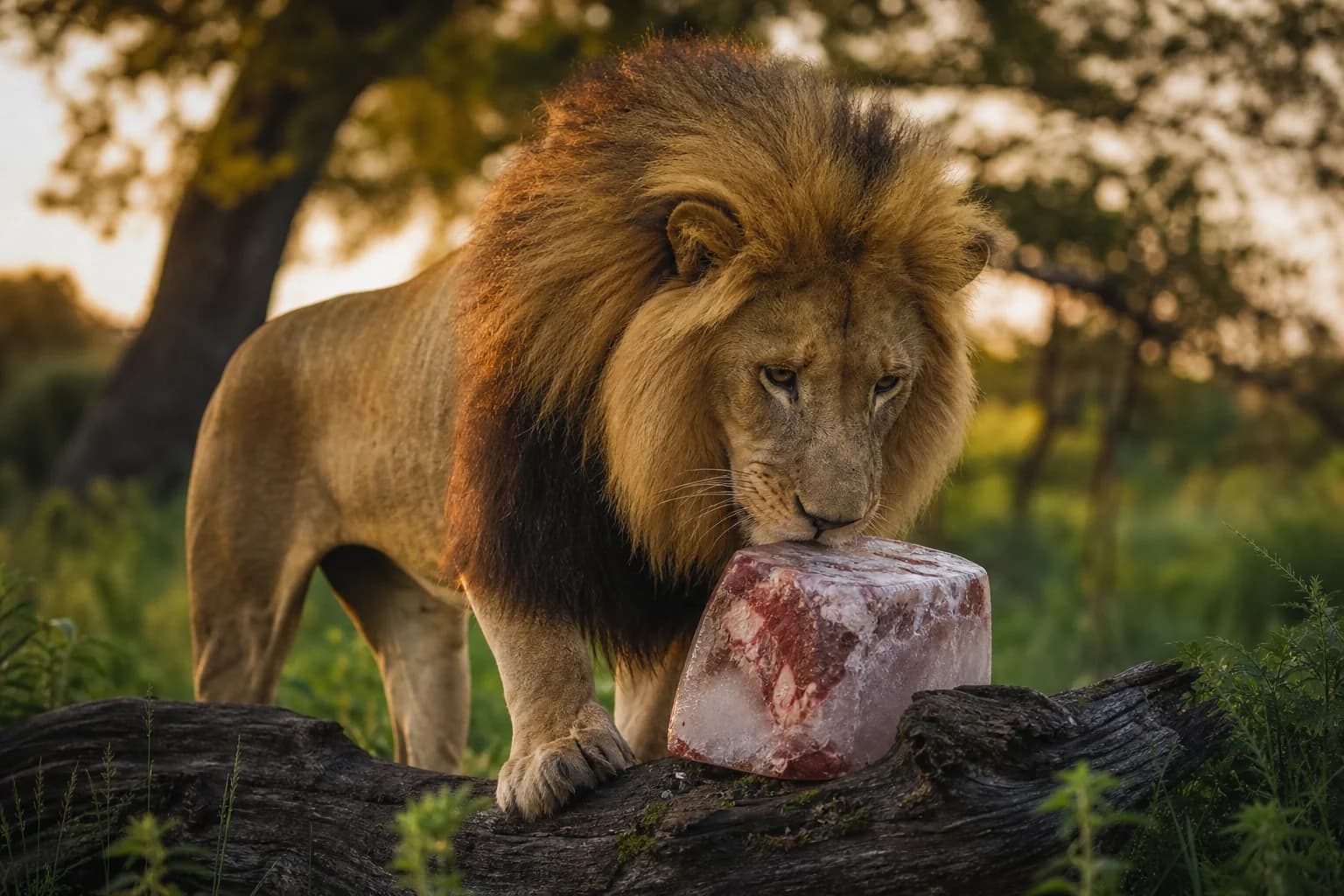
A groundbreaking study by the University of Adelaide, carried out in collaboration with Monarto Safari Park, has shown that zoo lions display more natural behaviour when fed whole carcasses as part of a feast-and-fast diet. The research, published in the journal Applied Animal Behaviour Science, focused on a group of male African lions.
A groundbreaking study into lion feeding behaviour
Researchers observed the lions after changing their feeding routine to include whole carcasses every nine days. This shift offered fresh insight into how captive lions can benefit from a diet that mimics their species' natural patterns. Continuous video footage recorded over three months revealed striking results: the lions spent almost three times as long eating when carcasses were available.
A feeding rhythm similar to that of wild lions
Not only did the lions eat for longer, they also showed more active behaviour during the fasting periods that followed. This feast-and-fast cycle observed in zoo lions closely mirrors the natural feeding habits of lions in the wild. According to Lesia Hryhorenko, the study's lead author, the research offers valuable insight into how diet affects the behaviour of carnivores in captivity.
Wild lions don't eat at set times each day. Their feeding depends on hunting success, which leads to periods of feast and fast. By introducing whole carcasses, the researchers set out to assess how these lions respond to feeding patterns closer to their natural behaviour.
A detailed look at lion behaviour
During the study, three adult male lions were observed before and after the carcasses were introduced. In total, around 200 kilograms of carcasses were distributed, with the food left available for three days. Researchers used eight infrared cameras to capture the lions' behaviour, creating one of the most detailed behavioural datasets ever compiled on captive lions.
The results showed that on carcass days, the lions not only ate for longer but also displayed tearing and food-handling behaviours typical of their natural conduct. These activities allowed them to express feeding behaviours that are essential to their natural ecology.
Longer rest periods and increased activity
After eating the carcasses, the lions spent more time resting. As the fasting period went on, their physical activity gradually increased, establishing a rhythm that mirrors the one seen in wild lion populations. Hryhorenko points out that this dietary change goes well beyond simple nutrition, as it allows lions to engage in natural behaviours that are crucial to their wellbeing.
Looking at repetitive behaviour
The researchers also studied pacing, a repetitive behaviour often linked to anticipation in carnivores. Although pacing increased slightly over the course of the study, it did not build up steadily during fasting periods. Instead, spikes in activity coincided with predictable events, such as keepers arriving or the lions moving around their habitat. This suggests pacing may be more closely tied to daily routines than to hunger.
Managing behaviour over the long term
The findings show how essential it is to monitor animal behaviour over extended periods in order to assess zoo management practices. According to Alexandra Whittaker, co-author of the study, much research focuses solely on the immediate effects of feeding. This study, however, highlights the importance of examining behavioural patterns across the whole feeding cycle, rather than around a single feeding event.
Future prospects for animal welfare
Researchers looking to incorporate physiological measures alongside behavioural monitoring in future studies could provide a fuller picture of how different feeding strategies affect animal welfare. The ultimate goal is to ensure captive lions can live in conditions that support their physical and mental health while honouring their natural instincts.
This study paves the way for new feeding practices in zoos, underlining the importance of a diet that respects animals' natural behaviour. By adapting feeding methods, zoos can not only improve lions' quality of life but also enrich their social and behavioural environment.