Hanging from branches in the forests of Central and South America, sloths are considered the slowest mammals on the planet. Their lifestyle, built around minimal energy expenditure, has evolved over millions of years. Although their slowness has long intrigued scientists, the biological mechanisms behind it have, until now, been poorly understood. New research published in the journal BMC Biology sheds significant light on this phenomenon.
- The return of elk to Kentucky: a successful reintroduction
- Fiona, star hippo at Cincinnati Zoo, rushed into emergency care after swallowing a visitor's beanie
- Common cranes: thousands of birds are crossing French skies right now – here's where to watch them for free
A rich evolutionary history
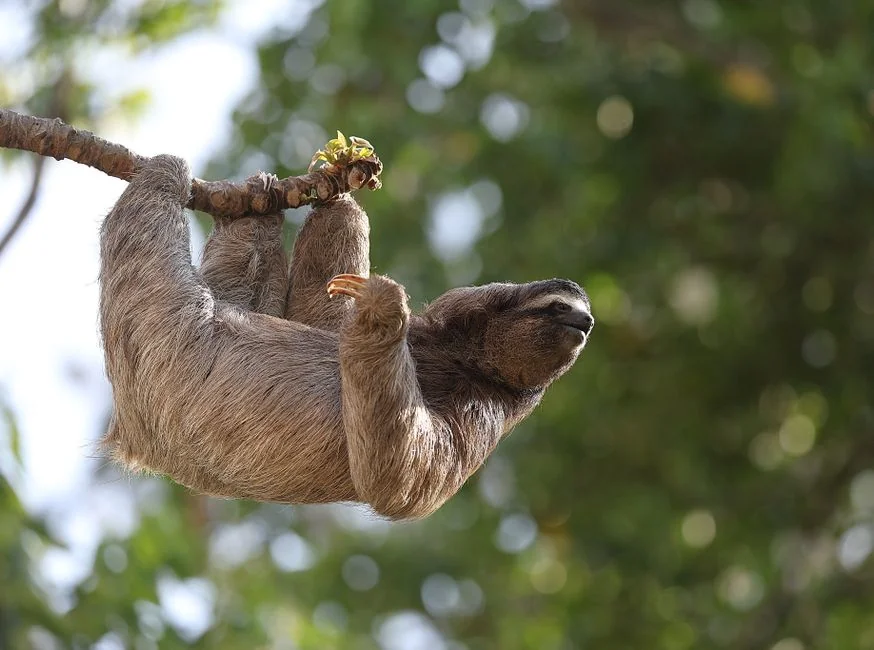
Sloths belong to the xenarthrans, a group of mammals that first emerged in South America around 65.5 million years ago. This family also includes species such as armadillos and anteaters. The ancestors of sloths were sometimes enormous, with some ground-dwelling species reaching the size of an elephant. Today's sloths, by contrast, live exclusively in trees and fall into two main groups: two-toed sloths and three-toed sloths. Their pace of life is extremely slow, and they spend most of their time motionless in the canopy, where their fur helps them blend in. Even when moving to feed on leaves or fruit, their movements remain very measured.
An unrivalled metabolism
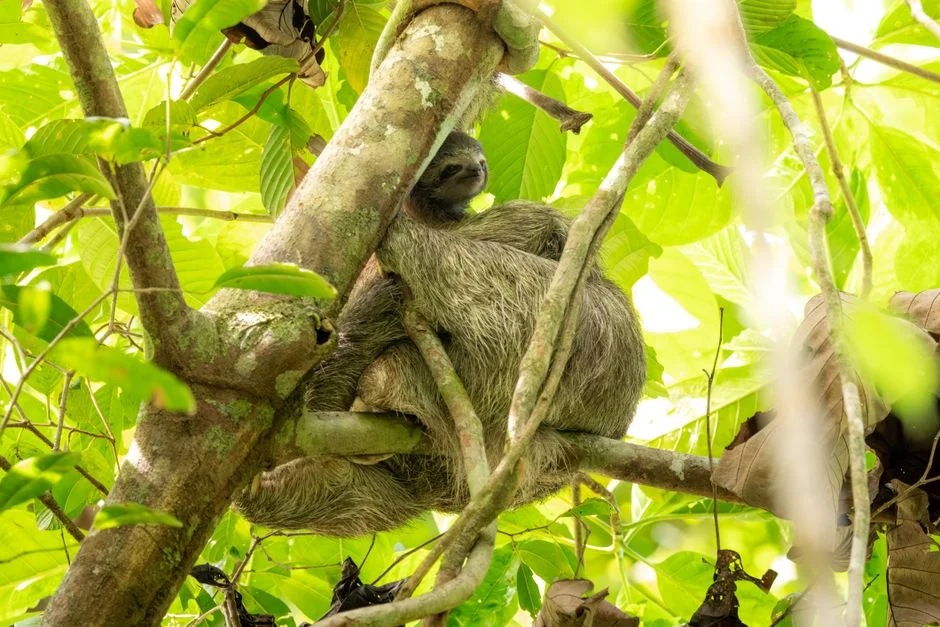
This slow-living strategy is underpinned by an exceptionally low metabolism, often less than half of what would be expected for an animal of their size. To make the most of their energy use, sloths switch between actively regulating their body temperature and relying on ambient environmental conditions. To explore the origins of this adaptation, an international team of researchers, including scientists from the Wellcome Sanger Institute and the Sírio-Libanês Hospital in São Paulo, sequenced the complete genome of a captive-bred two-toed sloth.
Telltale jumping genes
By comparing the sloth's genome with those of other mammals such as the armadillo and the anteater, scientists identified active DNA sequences, known as transposons, or