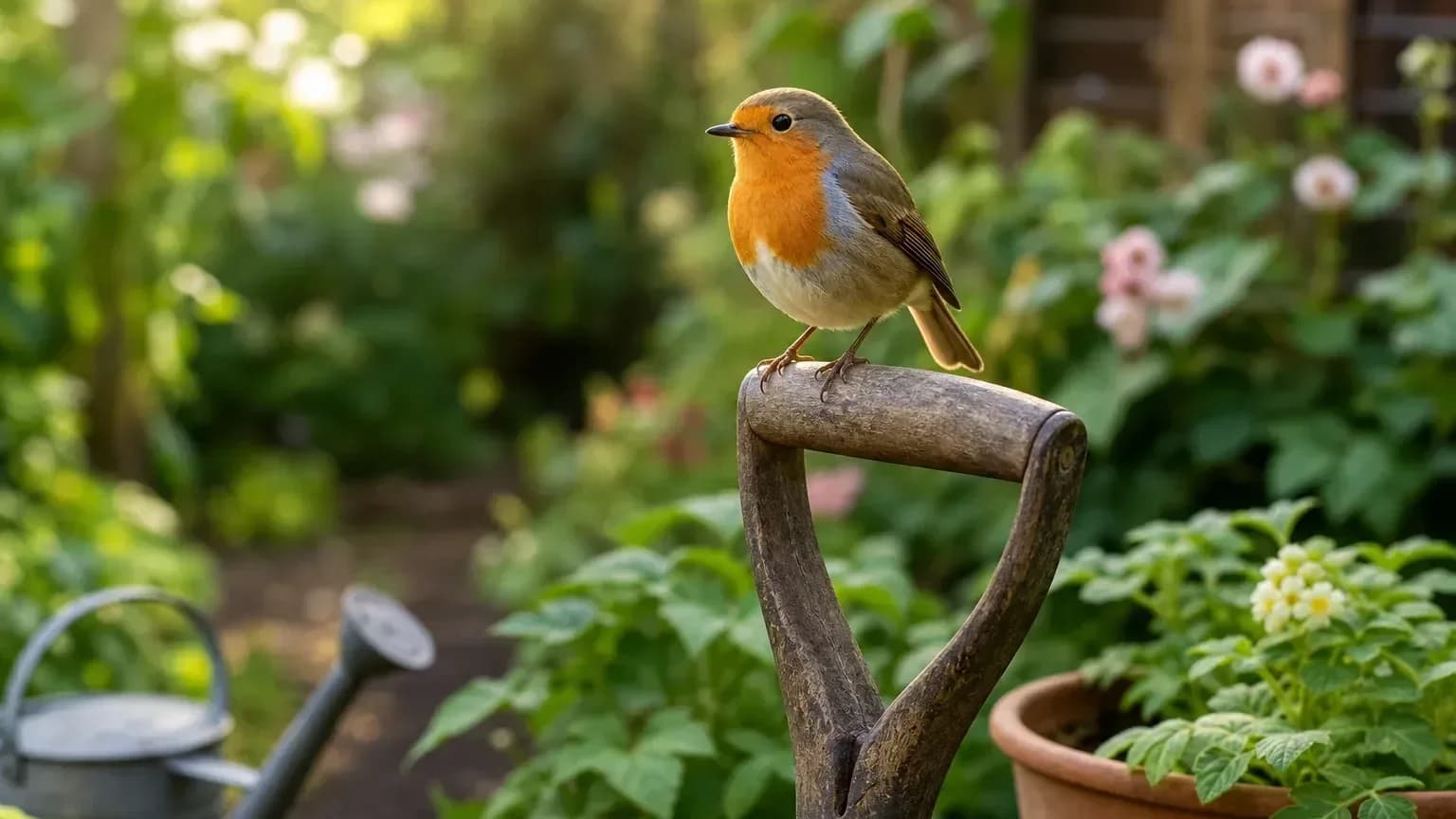
When you're working in your garden, it's not unusual to see a robin come closer, ready to take advantage of the disturbance you're creating.
Every time you turn over soil or debris, this bird seizes the chance to dig out worms and other insects hiding beneath the surface.
By disturbing the ground, you're giving it an opportunity it couldn't get on its own, particularly when it comes to shifting objects too heavy for it to move.
Unexpected help with the hunt
This behaviour isn't limited to gardens. In woodlands, robins have been observed following other animals, such as pheasants, which disturb the ground while searching for their own food and expose small prey in the process.
A study published in 2017 in the Journal of Ornithology documented this interaction, showing that robins take advantage of larger birds' presence to reach invertebrates they couldn't otherwise access. The dynamic between bird and gardener works much the same way: by disturbing the ground, you make it easier for the robin to feed.
An effective hunting strategy
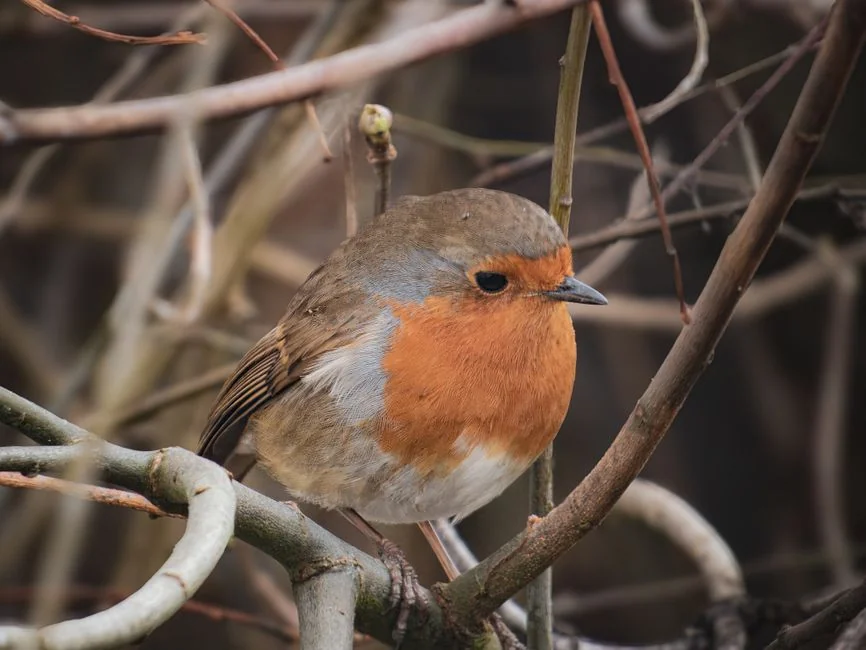
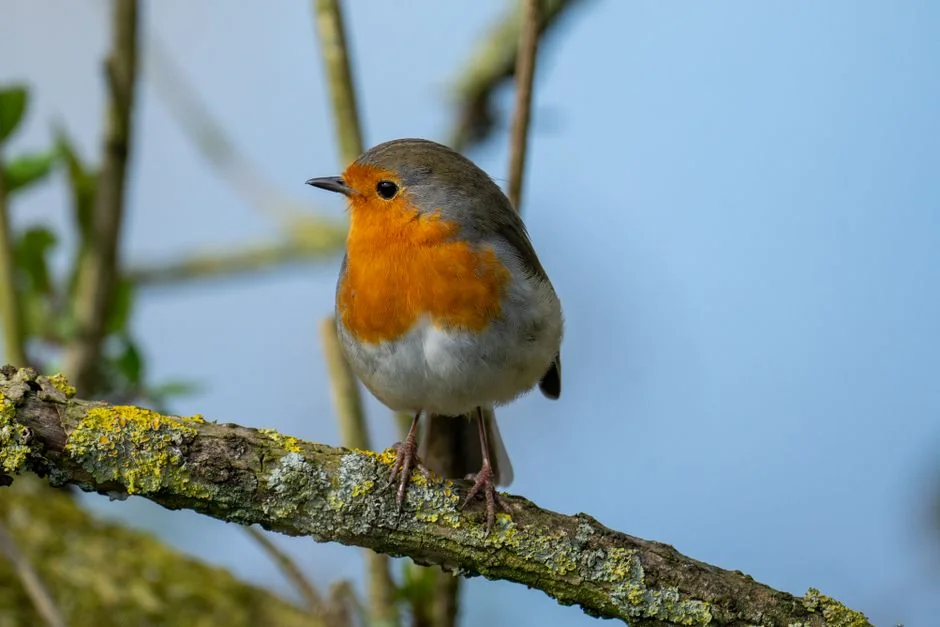
The robin is a patient hunter. Perched on a low branch, it scans the ground for prey. This watch-and-wait method lets it not only spot insects but also keep an eye out for potential predators. Research carried out in 1993 in the Journal für Ornithologie found that this strategy was particularly effective in hedgerow landscapes in Germany. Thanks to well-placed perches, robins could quickly snatch up invertebrates exposed by movement in the soil. In your garden, this same behaviour explains its back-and-forth routine: it watches from above, swoops down to grab its prey, then returns to its lookout post.
A cautious approach to humans
To feed close to you, a robin has to overcome a certain wariness. Researchers looked at how human presence affects the behaviour of nine bird species, including the robin, in forests in France and Switzerland. The findings, published in 2018 in PeerJ, showed that birds tolerated human proximity much better in heavily used forests, where footfall reached as many as twenty people per hour. By contrast, in a far less frequented forest in the Jura, the birds were noticeably more skittish. The researchers measured the distance at which birds took flight as humans approached, revealing their threshold of tolerance. In the garden, this means two things come together: human presence, which becomes familiar, and easily accessible prey thanks to your work.