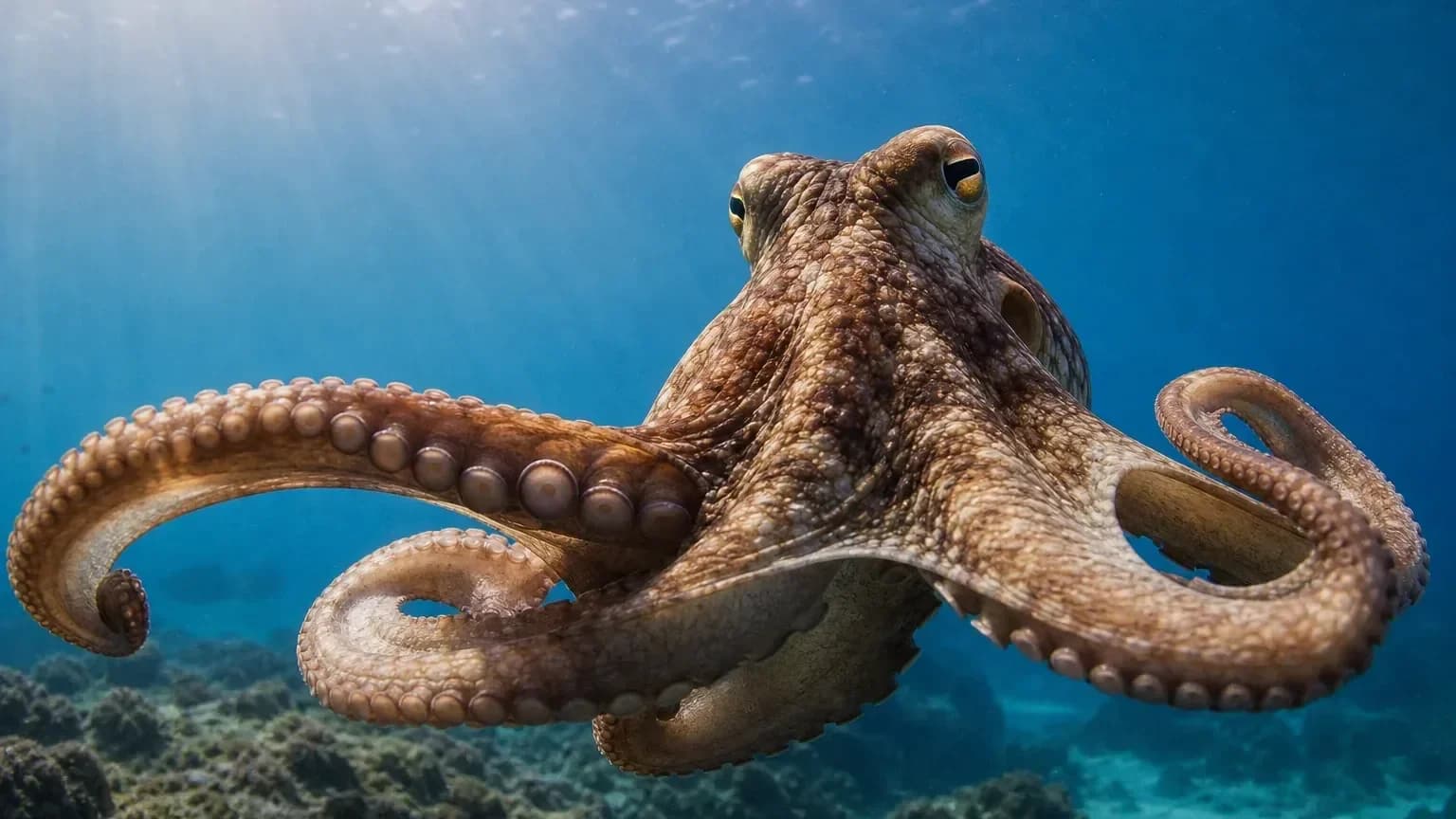
Cephalopods, octopuses chief among them, have one of the most complex nervous systems in the animal kingdom. A new study led by researchers at the University of Vienna, published in the journal Nature, has just uncovered the secret behind this extraordinary intelligence: the three-dimensional organisation of their genome.
DNA reorganised from the ground up
According to the researchers, an ancient reorganisation of cephalopod DNA profoundly changed the organisation of genetic material within cells. Certain parts of the genome ended up next to one another, allowing new interactions to take place. This reshuffling is thought to have had a major impact on the intelligence of octopuses, squid and cuttlefish.
A "regulatory tangle"
It all happened hundreds of millions of years ago, over a relatively short period. New regions of DNA moved closer together, became intertwined and influenced one another, creating new connections within the genome's regulatory networks. The researchers describe this process as a "regulatory tangle".
Impressive cognitive abilities
The elaborate nervous system of cephalopods, with its particularly well-distributed networks of neurons, is even more impressive in octopuses. They are able to solve problems and rapidly change their appearance through camouflage. These abilities are thought to stem from a genetic event that changed the very foundations of their genome.
"The genome isn't just a sequence of genes, it is folded into a complex three-dimensional structure. Understanding how this structure evolved is becoming increasingly important for understanding the emergence of new forms of biological complexity."
More broadly, this discovery could help explain how genetic systems reconcile stability with evolutionary innovation, by creating new interactions between regulatory elements and genes.