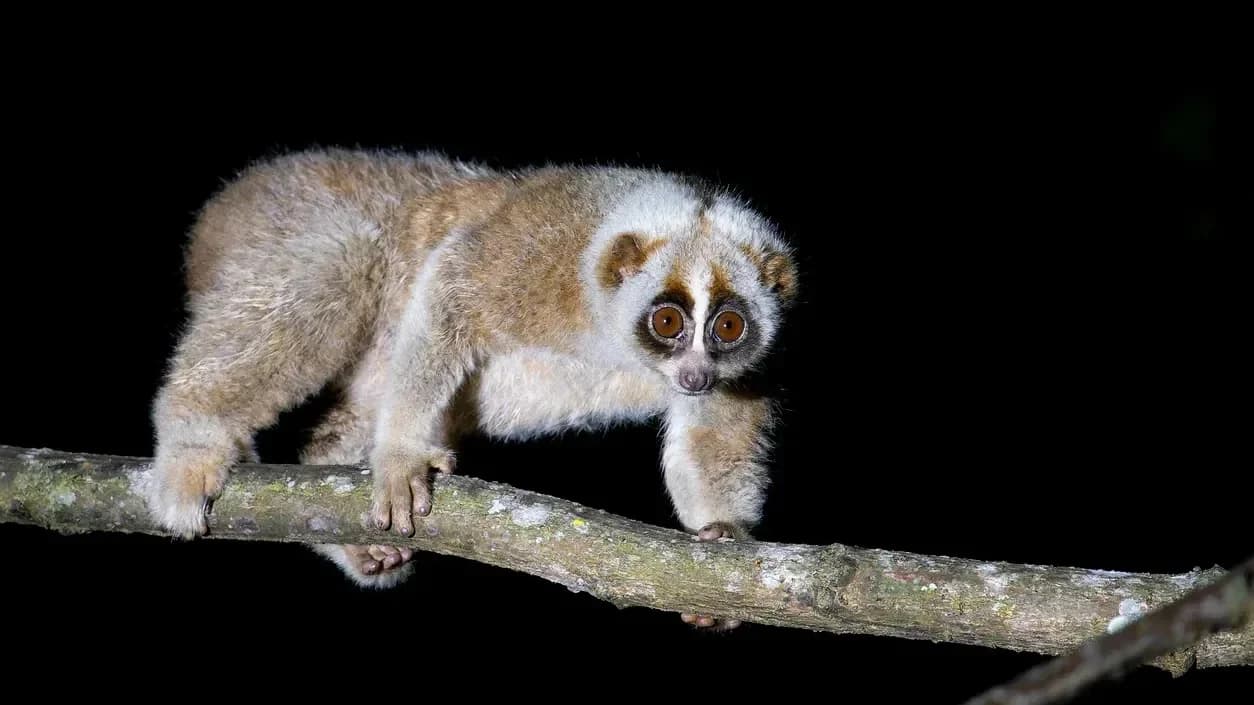
The Bangka slow loris, a small venomous primate from Indonesia, had not been observed since 1937 and was presumed extinct. A study published in October 2026 reveals that it survived on its island, secretly recorded for ten years by local residents. At least 90 individuals have been counted.
A primate believed extinct since 1937
The case seemed closed. The slow loris of Bangka, endemic to this Indonesian island, had not been documented since 1937. With no evidence to go on, the IUCN listed it as "critically endangered" with a "possibly extinct" tag, but scientists genuinely believed it was gone for good. A study published in October 2026 in the journal Spixiana has now changed the picture.
Rediscovered thanks to the island's residents
Science owed its wake-up call to local people. Between 2015 and 2025, residents of Bangka regularly reported their sightings to the Alobi wildlife rescue centre, sometimes while rescuing an injured animal. By analysing this data, researchers counted 90 individuals, spread across a large part of the island. As the study relies on reported sightings, the real population is likely far larger.
One of the few venomous primates
The slow loris is no harmless cuddly toy. Like all members of the genus Nycticebus, it is venomous: brachial glands near its elbows secrete a toxic oil. The animal licks them to coat its saliva and teeth, then bites. Snakes, monitor lizards, birds of prey, civets and even unwelcome fellow lorises can fall victim to it. Active at night, this elusive primate is rarely caught off guard, which explains why it went undetected for so long.
Victim of social media and trafficking
Behind its endearing image lies a grim reality. Stars of viral videos, slow lorises fuel a significant illegal trade, marked by mistreatment and mutilation: their canine teeth are ripped out to prevent any venomous bite. These "cute" videos mask a cruel reality, and the demand they generate puts the species under even greater pressure.
A survival that remains very fragile
The good news hides a tree in a shrinking forest. On Bangka, roads, housing, power lines and oil palm monocultures are relentlessly eating away at the loris's habitat. The study's authors are calling for a genuine conservation strategy to be built for this "rediscovered" primate. To find out more about these rare species, explore our zoological parks committed to conservation and our nature outing ideas.
A venomous primate once thought lost, saved from oblivion by those who live alongside it: proof that a species is never truly extinct as long as someone is watching.