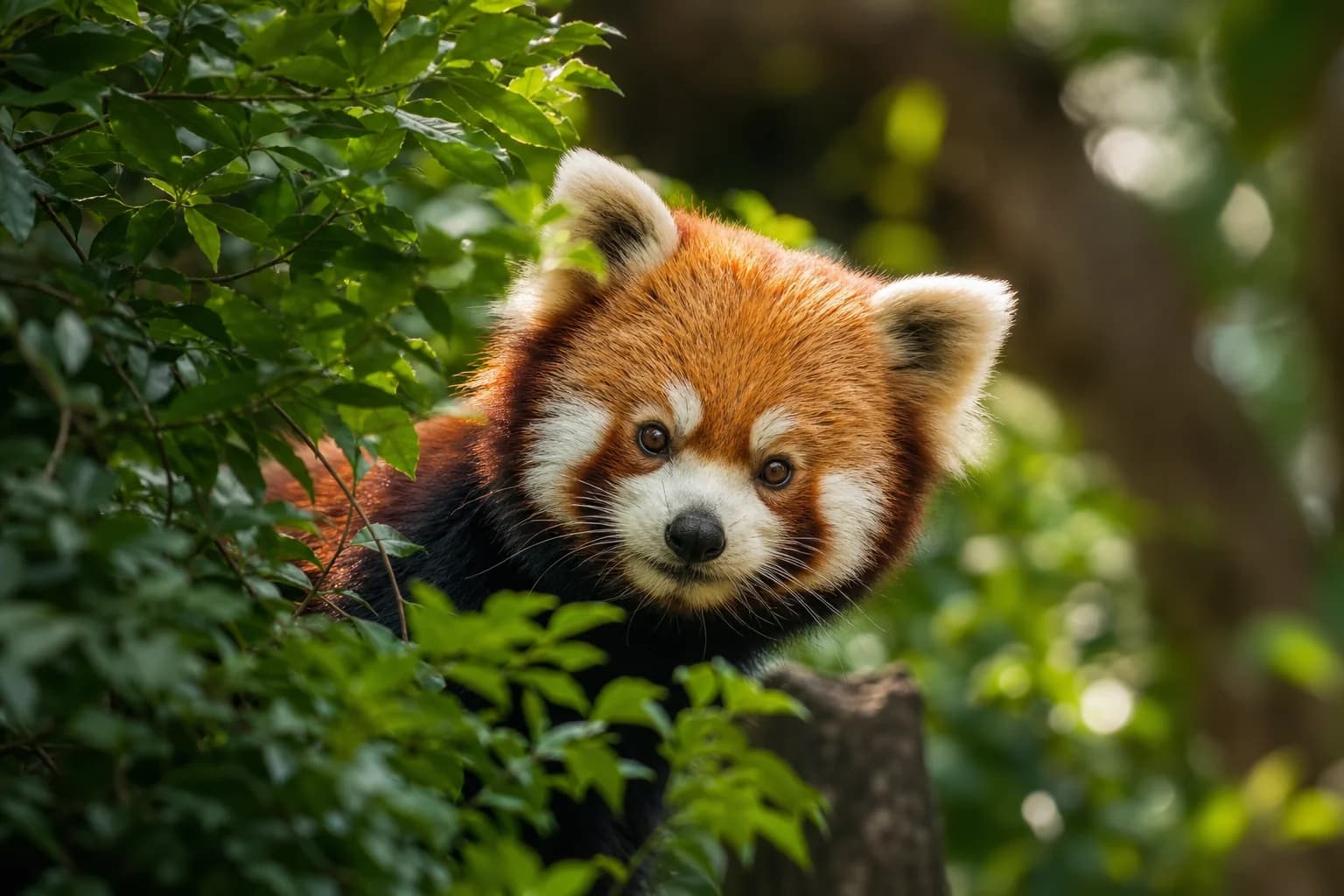
A male red panda cub was born in summer 2026 at Parc animalier de La Barben, in the Bouches-du-Rhône. The species is classed as "Endangered" on the IUCN Red List, and this youngster joins the European Endangered Species Programme (EEP), which manages the population of red pandas in European zoos.
The park isn't giving much away, and that's standard practice with red pandas
Parc animalier de La Barben is sharing the essentials: a male cub, growing up under his mother's watchful eye. No exact date, no name, no weight — and the species' biology explains the silence.
After a gestation of around 130 days, the female gives birth to one to four cubs weighing 100 to 150 grams, born blind, which she keeps in the den for several weeks. Cubs typically emerge between September and November, much like the three young red pandas at Trégomeur Zoo, expected to venture outside their den around All Saints' Day.
How many red pandas are left in the wild?
No one knows the exact number of red pandas (Ailurus fulgens) living in the wild. Red Panda Network puts the figure at somewhere between 2,500 and fewer than 10,000 individuals, a range inherited from the IUCN's 2015 assessment rather than any recent count.
It was this same assessment that moved the species from "vulnerable" to "endangered", with an estimated decline of half the population over three generations. European zoos are now home to more than 400 red pandas, representing over 5% of the world population according to the French National Museum of Natural History — a rough ratio, since the wild count itself spans such a wide range. The EEP exists to move breeding animals between parks to avoid inbreeding. Since 2020, scientists have recognised two separate species: one from the Himalayas and one from China.
The park's funding goes to Nepal's forests
Parc animalier de La Barben has been financially supporting the Red Panda Network since 2016, through the Ecofaune association, and lists 21 conservation programmes it funds. On the ground in Nepal, the NGO employs 128 forest guardians, including 44 in the Panchthar-Ilam-Taplejung corridor along the Indian border, as documented by Mongabay in July 2025. Since 2019, the network reports around 650,000 trees planted and 643 hectares of forest restored, within a bamboo habitat that is steadily shrinking.
Visiting La Barben this autumn
Spotting the young red panda this autumn will come down to luck, as the park hasn't confirmed whether he'll be out in the outdoor enclosure. Visiting conditions, however, are well known:
open 365 days a year, from 10am to 6pm in October, then 10am to 5.30pm in November and December;
entry prices of €23 for adults (aged 13-65) and €16 for children (aged 3-12), free under 3, full details from the park;
the last weekend of the autumn half-term holidays before school resumes on Monday 2 November;
Festival of Lights in the evening until 3 January 2027, from 5.30pm to 9.30pm, €16 and €14, combined ticket at €34 and €25.
Aim for first thing in the morning or late afternoon, when the air cools down. This semi-arboreal resident of the Himalayan forests dozes curled up in the branches during the hottest hours and becomes noticeably more active once temperatures drop.