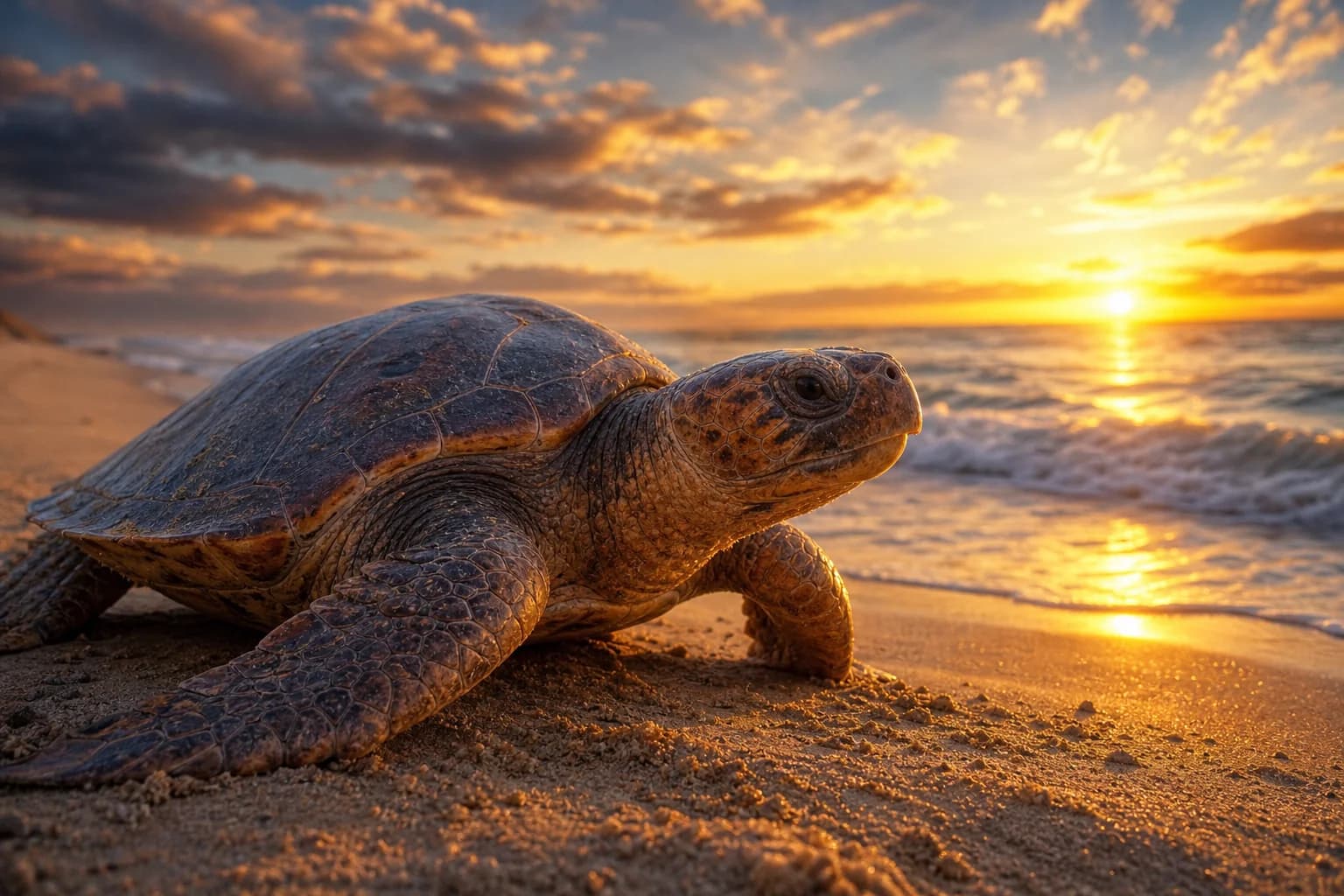
In 2004, a family out for a walk on a beach on the Irish coast made an unexpected discovery. While rummaging through seaweed and debris left behind by a storm, they found Molly, a badly injured loggerhead turtle. Her injuries, particularly to her front flippers, left vets fearing she might never regain the strength needed to survive in the ocean.
A long road to freedom
After being taken in, Molly spent 22 long years at Dingle Oceanworld aquarium, where she received constant care and tailored rehabilitation. On 28 October, she was finally released around 20 kilometres off the coast of the Algarve, Portugal. Fitted with a satellite tag, her journey can now be tracked, a device that will allow scientists to better understand her movements and her adaptation to life in the wild.
A family story
Mary Cronin, the woman who discovered Molly, has shared her emotions over the years. Together with her children, Barry and Aisling, she has followed the turtle's progress. Mary recalls: "The beach was covered in seaweed, and when we saw something moving, we found this turtle." Over the years, the family kept up with news of Molly, and Mary highlighted the positive impact the turtle's story has had on their lives.
Tailored veterinary care
Dr Kevin Flannery, the aquarium's director, explained that Molly was around 10 years old when she was rescued. Despite several attempts to fit her with prosthetic flippers, advances in veterinary medicine eventually made a return to the sea possible. During a medical examination, the team discovered that Molly was carrying eggs, which meant she had to be temporarily withdrawn from public display so she could prepare for an independent life. At first she weighed around 12 kilograms, but thanks to the care she received, her weight had reached 120 kilograms by the time she was released.
An uncertain but promising future
Loggerhead turtles, which can live between 50 and 80 years, are classed as a vulnerable species. They typically do not reach sexual maturity for several decades, between 25 and 35 years. Dr Flannery stressed the importance of reintroducing these animals to their natural habitat to ensure their survival and wellbeing. He said: "It's essential that these creatures return to the wild and are able to thrive in future."
Similar initiatives in France
In France, several organisations are also working to rehabilitate wild animals. For example, the Athénas centre, located in the Jura, takes in around 7,000 animals in distress each year. Over two decades, the number of animals cared for by the centre has increased tenfold, reflecting the growing importance of wildlife protection.
Molly's journey stands as a moving testament to the efforts made to save endangered species. Her return to the ocean represents not only a personal victory for her, but also a sign of hope for the preservation of marine biodiversity.