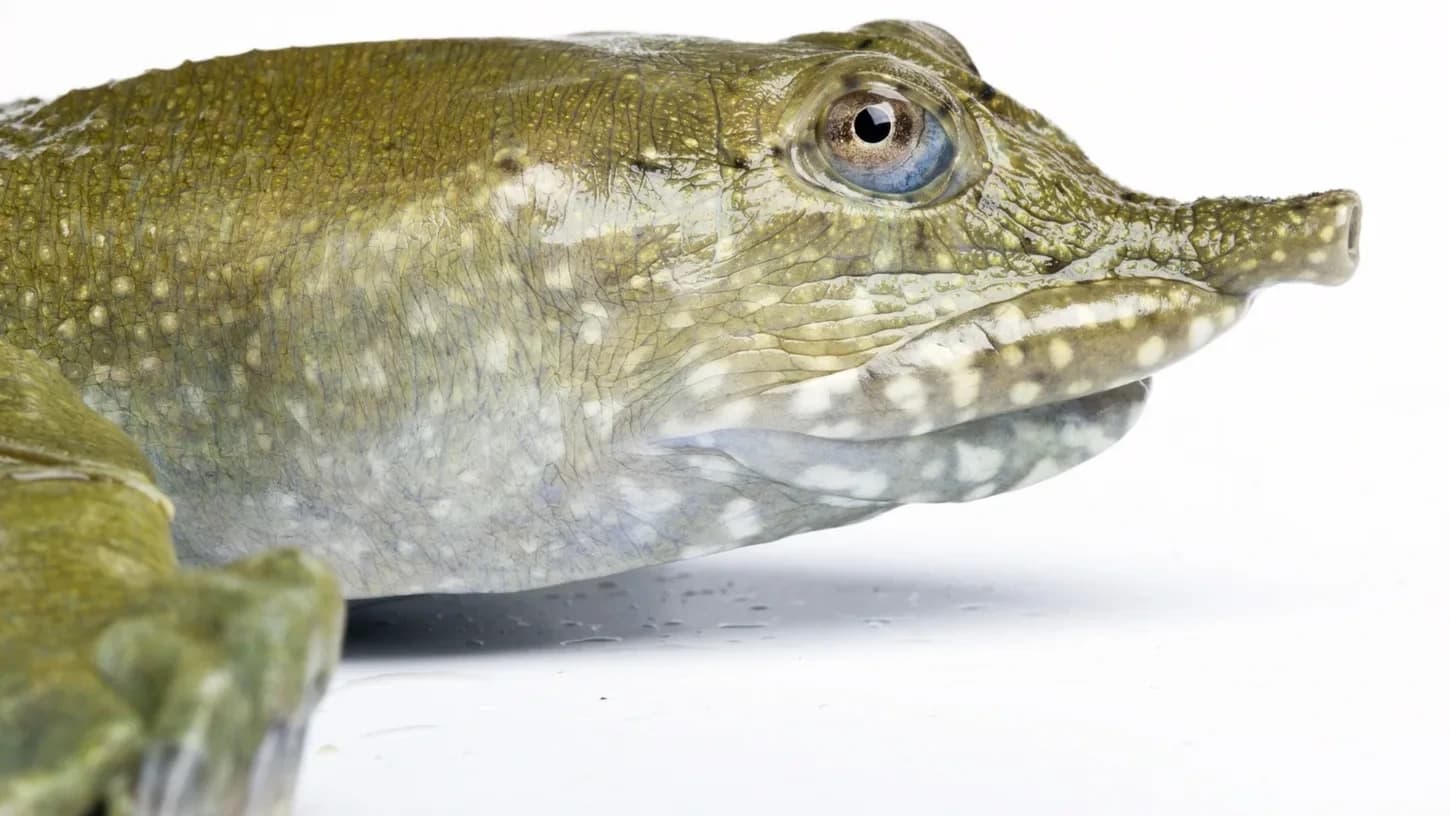
The Chinese softshell turtle, a species with a soft shell, has been identified as the first known animal to urinate through its mouth. A study carried out by researchers at the National University of Singapore and published in 2012 in the Journal of Experimental Biology shed light on this unique behaviour. While observing these turtles, scientists noticed that they would dip their heads into puddles of water, waggling their tongues, without actually drinking.
A surprising discovery
The study's lead author, Yuen K. Ip, noted that these turtles had gill-like structures inside their mouths. Researchers had previously believed these structures were used solely for breathing, but the new observations suggest they may also play a role in excreting urea.
A unique excretion mechanism
To dig deeper, the scientists acquired live turtles from the local market and kept them submerged in water for six days. They found that only 6% of the urea produced by the turtles was eliminated via their hindquarters. By contrast, when placed near a puddle of water, the turtles expelled up to 50 times more urea by using the water to rinse out their mouths. Although similar to urination, this process can't technically be called that, since the urea travels through the bloodstream to the mouth.
An adaptation to their environment
These turtles often live in brackish environments, which makes this excretion mechanism particularly advantageous. If they expelled urea in the conventional way, they would need to drink more water to stay hydrated, potentially triggering a dangerous cycle of consuming salt water. By using water to rinse their mouths instead, they avoid drinking salt water, safeguarding their health.
Implications for human medicine
Yuen K. Ip's research isn't limited to studying these turtles. He is also exploring what these findings could offer the biomedical field. Indeed, the excretion mechanisms observed in these turtles could one day inspire treatments for people with kidney failure. Currently, such patients must undergo dialysis to remove waste from their blood. The idea would be to develop a system similar to the turtles', allowing urea to be expelled simply by rinsing the mouth with water.
A glimmer of hope for the future
Although this idea remains theoretical for now, it paves the way for future research that could revolutionise treatments for kidney disease. Yuen K. Ip stresses the importance of studying animal adaptations to better understand how they might help solve human health problems. In this unexpected way, the softshell turtle could end up contributing to significant medical advances.