The Vantara reserve, which spans almost 1,500 hectares, is home to a huge collection of animals, ranging from elephants to tigers and orangutans. The park, the largest of its kind in India, is often described as a modern-day Noah's Ark, but it also sits at the centre of numerous controversies. Animal welfare NGOs have criticised its sheer scale and questioned the origins of its animals, prompting its directors to promise significant reforms.
A response to the criticism
To address the accusations, Vantara's management has decided to adopt a more open and transparent approach. They have announced an end to animal imports and have pledged to engage in dialogue with wildlife protection organisations. CITES (the Convention on International Trade in Endangered Species of Wild Fauna and Flora) recently acknowledged these efforts, while calling on India to step up its investigations into the illegal animal trade.
A revealing visit
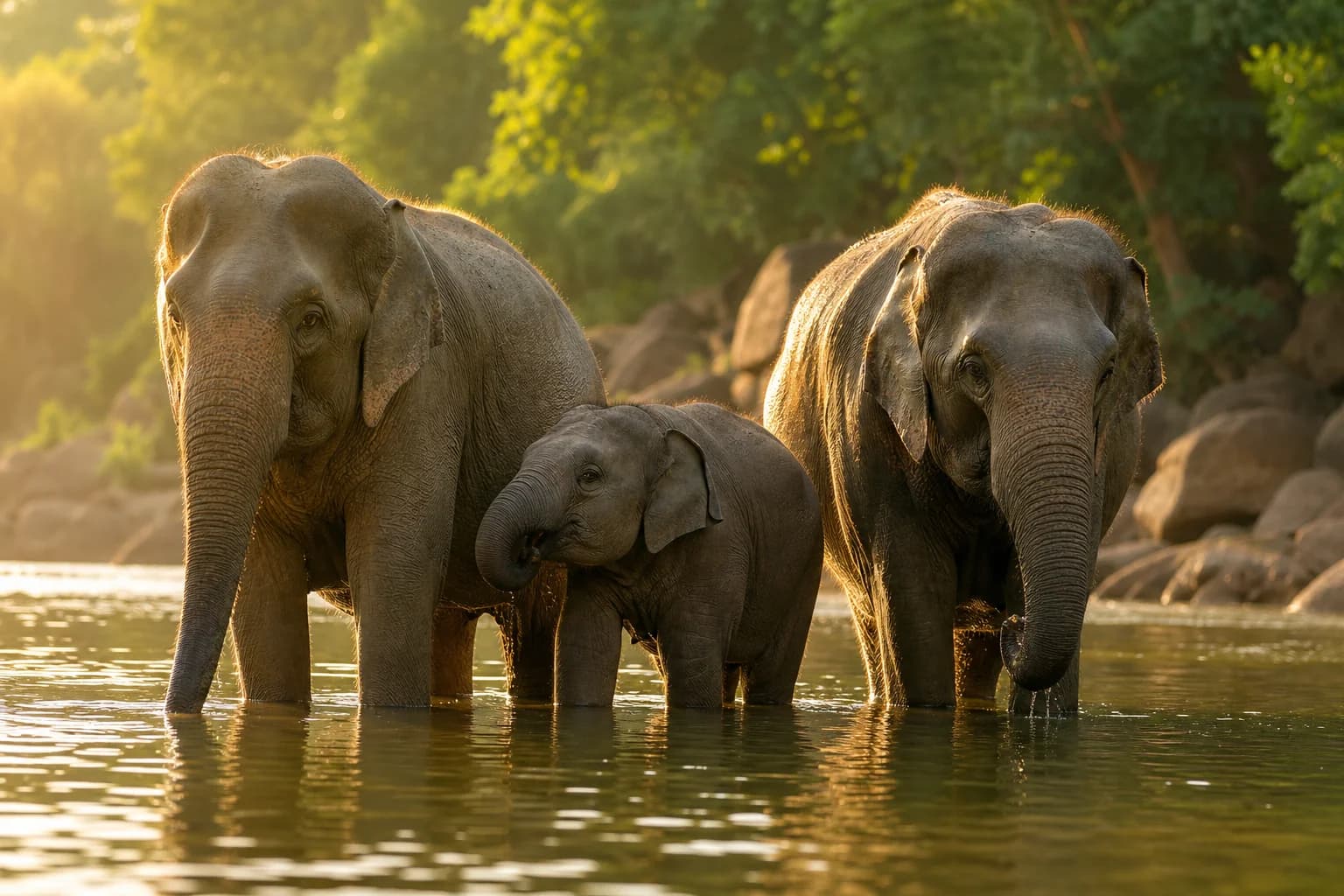
During a visit organised by the park, AFP was able to explore part of the 150,000 animals that Vantara claims to house, representing more than 2,000 species. Although these figures are disputed, the diversity of animals is impressive, with more than 200 elephants, lions and cheetahs, along with a multitude of birds and reptiles. The elephants roam freely through teak forests and bathe in lakes, while hippos swim in vast pools.
A controversial project
Vantara was founded by Anant Ambani, son of billionaire Mukesh Ambani. He sees the park as a sanctuary for animals, saying that every creature deserves dignity and respect. However, experts such as the Species Survival Network describe it as a mega-zoo, pointing out that the commercial aims of a traditional zoo do not match Vantara's stated mission.
The park was built at a time when many other sanctuaries around the world were facing serious financial difficulties because of the Covid-19 pandemic. Vantara took advantage of the situation to take in animals from various countries, including Mexico, Gulf nations, Thailand and South Africa.
Allegations of trafficking
Vantara's rise to prominence drew international attention, not least during Anant Ambani's lavish wedding, attended by celebrities such as Mark Zuckerberg and Rihanna. However, this exposure also raised suspicions about the origins of some of its animals. In 2025, CITES raised concerns about the provenance of animals presented as captive-bred, suggesting they may have been obtained illegally. Specific cases, including tortoises and parrots, were cited as a cause for concern.
A firm defence
Despite the criticism, Vantara's CEO, Vivaan Karani, firmly defends the park's practices, insisting that no laws have been broken. He points out that an inquiry by India's Supreme Court confirmed their legal compliance. However, some experts remain sceptical, particularly regarding a Tapanuli orangutan whose origin raises questions.
A new commitment to conservation
Faced with these challenges, Vantara has announced a new chapter in its work, focusing on reintroducing endangered species. Working with experts, the park has begun breeding African cheetahs for reintroduction into Asia, where they had been extinct since 1952. The first cheetahs were released in India in 2022, and further reintroduction projects involving antelope and freshwater dolphins are also being considered.
Partnerships and the future
Vantara hopes to establish a wildlife university in India and has formed partnerships with international organisations to modernise zoos in countries such as Indonesia and Laos. However, for these projects to take shape, the park must convince NGOs of its sincerity and its commitment to animal protection.
An uncertain future
Doubts remain over the origins of some animals, and NGOs remain watchful. Daniela Freyer of Pro Wildlife points out that Vantara imported a large number of animals in a short space of time, and stresses the need for consequences if any rules have been broken. Vivaan Karani has invited sceptics to visit the park to see the changes under way for themselves, insisting that their mission is aligned with animal protection.