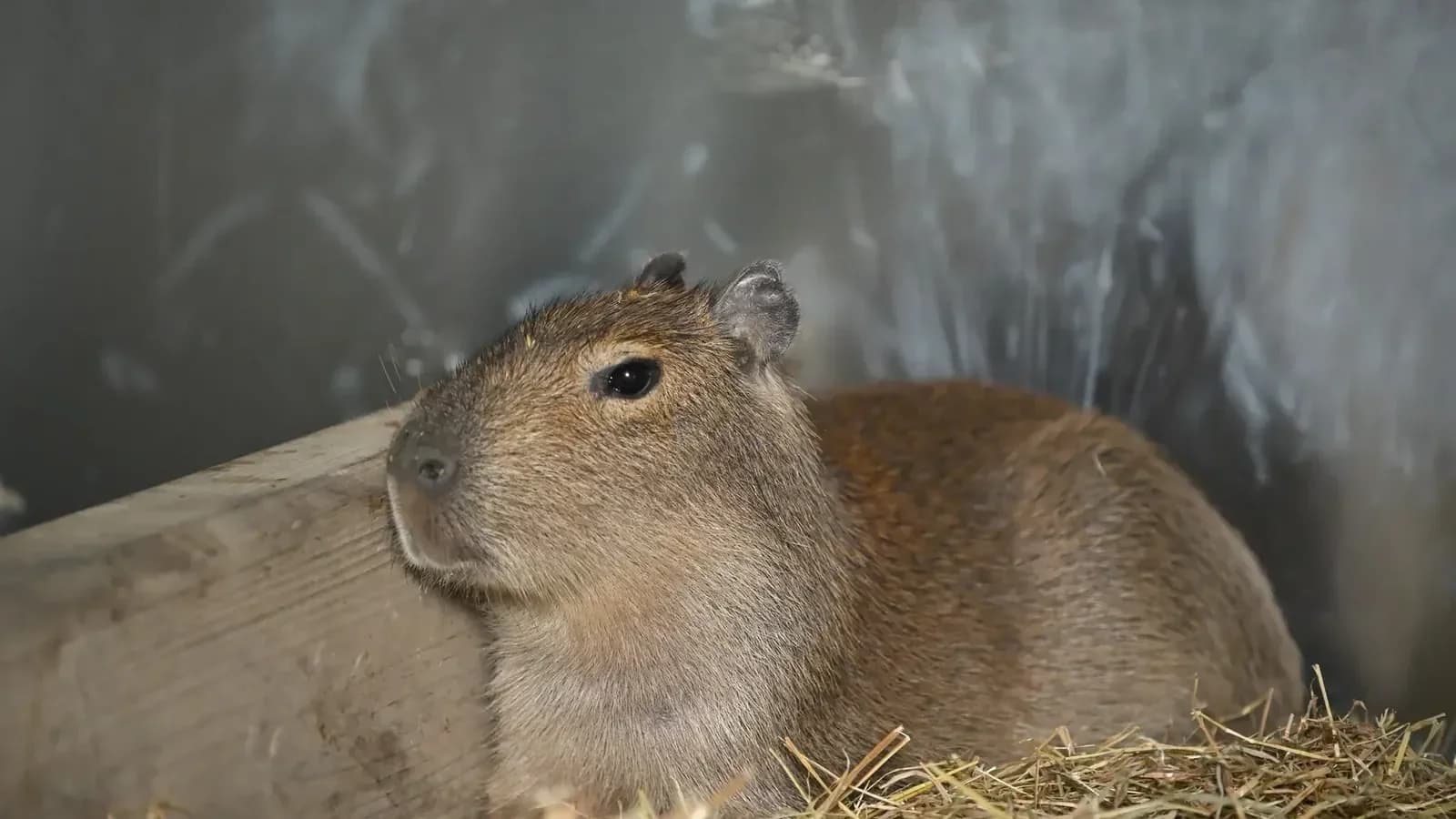
Last week, a new resident moved into the enclosures at Asson Zoo: a female capybara just five months old. This rodent, the largest in the world, can grow up to 1.35 metres long and weigh close to 65 kilos as an adult. In two weeks' time, a male capybara from the Czech Republic will join her as part of a breeding programme.
Growing enthusiasm for the capybara
Young visitors such as Lisa and Inès, aged 8 and 10 respectively, are already crowding round the enclosure to catch a glimpse of the animal everyone's talking about on social media. "Capybaras are really trendy, you see loads of them online," says Inès. Lisa adds that she wanted to see one after hearing her friends talk about it. Thomas Ferrère, the zoo's project officer, confirms that the animal's popularity is growing fast and is drawing in plenty of curious visitors.
For the zoo, the capybara's arrival is a double opportunity: attracting a new audience while educating visitors about the species' particular needs. Thomas Ferrère points out that having a capybara at the park helps raise public awareness of the animal's requirements. Zoo director Luc Lorca is also delighted by the impact the animal could have in bringing back former visitors who haven't been in a long while.
A wild animal that takes taming
Although capybaras are often shown in a friendly light on social media, it's important to remember that they remain wild animals. Thomas Ferrère warns against common misconceptions, explaining that the capybara is semi-aquatic and spends a great deal of time in water. Its behaviour in captivity differs from what's observed in its natural habitat, which calls for specially tailored care.
To that end, the zoo has set up a dedicated environment to welcome the female capybara, with the help of an animal behaviourist who has advised keepers on the best way to help her settle in. Despite its placid appearance, the capybara must be handled with care, particularly females and young ones, which are more vulnerable to predators in the wild, such as caimans and anacondas.
An ambassador for biodiversity
Although the capybara is not an endangered species, its natural habitat is under threat from deforestation in the Amazon. Thomas Ferrère, who has worked with the species at another park before, highlights the importance of this rodent as an ambassador for South American wildlife. Public education is therefore key to raising awareness of the need to protect its habitat.
The capybara is often held up as the "coolest" animal on the internet, but it's crucial to understand the realities of its life in the wild. Videos showing capybaras interacting with other animals, such as caimans, can give a false sense of safety. In reality, these animals are always exposed to danger, especially when young.
A fresh boost for Asson Zoo
Asson Zoo has seen a significant rise in visitor numbers, particularly after a difficult summer marked by extreme weather. The capybara's arrival is part of a wider strategy to boost the park's appeal. Luc Lorca says this kind of initiative is essential to keeping the zoo lively and constantly evolving.
In the coming days, the zoo hopes the arrival of the male capybara will help start a small family, adding even more charm to the site. This momentum could also encourage visitors to come back regularly to discover the park's new arrivals and activities.
Conclusion
In short, the capybara, with its undeniable charm, is much more than just a social media phenomenon. It offers a valuable opportunity to raise visitors' awareness of biodiversity protection and the preservation of its natural habitat. By welcoming this fascinating animal, Asson Zoo is committed to offering visitors an enriching experience while playing an essential role in conserving this iconic species.