
The effects of human activity on wildlife are becoming an increasing concern.
A recent study has highlighted the impact of noise pollution on the Himalayan monal (Lophophorus impejanus), a bird found in the alpine meadows of the Himalayas.
Researchers observed that the bird changes its calls to adapt to a noisy environment, particularly in areas with frequent traffic and pilgrim footfall.
Revealing studies on the Himalayan monal
Two studies carried out by Indian scientists have recently been published, highlighting how the species is adapting to a disturbed habitat. The first study shows that the Himalayan monal is being forced to move to higher altitudes, as its natural meadows are increasingly encroached upon by human activity. The second study focuses on the changes to its song, which prove necessary for the bird to be heard over the ambient noise.
Analysing calls in two valleys
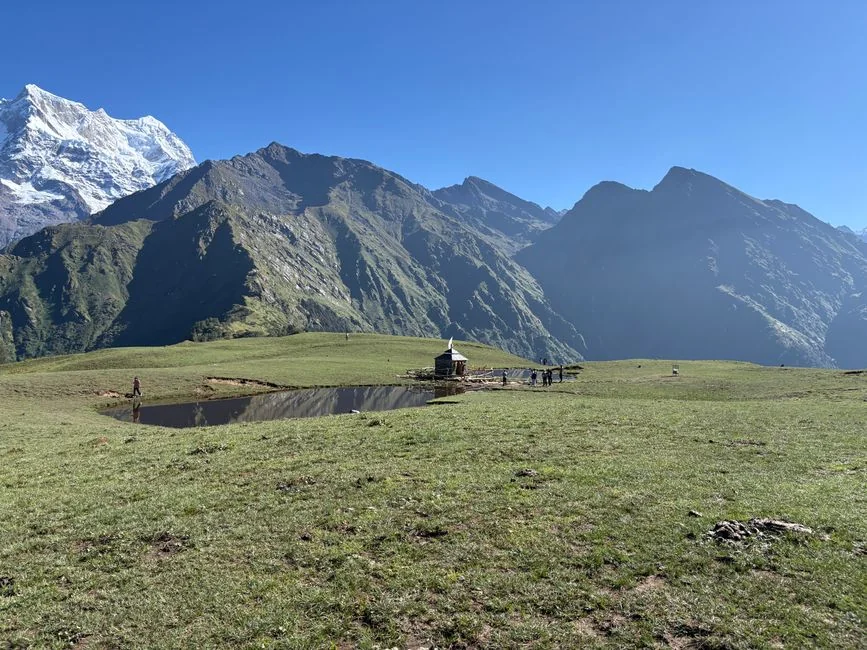
For this study, researchers recorded hundreds of monal calls in two valleys of the Indian Himalayas: the relatively unspoilt Madmaheshwar valley and the much busier Chopta valley. The results reveal a marked difference in vocalisations. In the Chopta valley, where noise disturbance is far more prevalent, the birds sing at higher frequencies and with greater amplitude. In the Madmaheshwar valley, by contrast, the song is deeper and less intense. This variation is directly linked to the sound pressure generated by human activity, according to Anand Kumar, co-author of the study and researcher at the Central University of Uttarakhand.
Effects on breeding and social behaviour
These changes in vocalisations could have a significant impact on the Himalayan monal's social life. Vocal communication is essential for pair formation and breeding, so changes to the bird's song could affect its social interactions and its ability to reproduce effectively. Rajeev Lochan, also involved in the research, points out that these adaptations are not necessarily permanent evolutionary changes, but rather flexible responses to shifts in their acoustic environment.
The urgent need for conservation and behavioural understanding
With human pressure on Himalayan ecosystems on the rise, the study's authors stress the importance of better understanding the Himalayan monal's vocal communication. This could help inform the conservation policies needed to protect the species and its habitat. The findings, published in the Proceedings of the Zoological Society, highlight the need for greater awareness of the impact of noise pollution on wildlife.