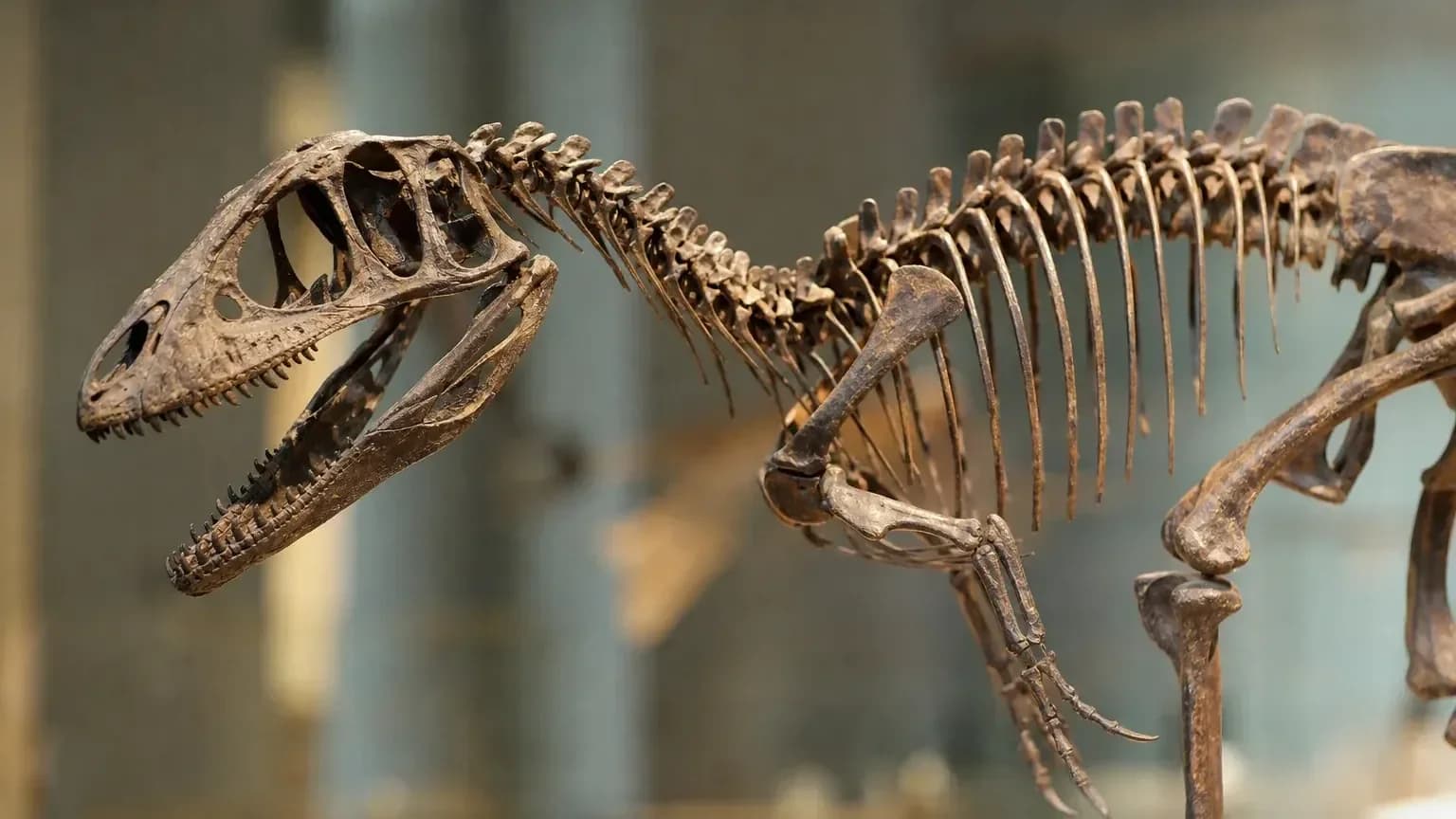
Traces of biomolecules are extremely rare in fossils: at best, researchers can hope for a few traces of pigment, or occasionally a strand of DNA. But a team of scientists has just achieved a first: finding fossilised red blood cells and intact haemoglobin molecules in the bones of a dinosaur.
- The return of elk to Kentucky: a successful reintroduction
- Fiona, star hippo at Cincinnati Zoo, rushed into emergency care after swallowing a visitor's beanie
- Common cranes: thousands of birds are crossing French skies right now – here's where to watch them for free
A treasure from Aratasaurus museunacionali
It is Aratasaurus museunacionali that yields this treasure from the past. An international team of researchers, led by Curtin University in Western Australia, analysed the bones of this 115-million-year-old theropod, discovered in north-western Brazil. They identified mineralised red blood cells as well as intact heme B molecules. Heme is an iron-containing molecule, an essential component of haemoglobin, the protein that carries oxygen in the blood.
"Detecting intact heme-derived molecules in 115-million-year-old red blood cells is astonishing: it is truly a major discovery,"
Why it matters
These findings challenge the long-held assumption that certain biomolecules, such as haemoglobin, cannot survive over geological timescales. They offer an intimate glimpse into the biology of this three-metre-long bipedal animal, opening the way to studying the evolution of blood, metabolism, and even activity levels in extinct animals.
Jurassic Park isn't happening any time soon
The discovery will stir memories for the Jurassic Park generation, who dreamed of seeing dinosaurs brought back to life through cloning. But, as the researchers point out, this does not make such a scenario any more plausible: above all, it opens up exciting new avenues for molecular palaeontology.