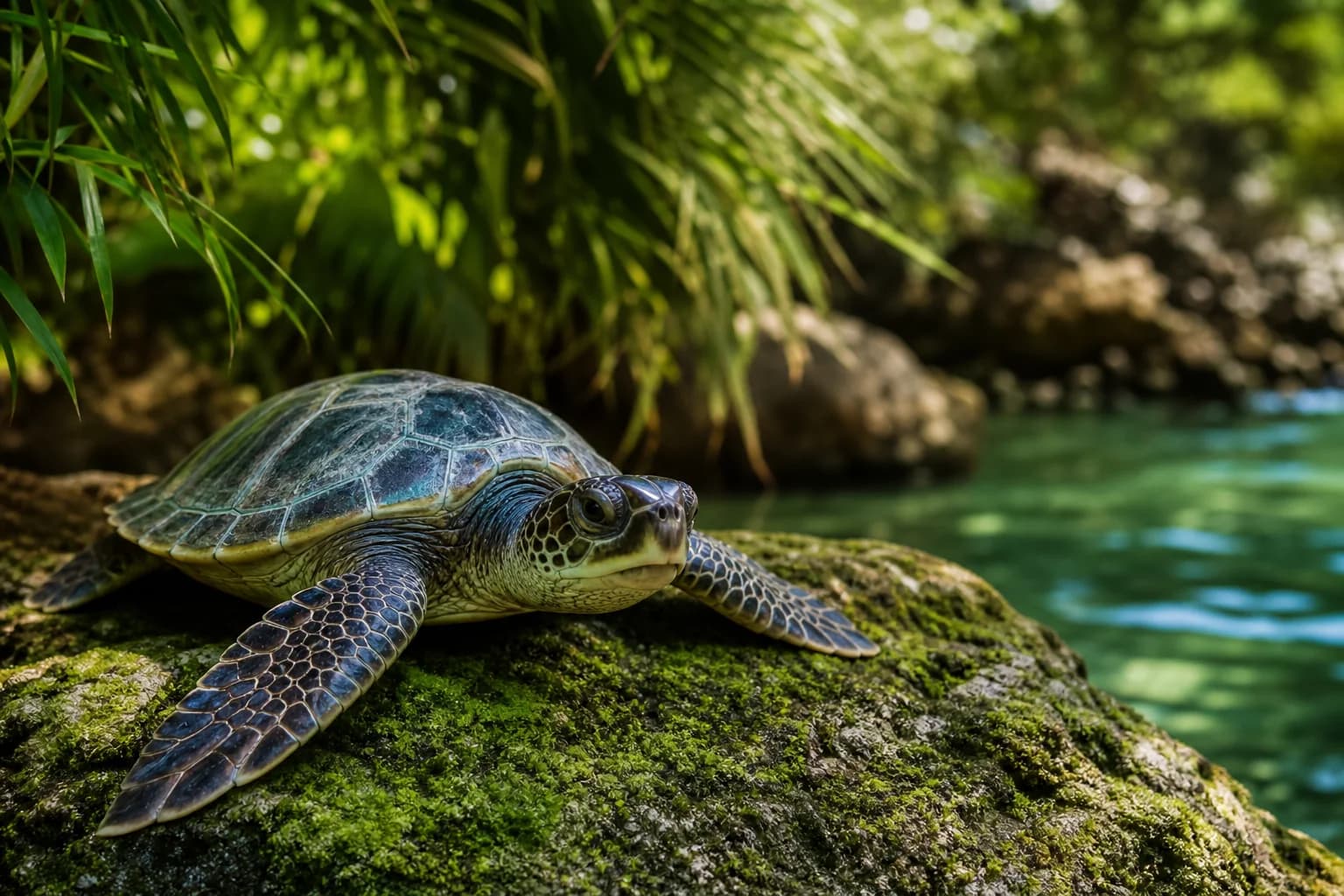
Researchers from the Centre de recherche en paléontologie de Paris (CR2P) have recently announced the discovery of a new species of sea turtle on the Canjuers plateau, a site that was once home to rich marine biodiversity.
This discovery was made through excavations that uncovered several fossils dating from the Jurassic, around 150 million years ago. The study was published on 18 September 2026 in the Zoological Journal of the Linnean Society.
A species named in tribute to local history
The fossils found belong to the thalassochelydians, a group of turtles that were among the first to adapt to a marine way of life. Among the specimens discovered, two belong to a new species, named Caesaria templaria.
The choice of name is no coincidence: 'Caesaria' refers to Julius Caesar, who gave his name to the region in antiquity, while 'templaria' evokes the Knights Templar, who had established a fortress nearby, in the village of Comps-sur-Artuby, during the Middle Ages.
Other discoveries at the site
In addition to this new species, researchers also uncovered other sea turtle fossils, including a specimen of Solnhofia parsonsi and a juvenile turtle.
However, the state of preservation of the juvenile turtle does not allow its species to be precisely identified, although the fossils are generally well preserved.
This discovery underlines the continued importance of research on the Canjuers plateau, which is today the largest military camp in Europe, yet still holds significant palaeontological potential.