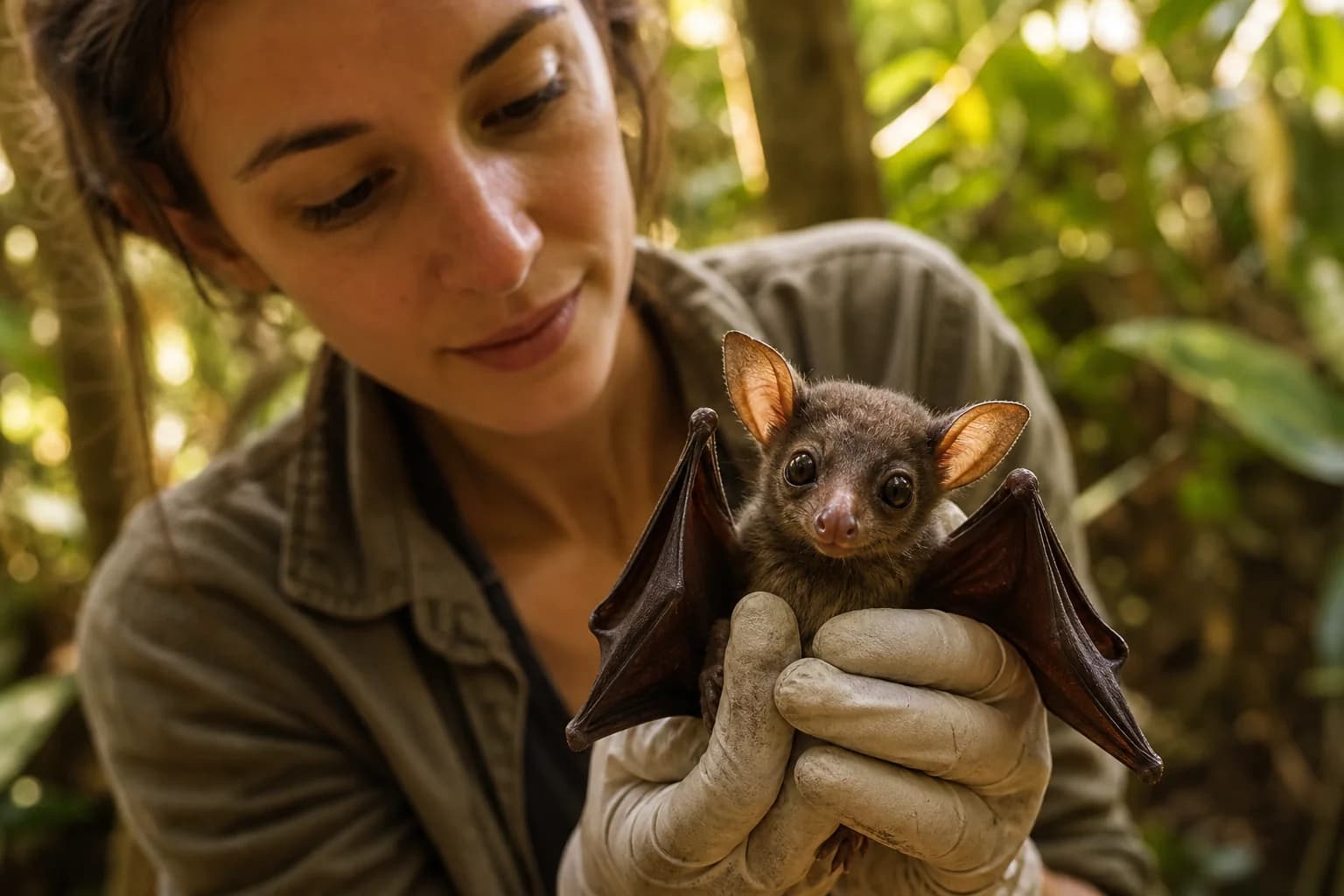
The New Caledonian long-eared bat (Nyctophilus nebulosus) is a bat species endemic to New Caledonia, known for its large ears and discreet behaviour. This insect-eating mammal stands out for its ability to hunt close to vegetation while remaining relatively silent, earning it the nickname "whispering bat". In October, a team of researchers had the good fortune to capture one for the first time at the Rivière Bleue provincial park.
A significant discovery
This sighting is particularly important, as the New Caledonian long-eared bat is classified as critically endangered by the International Union for Conservation of Nature (IUCN). Among the five insect-eating bat species found in the territory, it is considered the most threatened. It is so rare that encounters with this animal can be counted on the fingers of one hand since it was first described.
The long-eared bat was first identified in 2002, thanks to captures carried out in the Koghis and Ni mountain regions, north of the Dzumac range. Since then, it has very rarely been observed. The last capture before this year's took place in 2021, in the Haute-Dumbéa reserve.
Complex research
To achieve this discovery, three volunteer bat specialists spent two years searching for the species, using recorders to pick up the bats' characteristic ultrasonic calls and nets to catch them. The work was particularly difficult because of the long-eared bat's specific behaviour. Unlike other species that hunt in flight, this type of bat uses a more discreet hunting method, landing near bark, plants or the ground to seize its prey.
The animal's large ears allow it to listen more closely to its surroundings and locate insects without being noticed. However, its ultrasonic calls are very faint, which makes life difficult for naturalists trying to detect them.
A hopeful sign for research
Locating the New Caledonian long-eared bat in the lower valleys of the Rivière Bleue park marks an encouraging step forward for researchers. It is the first accessible site where the species has been found, which could make future studies into its habitat and behaviour easier.
Many questions remain, however. How many long-eared bats are left in New Caledonia? What is their geographical distribution? What are their daytime habits, and what threats do they face? These questions remain unanswered, but the volunteer naturalists, working alongside park staff, intend to continue their investigations.
A call for conservation
The discovery of this rare bat highlights the importance of preserving natural habitats in New Caledonia. The region's biodiversity is unique, yet also vulnerable to environmental threats. Protecting endemic species such as the New Caledonian long-eared bat is crucial to maintaining the balance of the local ecosystem.
Research and conservation efforts are essential to better understand this species and the challenges it faces. The scientific community hopes that new discoveries will help raise public awareness of the need to protect these rare species and their habitat, to secure their survival for future generations.