Ants do sleep, but never all at the same time. In fire ants (Solenopsis invicta), each worker gets through around 250 one-minute micro-naps a day, while the queen treats herself to longer stretches of around 6 minutes. The result: the colony stays active round the clock.
A colony never truly sleeps
In a colony, someone is always awake. The landmark study on ant sleep, carried out on fire ants by Deby Cassill and her team in 2009, measured it precisely: at any given moment, 80% of workers are busy cleaning, feeding or digging the nest (Journal of Insect Behavior). Rest periods are so short and so scattered that the nest never switches off.
Worker ants: queens of the micro-nap
A worker ant never has a long night's sleep. She dozes off in brief bursts: around 253 naps of 1.1 minutes each over the course of a day, adding up to barely 4.8 hours of rest in total (2009 study). Since each ant sleeps on its own schedule, there's always someone covering the shift. When a worker truly drops off, her antennae fold back and she stops responding to contact from her sisters — a sign of genuine sleep, not just a pause.
The queen, the colony's heavy sleeper
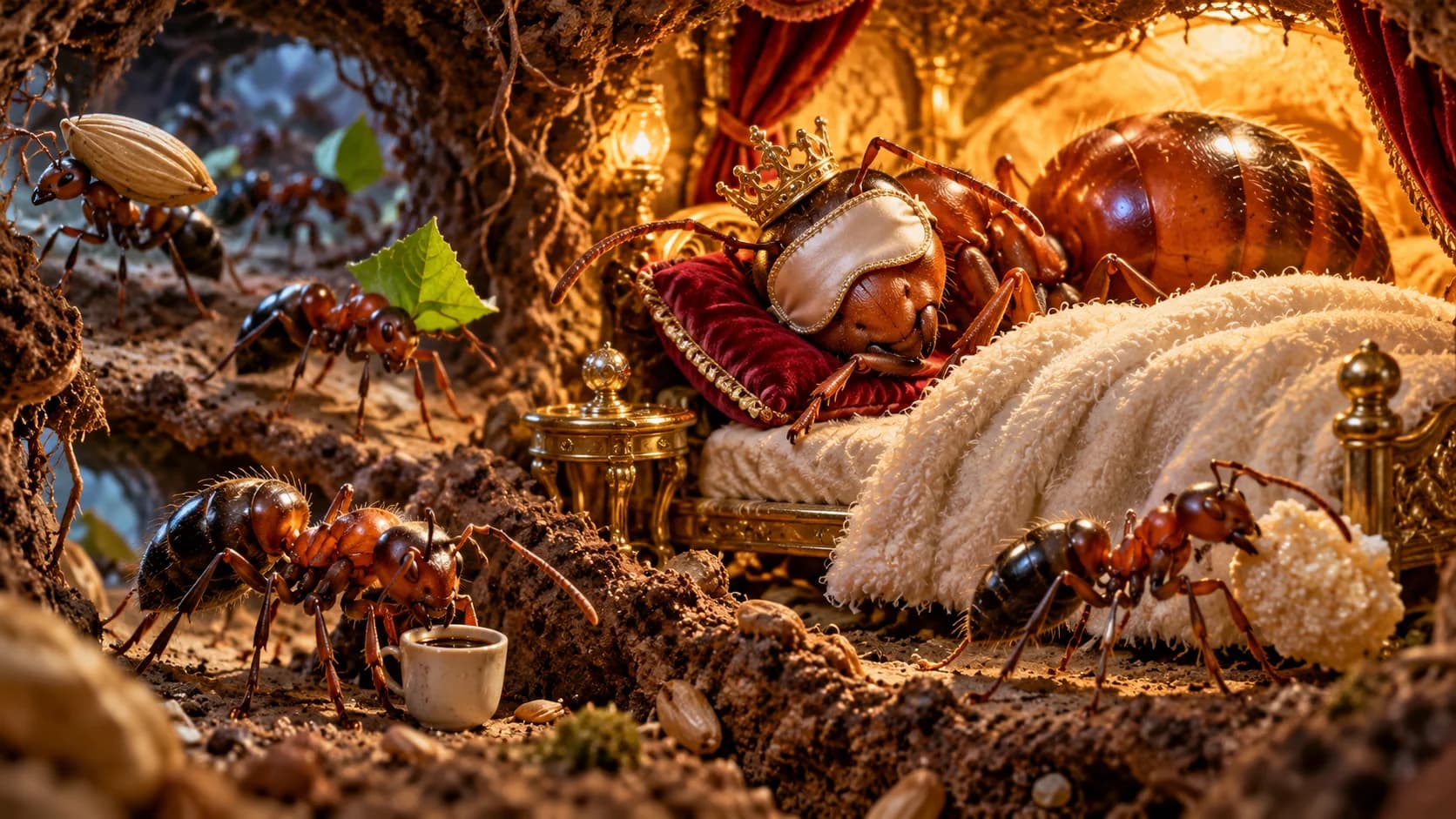
The queen runs on a different rhythm. She sleeps around 92 times a day, but in 6-minute stretches, longer and deeper than those of the workers, adding up to close to 9.4 hours of rest a day (same study). Queens huddle together, and this contact synchronises their sleep cycles. Researchers see this as a colony where sterile, expendable workers stay alert and wear themselves out within weeks, while the queen, protected, recovers and keeps laying eggs for years.
What this sleep tells us about insects
For a long time, it was thought insects didn't sleep at all. We now know they do. The honeybee lets its antennae droop and responds less to its surroundings while resting, a state first described back in the 1980s by researcher Walter Kaiser. And this rest genuinely matters: deprived of sleep, bees perform a less precise dance to tell their fellow bees where to find food (University of Texas, 2010). Even with a tiny brain, sleep still serves a purpose.
Watching ants as a family
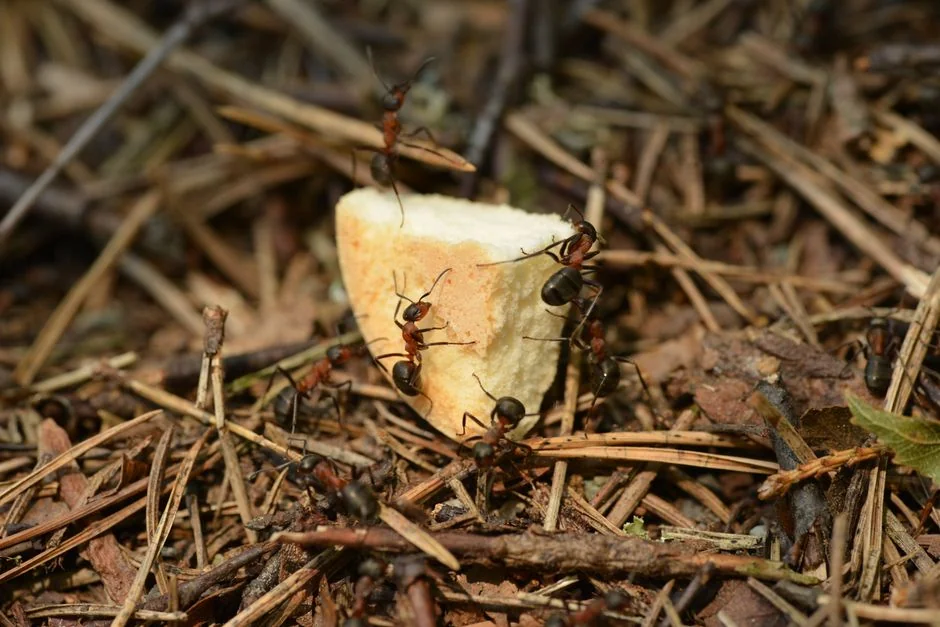
You don't need a microscope to step into this world. An anthill by the side of a path, watched for ten minutes, is enough to spot the carriers, the cleaners, and that leaderless coming and going. To go further, the insectariums and vivariums at some animal parks display living colonies behind glass, and our nature outing ideas offer plenty of ways to observe small wildlife outdoors. Fancy a dedicated walk? Take a look at our family outing ideas. Next time you spot a line of ants, remember: some of them may have only just woken up.
Your questions, answered
Do ants really sleep?
Yes, but in their own way. They don't have one long night's sleep: instead, they build up short rest periods spread across the 24 hours. In fire ants (Solenopsis invicta), the study by Deby Cassill and her team (Journal of Insect Behavior, 2009) measured around 253 one-minute micro-naps a day in workers, adding up to barely 4.8 hours of rest in total. Since each ant sleeps on its own schedule, the colony itself never fully stops.
Why does the queen sleep more than the workers?
The queen sleeps around 92 times a day, in 6-minute stretches, for a total of close to 9.4 hours: almost double that of the workers. Her sleep is also deeper. Queens huddle together, which synchronises their sleep cycles. Researchers see this as a colony where sterile workers stay alert and wear themselves out quickly, while the queen, protected, recovers and keeps laying eggs for years.
How can you tell an ant is asleep?
In deep rest, an ant folds its antennae against its body and stops responding when another ant touches it. This posture contrasts sharply with its waking stance. Researchers have also noted rapid antennae movements during the deepest sleep, which they cautiously compare to the REM sleep observed in humans. A folded, motionless antenna remains the surest sign of a truly sleeping ant.