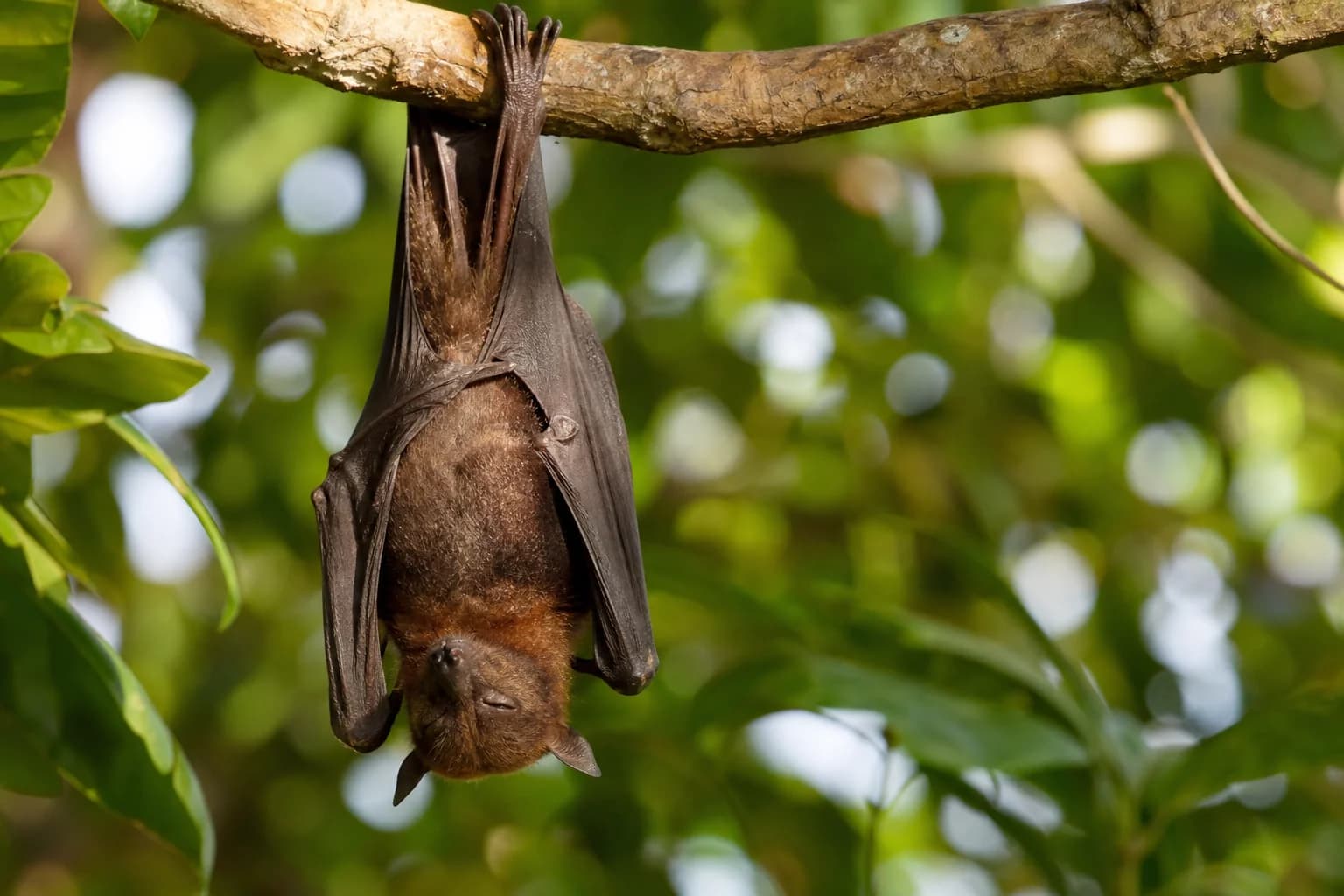
Bats sleep upside down because the tendons in their claws lock shut under their own body weight, with no muscular effort at all. They're also among the heaviest sleepers in the animal kingdom, with old measurements putting it at around 20 hours a day — a figure now revised downwards depending on the species.
Hanging for hours without ever falling
It's an image that intrigues everyone: a small body clinging to the ceiling of a cave or attic, perfectly still, head down. You'd imagine a muscle clenched tight to hold on.
It's actually the opposite. The bat isn't fighting gravity, it's using it. Its rest looks like a passive suspension, rather like a coat on a hook. So what's the mechanism that keeps it hanging there all day?
How it hangs on without the slightest effort
Staying suspended costs a bat almost nothing. Its claws work the opposite way to ours: the tendons that close them are pulled taut by the body's own weight, not by a muscle. When the animal lets itself hang, that weight locks the tendon inside its sheath and the claws close by themselves, with no muscular effort required. Sleeping while hanging for hours therefore demands nothing of it. It's actually letting go that takes some effort.
Why head down, and not some other way
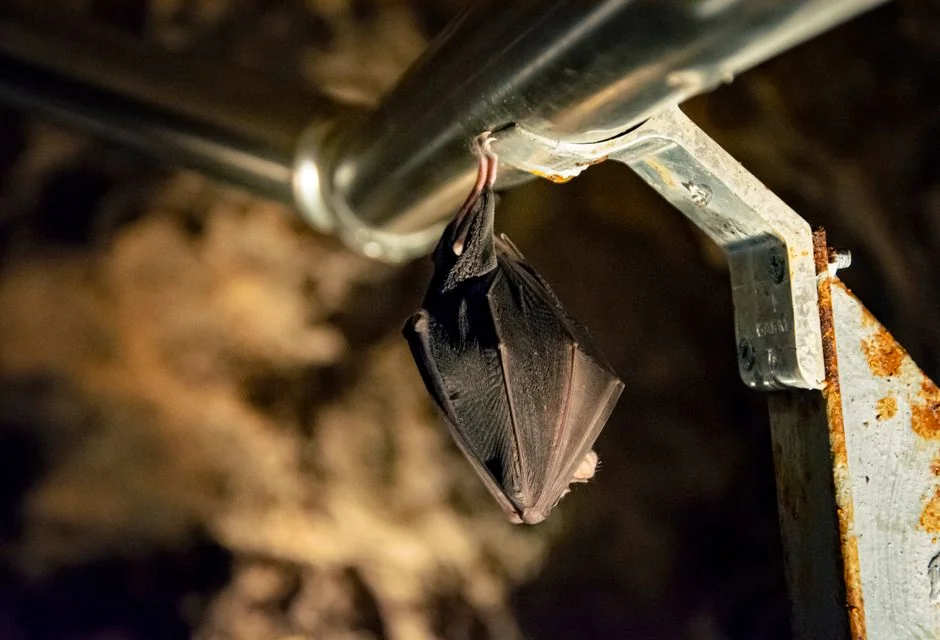
Sleeping head down is, first and foremost, a solution for take-off. Over the course of evolution, bats' legs have become weak and atrophied: too feeble for running or jumping, which rules out launching into flight from the ground the way a bird does.
Perched up high, all the creature has to do is open its claws and let itself drop: the fall kick-starts the flight, and the wings do the rest. Sleeping up there also keeps them away from predators, which mostly live at ground level.
Heavy sleeper: where the 20-hour myth comes from
The figure of 20 hours' sleep a day comes from an old measurement, taken on a single species. In 1972, a little brown bat recorded at 33°C slept for almost 20 hours a day.
A 2022 reanalysis has since qualified that record: depending on the species and the temperature, sleep actually ranges from 61% to 83% of the day, and the same creature slept for only 11 hours at 26°C, according to this study. Bats remain heavy sleepers, but the record should be taken with a pinch of salt.
Sleep or hibernation: don't get them mixed up
Sleeping and hibernating are not the same thing. In winter, with no insects to eat, bats go into hibernation: their metabolism collapses, far beyond anything a simple sleep could achieve. Their heart rate drops from 300–600 beats per minute to just 10 or 20, a fall of more than 95%, and their breathing can space out to several minutes apart, sometimes for up to six months. Waking one up forces it to burn through its fat reserves and can cost it its life. If you come across a sleeping bat in a cellar, whatever you do, don't disturb it.
Where to spot bats this autumn
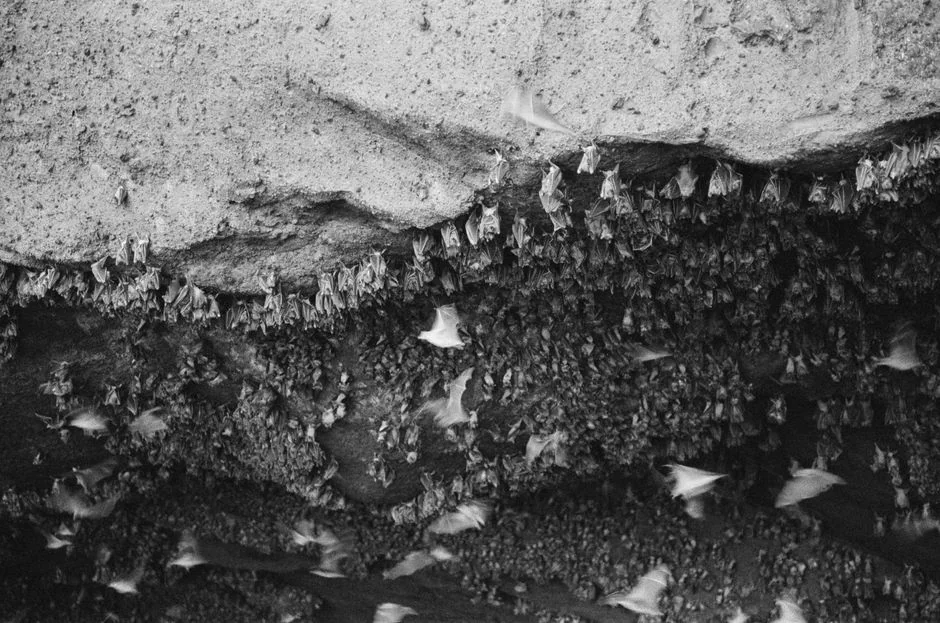
Autumn remains a good season to get close to them: they're still hunting at dusk before heading to their winter roosts. Caves and underground sites are among their favourite hibernation shelters, along with cellars and old quarries. To see them in flight, head out for a nature walk at sunset, or keep an eye out for International Bat Night, held every year in late August by the SFEPM. Running low on ideas for family days out? The evening sky often has a few in store.