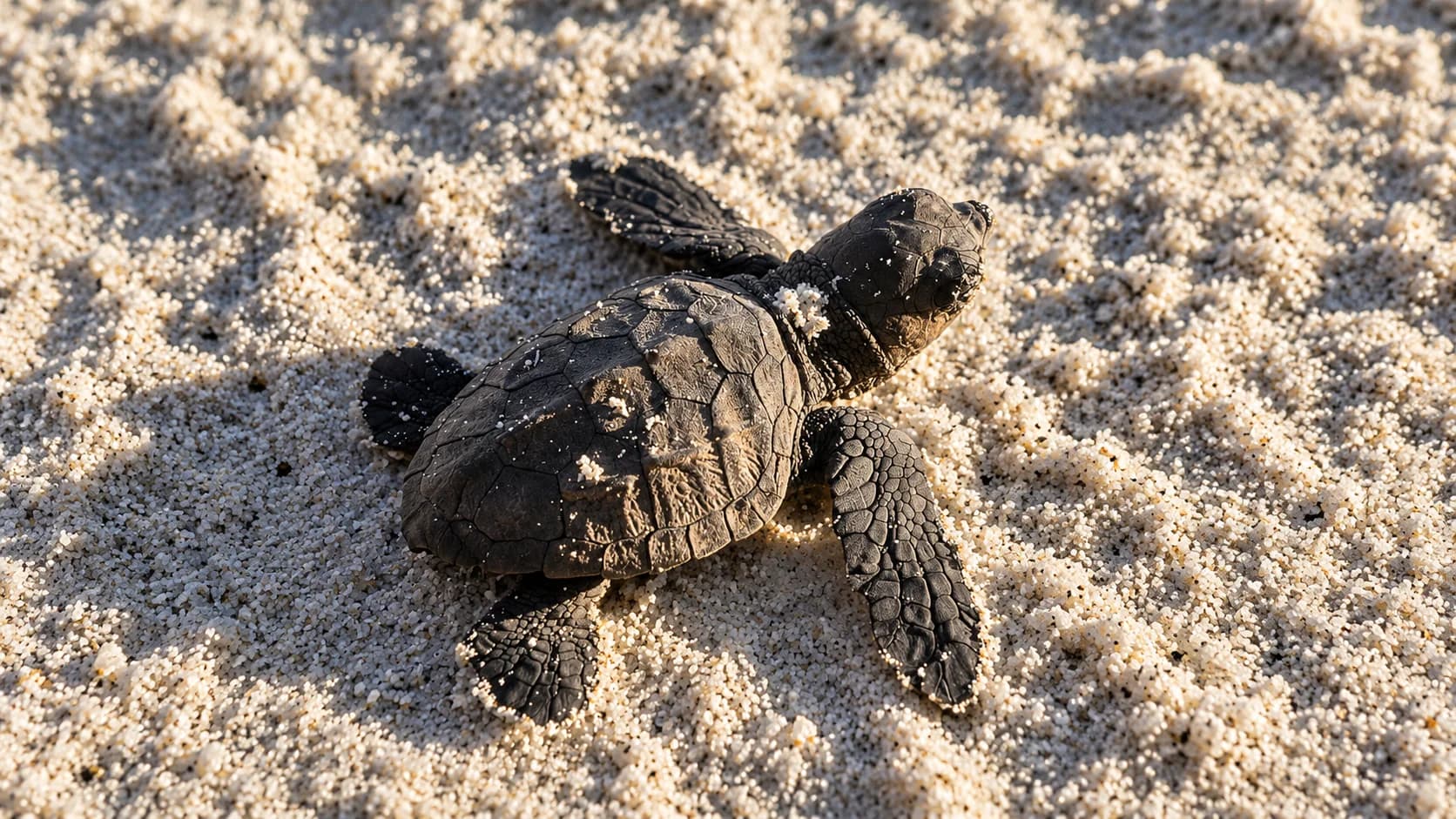
Baby loggerhead turtles have hatched on Grand Jardin beach in Bormes-les-Mimosas, in the Var. Spotted on 15 October 2026, they came from a nest of 51 eggs, the very first ever identified in the commune. Monitored by the Émergence association, the site allowed several hatchlings to make their way to the sea.
Baby turtles spotted in the early morning
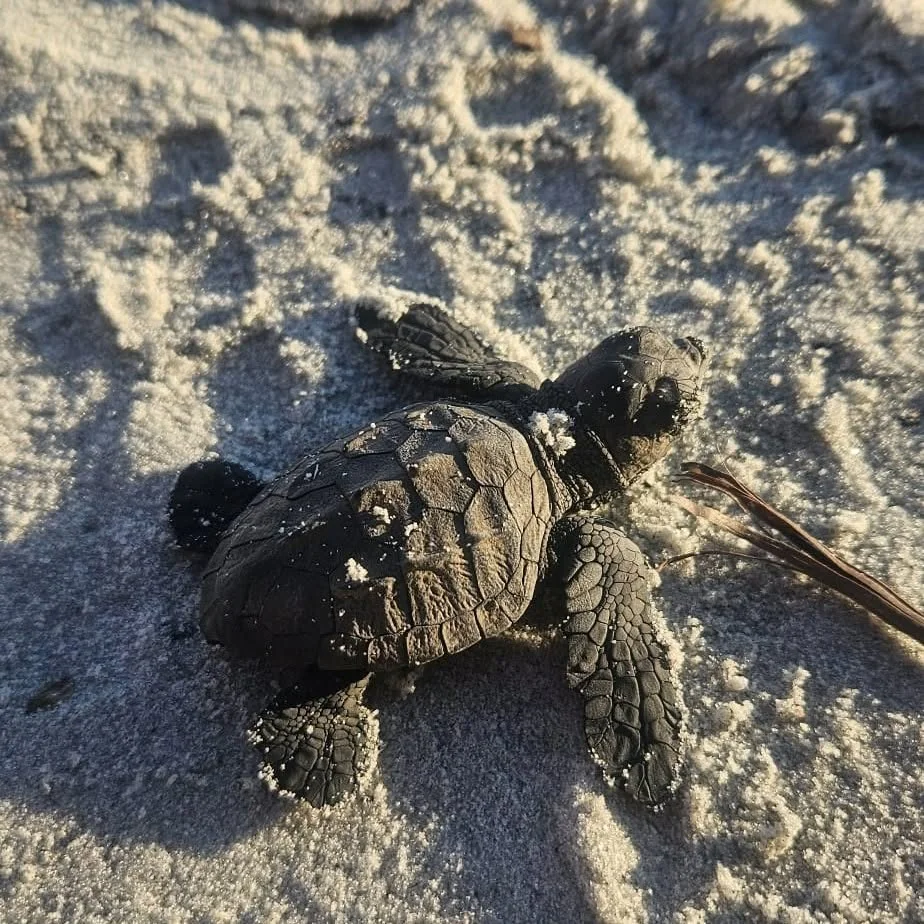
It all began on the morning of 15 October 2026. Two tiny turtles were seen on Grand Jardin beach, crawling towards the sea. Passers-by raised the alarm, making it possible to identify the presence of a nest straight away. No aquarium, no reserve: these newborns came into the world out in the wild, on a beach in the Var.
A nest of 51 eggs, the first in Bormes
The teams then discovered a loggerhead turtle nest, a protected species. In total, 51 eggs were counted. More than a dozen hatchlings were still buried under nearly 50 cm of compacted sand. Carefully dug out, they were accompanied down to the first waves. This is the first nest ever recorded at Bormes-les-Mimosas.
Day-after-day monitoring
To protect the clutch, the Émergence association called in the French Mediterranean Sea Turtle Network and the commune's staff. Daily monitoring was set up, and a cage was placed around the nest to prevent predation, particularly by dogs, while still letting the hatchlings make their way to the water. A discreet set-up, designed to cause as little disturbance as possible.
An ideal beach for nesting
The turtle's choice of this stretch of coast was no accident. Grand Jardin beach sees little footfall, with no mechanical sand cleaning and no light pollution. These are precious conditions: artificial lights disorientate hatchlings, which rely on the natural brightness of the sea horizon to find their way to the water. Here, nothing disrupted their compass.
A rare phenomenon, increasingly monitored
This nest remains a notable event. It is the tenth recorded on the French Mediterranean coastline in 2026, a figure that shows just how much every clutch matters. Loggerhead turtles nest mainly in the eastern Mediterranean, and their presence on our beaches mobilises volunteers and scientists alike.
« Reporting any unusual sighting is therefore an essential part of protecting them. »
To observe wildlife without disturbing it, it's best to keep your distance and alert the right people. Our nature walk ideas and days-out ideas along the coast give you plenty of reasons to keep your eyes peeled, binoculars in hand.
A few shells no bigger than a hand, and already a whole beach mobilised. At Bormes-les-Mimosas, the sea has reclaimed what it had entrusted to the sand.