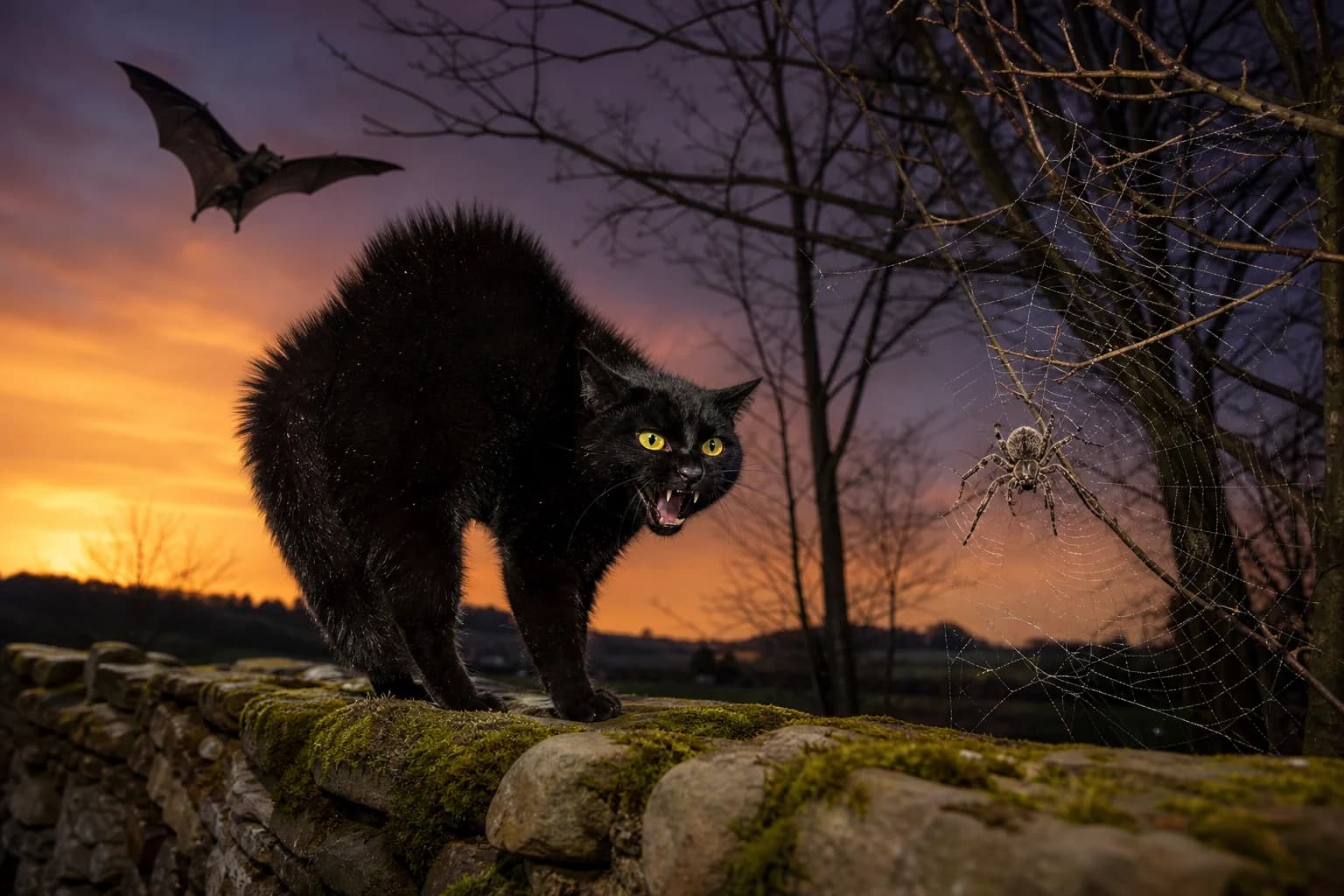
These five animals have become the emblems of Halloween because they're active at night, a time our ancestors associated with death and evil spirits. Medieval folklore turned them into companions of witches and the devil. In nature, however, they're all harmless and genuinely useful.
Creatures of the night, and the night was frightening
Before electricity, darkness carried every danger, and the animals that stirred within it were suspect by default. Halloween inherits this age-old dread: the festival has its roots in Samhain, the ancient Celtic festival marking the end of autumn, when tradition held that the boundary with the world of the dead grew thin. Elusive and hard to spot, nocturnal creatures made the perfect cast for embodying this unsettling passage.
The bat, from caves to vampire legend
Queen of villainous roles, the bat racks up image problems: it flies by night, roosts in caves and attics, and moves without a sound. On arriving in America, Europeans discovered a species that genuinely feeds on blood, named the vampire bat (Desmodus rotundus), a name officially adopted in 1810, according to The Great Projects. Bram Stoker did the rest in 1897: his Count Dracula transforms into a bat, and the association was set in stone for good.
Spiders and owls: the web and the cry that chill the blood
The spider ticks the same boxes. You mostly encounter it in autumn, during mating season, and its web instantly conjures the dusty attic of a haunted house. The owl, meanwhile, has carried a funereal reputation since antiquity: Pliny the Elder already regarded it as a bird of ill omen. In France, the white-faced barn owl, nicknamed the "white lady", was nailed to barn doors to ward off bad luck. Its piercing cry in the dark was enough to make people fear a death was coming.
The black cat and the crow, condemned by the Middle Ages
These two pay the price for their dark colouring. In the 13th century, a decree by Pope Gregory IX, the Vox in Rama bull of June 1233, linked cats, especially black ones, to the devil's rituals (Wikipedia); the idea that cats were burned alongside their witch owners came later and remains disputed. The crow, for its part, follows battlefields and feeds on corpses. Between the 8th and 12th centuries, the Church linked its black plumage to the devil, making it a messenger of death.
In nature, the picture is reversed
None of these creatures mean you any harm, and all of them are useful. A single common pipistrelle can devour up to 3,000 insects a night, mosquitoes included. Owls keep rodent populations in the countryside in check, to the point that they've been strictly protected in France since 1972. House spiders, meanwhile, rid you of flies. Crows, finally, rank among the most intelligent of birds, with impressive memory and reasoning skills.
See them for yourself, without the shivers
The best way to defuse the fear is to take a close look at these animals. In the insect houses and vivariums of our animal parks, spiders and snakes can be observed at a child's eye level, with a pane of glass between you and them. For bats, caves and underground sites remain their favourite shelters, best visited without disturbing them. And a simple nature walk at dusk is often all it takes to hear an owl. Enough to turn Halloween shivers into genuine curiosity.