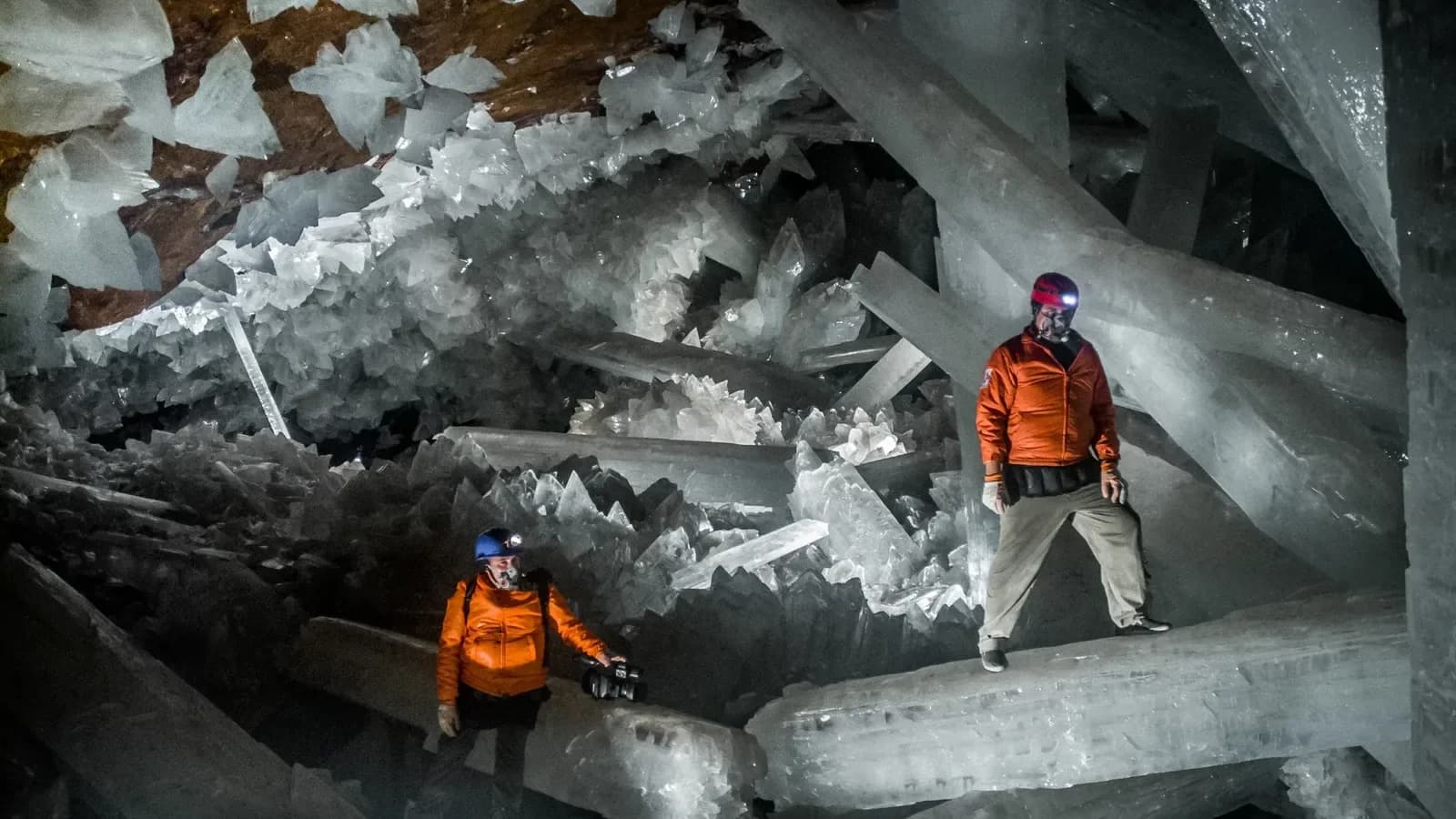
The Naica mine, located in the state of Chihuahua, is known for the extraction of metals such as lead, zinc and silver. In April 2000, miners accidentally discovered a cavity roughly ten metres wide and thirty metres long, almost 290 metres underground. The site is home to impressively large gypsum crystals, the biggest of which measures 11.40 metres long and 1.2 metres in diameter, and weighs nearly twelve tonnes.
An extreme environment for unique growth
Conditions inside the cave are extreme: temperatures reach 58 degrees Celsius and humidity is close to saturation, making exploration difficult. An unequipped visitor cannot stay inside for more than ten minutes without becoming disoriented. Scientists, meanwhile, have turned to analysing the fluid inclusions trapped within the crystals to trace their history. These tiny pockets of liquid, preserved as the crystals formed, reveal details about the conditions in which they grew.
A complex geological process
The chemistry of the water at Naica is unusual. Around 26 million years ago, volcanic activity left behind deposits of anhydrite, an anhydrous calcium sulphate. As long as the temperature of the underground water table stays above 58 degrees, the anhydrite remains stable. When the temperature drops below that threshold, the anhydrite dissolves and gives way to gypsum. The solubility of the two minerals is so close that the water only slightly exceeds the saturation point for gypsum, which limits the formation of new crystals. As a result, the existing crystals have been able to grow slowly over hundreds of thousands of years.
The Cave of Swords, discovered in 1910 at a depth of 120 metres, supports this theory. Its crystals, though striking, generally do not exceed one metre in length. The difference in temperature between the two caves explains this variation in size: closer to the surface, the water cools more quickly, causing supersaturation and a proliferation of crystal seeds at the expense of their size.
A treasure beneath the water
In 2015, mining operations were suspended due to falling metal prices, and water pumping stopped. Within a few months, the water table returned to its natural level, flooding the cave's main chamber. Today, this area is inaccessible to both scientists and curious visitors alike. Exposed to air, Naica's gypsum cracks and loses its transparency, but the water now covering the crystals protects them better than any conservation method could. If the water table remains stable, the crystals may even continue to grow, albeit imperceptibly. The mine has produced no metal since 2015.