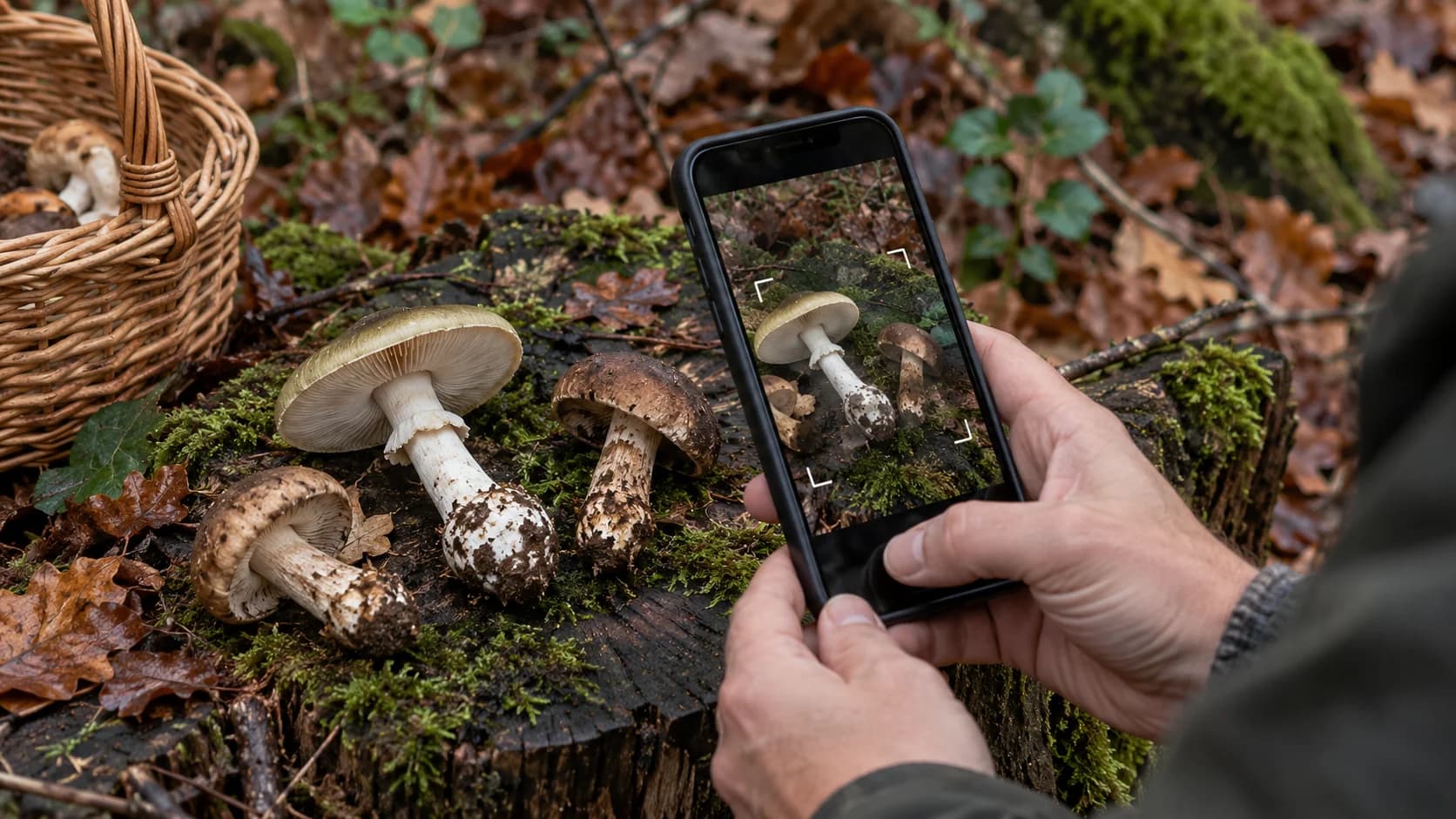
Identifying a mushroom with ChatGPT or an artificial intelligence app is strongly discouraged: these tools often get it wrong, and cases of poisoning linked to their use have already been documented abroad. In France, ANSES is urging people never to eat a mushroom identified by an app. Here's what recent cases show.
AI-related poisonings already on record
The danger is far from theoretical. In China, a forager developed acute kidney failure after eating a toxic mushroom approved by an AI app, despite its warnings, according to the OECD's incident database. In Japan, a man in his sixties was poisoned after having his haul identified by artificial intelligence. A chatbot built into a Facebook group by Meta even advised eating a mushroom containing arsenic.
ChatGPT, apps: tools that get it wrong
These incidents are not isolated accidents. A study published in npj Science of Food tested twelve identification tools against more than a hundred photos covering around sixty species: none proved reliable, and even the best got it wrong almost one time in seven. An earlier Australian study credited some apps with barely 50% correct answers. The problem is that a photo captures neither smell, texture nor growing environment, all of which are crucial to a correct identification.
Hundreds of cases every autumn in France
The 2026 season confirms this. Poison control centres recorded nearly 500 mushroom poisoning cases in September 2026, with more than 200 further cases since 1 October, according to ANSES. The agency cites misidentification, including via recognition apps, among the recurring causes of these accidents.
"Do not eat mushrooms identified using a smartphone recognition app, owing to the high risk of error."
Why a mushroom can't be identified from a photo
Some deadly species are easily mistaken for edible ones. The fearsome death cap, responsible for most fatalities, can for instance be confused with commonly foraged species. Telling them apart requires examining several features, from the base of the stem to the gills, sometimes even a spore print. These are details a screen simply can't show, and that artificial intelligence cannot check on your behalf.
The right habits for safe foraging
The principle is simple: when in doubt, don't eat it. Have your entire haul checked by a trained pharmacist or a mycological association before eating any of it. Only pick species you know with complete certainty, keep them separate in your basket, and discard the whole batch if a doubtful mushroom has found its way in. Photographing your haul before cooking can also help if a problem arises. Eat mushrooms in reasonable amounts, always thoroughly cooked and never raw, and avoid giving them to young children or pregnant women.
If symptoms appear, act fast
The first signs, nausea, vomiting or diarrhoea, can appear several hours, or even more than a day, after the meal, which makes the risk worse. At the first symptom, call 999 or a poison control centre, and note down the time of the meal as well as when the symptoms started. If possible, keep a sample of the haul for identification purposes. For safer outings, take a look at our nature walk ideas and our outing ideas.
Artificial intelligence knows a great deal, but it cannot replace an expert's eye. When faced with a mushroom, the only sound approach is still a human one: a specialist holding it in their hands.