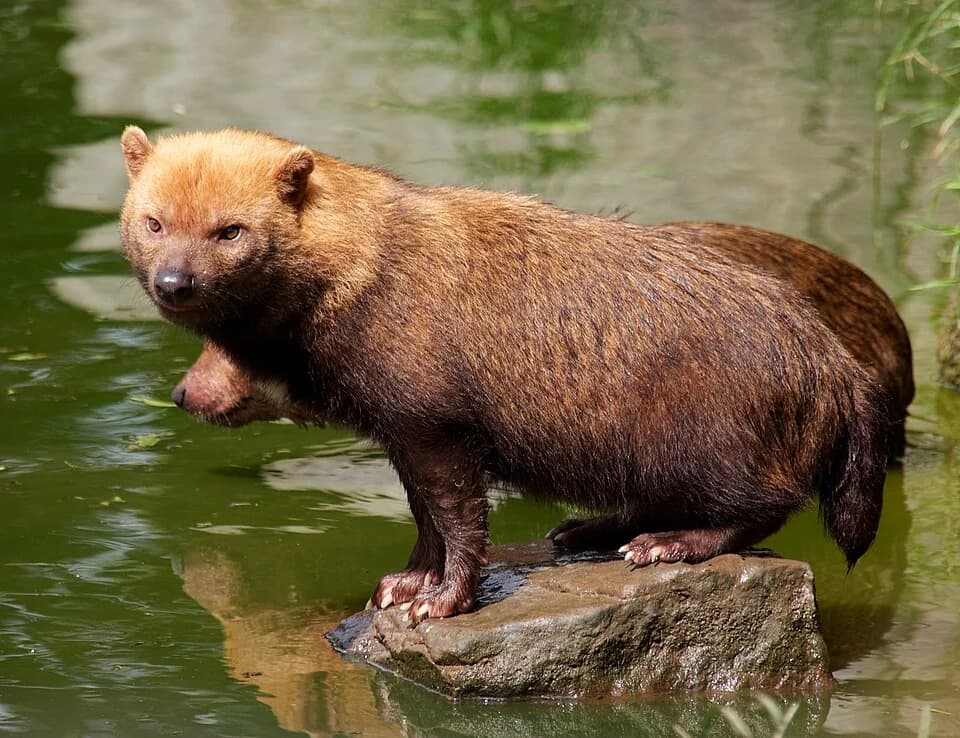
This young bush dog, known by its scientific name Speothos venaticus, was born in the natural setting of its enclosure at Mulhouse Zoo. Although the exact date of its birth is estimated to be 31 August, it did not emerge from its den until a month later. Keepers were able to work out that it had been born by listening to squeaks coming from the den, explains Anaïs Tritto, head of the Science and Conservation department. For now, the pup has not yet been handled to determine its sex, as the teams prioritise animal welfare by keeping their interventions to a minimum. Unlike previous practice, where females would give birth in crates, the parents chose to dig a den of their own to raise their pup.
- "Grandad, Will You Come on the Ride?" Grandparents at the Theme Park, A Survival Guide
- Puy du Fou reopens for Christmas after nine years: a night-time show and a thousand giant Christmas trees
- Lights, Shows and Ice Rinks: The Big Theme Parks Transforming for Christmas
A landmark event for the zoo
The pup, which is active and in good health, is the first offspring of the zoo's recently formed bush dog pair. The male, aged 8, was transferred from Prague in November 2024, while the female, aged 2, joined Mulhouse from Amiens Zoo in July 2025. Although the zoo has seen several births of this species in the past, this is the first since 2016, making the event all the more significant.
A threatened species
The bush dog is classified as "near threatened" by the International Union for Conservation of Nature (IUCN). Anaïs Tritto points out that this status may need to be reassessed, as sightings of the species have dropped considerably in recent years, suggesting they may be more at risk than they appear. Around 240 individuals are currently recorded across 51 zoos throughout Europe, thanks to breeding programmes that have helped boost their population in recent years.
In their natural habitat, these canids live in groups led by a dominant pair and are found mainly in the forests of French Guiana, as well as partly in Peru. However, their survival is threatened by various factors, including deforestation and hunting for meat. The birth of this bush dog pup at Mulhouse Zoo offers hope for the species' future, while also raising public awareness of the need to protect its natural habitat.