

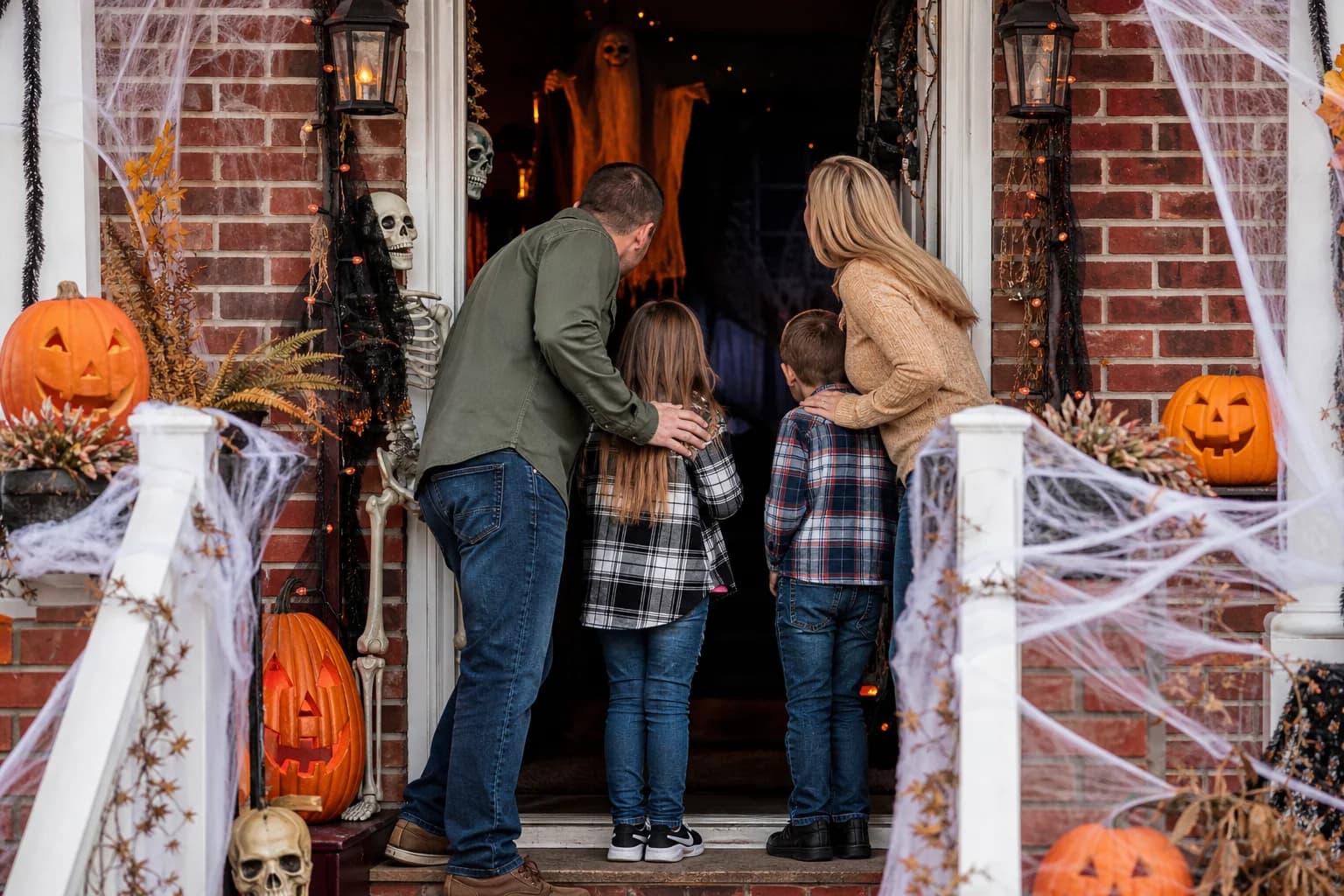
Haunted houses, skeletons leaping out, monsters round every corner: at Halloween, many children ask for exactly what should terrify them. This contradiction puzzles parents. Yet it has a solid, and rather reassuring, explanation. Here's why your kids love being scared, and what it actually gives them.
1. Fear, but safe
Researchers call it recreational fear: the pleasure of feeling frightened when the brain knows, deep down, that no real danger threatens it. In a haunted house, the body races and the heart pounds, but a small voice reminds the child that mum is right there and the monster is an actor in a costume. This balancing act between the thrill and the safety net is precisely where the enjoyment comes from.
2. A measured hit of adrenaline
Getting a scare means tasting a rush of adrenaline without ever leaving familiar ground. Some children, more sensation-seeking than others, love it just as much as they love a stomach-flipping slide. It's the same drive that may later draw them towards the big rides, something we explored in our article on what roller coasters reveal about personality.
3. The joy of overcoming
Walking through a dark corridor and coming out the other side alive is a small victory. The child was scared, held their nerve, and won. This feeling of mastery builds their confidence: they discover that a strong emotion can be lived through and that it eventually fades. A valuable lesson that reaches far beyond Halloween.
4. Playing at being scared is a way of learning
The witch costume, the fake cobweb, the exaggerated "boo!": all of this is role play. By playing at being scared, children tame their real anxieties, put some distance between themselves and those fears, and turn them into a story. Play is their emotional laboratory, and the imaginary monster has pride of place in it.
5. Fear shared is fear halved
No one screams quite as loudly as when huddled close to others. Halloween frights are best lived in a group: everyone shrieks together, laughs together, reassures each other together. This shared experience builds bonds, between friends as much as between parents and children. It's also why these memories of collective fright stick around for years.
The parents' role: stay the safe harbour
It all comes down to balance: the fear must be chosen, never forced. Stay the reassuring anchor the child can turn to, pitch the intensity to their age, and always respect "stop" when it comes. Handled well, the Halloween shiver is nothing like a trauma: it's an emotional playground where your child grows by laughing at their own fears.
Your questions, answered
From what age can a child enjoy being scared?
This varies a great deal from child to child, but a taste for controlled thrills often appears around age 5 or 6, once the child can clearly tell real from imaginary. Before that, it's best to stick to a gentle Halloween, costumes and décor without monsters leaping out. The best guide is your own child: if they laugh after being scared, they're up for it; if they freeze or cry, it's time to ease off.
Can pretend scares lead to real anxiety?
As long as the fear stays chosen, supervised and followed by a return to calm, it doesn't feed anxiety: on the contrary, it teaches the child to manage their emotions within a safe framework. Problems would arise from fear that is imposed, uncontrolled or too intense for the child's age. The golden rule: the child must be able to say stop, and be heard.


