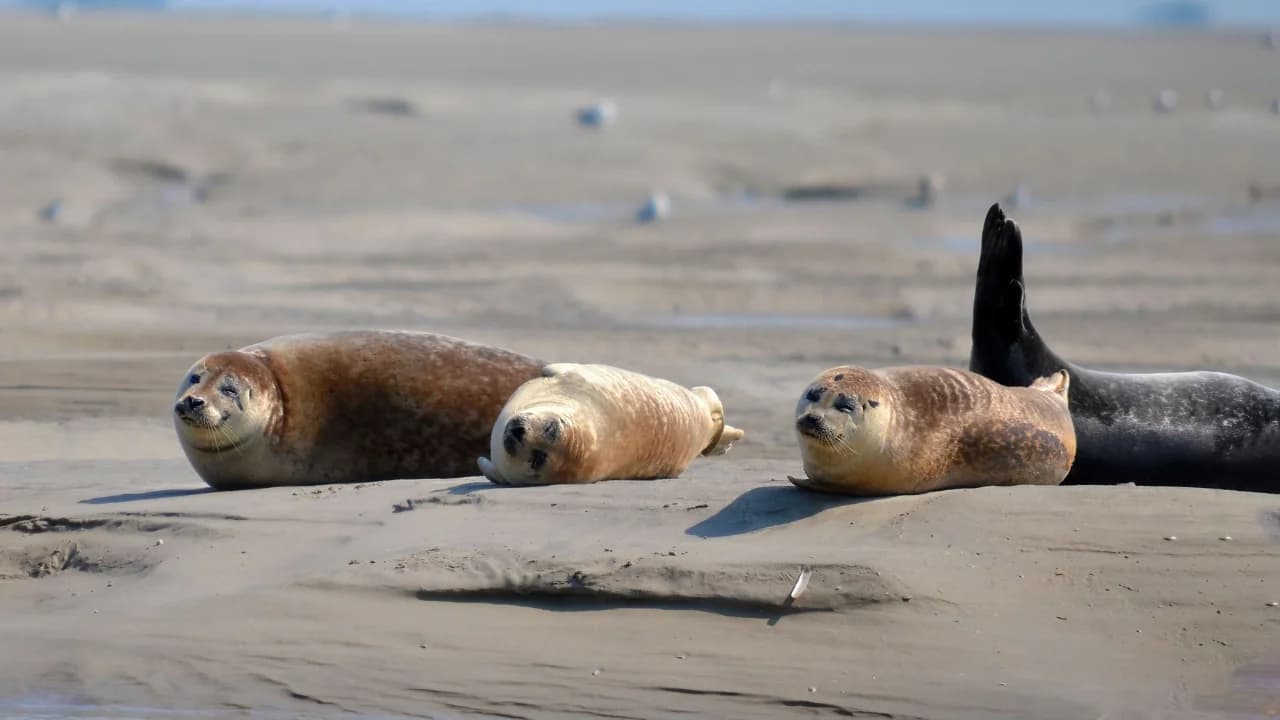
The Somme Bay is home to France's largest colony of harbour seals, alongside grey seals. You'll spot them at low tide, lying on the sandbanks, especially from the Pointe du Hourdel. Bring binoculars, keep 300 metres back, and keep an eye on the tide times.
Harbour seal or grey seal: telling the two species apart
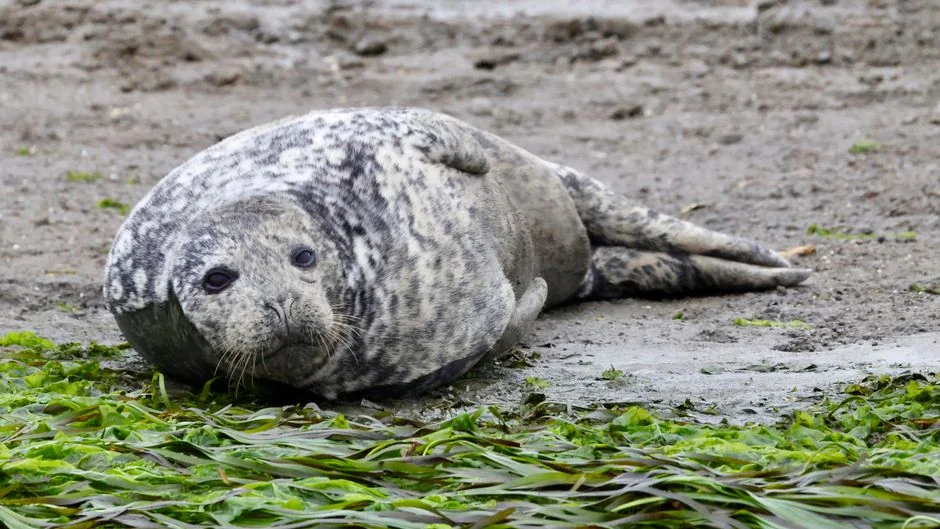
Two species share the estuary, both protected in France since the 1960s. The harbour seal, the more numerous of the two, has a small round head and a silvery-grey coat mottled with black; its nostrils form a V shape. The grey seal, bulkier, is recognisable by its straight, horse-like head profile, its elongated snout and its parallel nostrils. Both were hunted in the past and have since recolonised the Picardy coast from other European colonies.
The Somme Bay is home to France's largest colony of harbour seals. During the aerial count on 8 July 2021, between Calais and the bay, observers recorded 885 harbour seals and 312 grey seals on the same day.
Where and when to see the seals in the Somme Bay
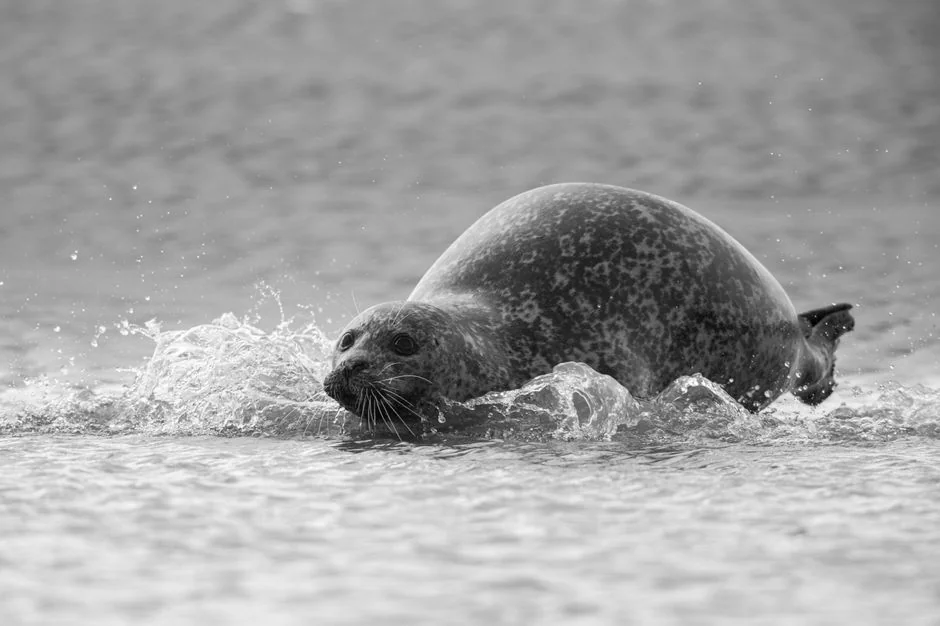
Seals live in the bay all year round, but everything depends on the tide. At low tide, they haul out onto the exposed sandbanks to rest in the sun — these resting spots are known as "reposoirs". At high tide, they head off to feed and slip out of sight underwater.
The best vantage point remains the Pointe du Hourdel, facing the most popular sandbanks. The harbours at Saint-Valery-sur-Somme and Le Crotoy sometimes offer a glimpse of a snout breaking the surface. Aim to go one to two hours before low tide. Sightings peak in summer, but the colony can be seen in any season.
Golden rules for watching without disturbing them
A disturbed seal bolts for the water and loses its resting time. To prevent this, Picardie Nature and the OFB (French Office for Biodiversity) advise staying at least 300 metres away on foot, and a minimum of 100 metres by boat, using binoculars or a spotting scope. Drones are strictly off-limits.
This rule becomes critical during pupping season. Harbour seals give birth on the sandbanks between June and July; a frightened mother can become separated from her pup, which may then be abandoned. Disturbing a protected species remains an offence, punishable by a fine of up to €750. A young seal alone on the sand isn't necessarily lost — report it to a specialist rather than approaching it.
Guided outings and nature walks in Hauts-de-France
To make the most of your visit without risking disturbance, join a nature guide. Picardie Nature runs a watch over the resting sites every summer, and the Hauts-de-France region recommends guided outings over solo approaches. Your guide will read the tide, spot the groups and keep the right distance for you.
The Somme Bay is just the start of countless other nature walks along the Picardy coast, amid bird reserves, dunes and seaside paths. To plan your weekend, browse our outing ideas and our hiking routes in Hauts-de-France.
Your questions, answered
Where can you see the seals in the Somme Bay?
The safest vantage point is the Pointe du Hourdel, facing the large sandbanks where seals rest at low tide. The harbours at Saint-Valery-sur-Somme and Le Crotoy sometimes offer a glimpse of a snout breaking the surface. Aim to arrive one to two hours before low tide, binoculars at the ready.
What's the best time of year to see them?
Seals live in the bay all year round. Summer is the liveliest season, as harbour seals give birth on the sandbanks between June and July. It's also the most sensitive time: a disturbed mother can abandon her pup, so keep your distance and consider a guided outing.
How far away should you stay from the seals?
Picardie Nature and the OFB recommend staying at least 300 metres away on foot, and a minimum of 100 metres from a boat, using binoculars or a spotting scope. Drones are not advised. Disturbing a protected species is an offence, punishable by a fine of up to €750.