After the death of a man who entered a tiger enclosure at Yorkshire Wildlife Park, one question keeps coming up: why wasn't the animal tranquillised?
What happened at Yorkshire Wildlife Park
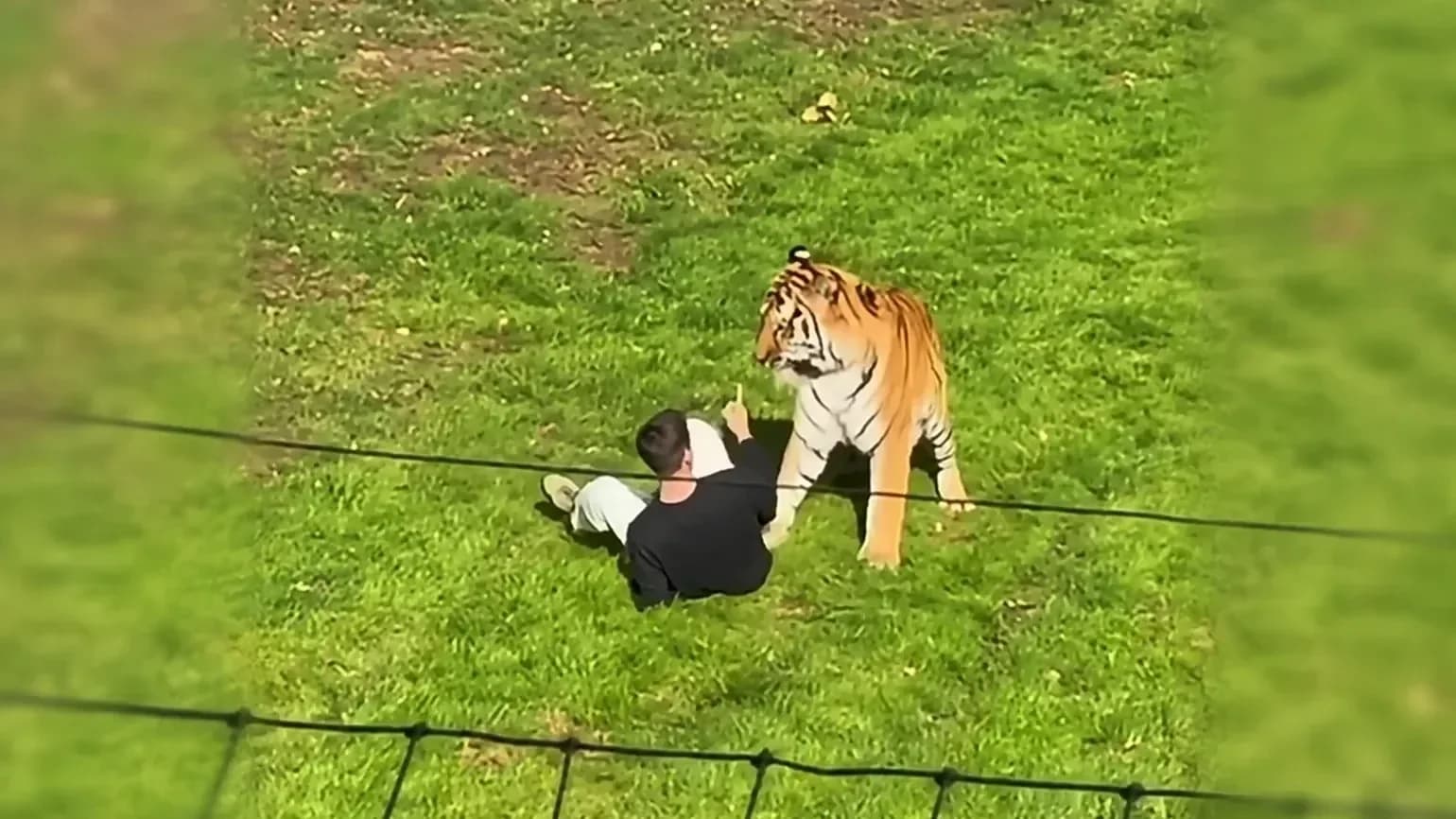
On Saturday 10 October 2026, in Doncaster, northern England, a man entered a tiger enclosure. According to South Yorkshire Police, the animal attacked him, and the victim, a man in his twenties who was apparently alone, died at the scene despite the efforts of emergency services. A key point: the tiger never left its enclosure. There was therefore no big cat on the loose threatening visitors. The park confirmed the animal would not be put down.
Why a dart doesn't knock an animal out like in the movies
The image of a dart felling the beast in a split second is pure film fantasy. In reality, the anaesthetic is injected into the muscle and has to diffuse through to the nervous system.
In a big cat, the first effects take five to ten minutes to appear, with the animal fully asleep after around twenty minutes, according to veterinary literature (Le Point Vétérinaire). Baptiste Mulot, head vet at ZooParc de Beauval, confirmed as much in an interview with France Bleu.
"A darted animal doesn't fall asleep instantly."
Too slow to stop an attack
That's the whole problem. During the ten to twenty minutes it takes the drug to work, a tiger can still move about and charge, and the dart itself may even agitate the animal before it calms down. Faced with a person in immediate danger, tranquillising the animal would have changed nothing: everything happens within seconds. Remote anaesthesia is a tool for treating an animal or recapturing an escapee once a perimeter has been secured — not an emergency weapon.
Why the tiger wasn't put down
That leaves the other recurring question: should it have been shot? In this case, no. A lethal shot is only used when a dangerous animal has escaped and is threatening the public, which was not the case here.
The tiger stayed on its own territory, reacting as any big cat would to an intrusion. The "gunshots" some witnesses reported hearing were in fact the sound of gas canisters: the animal survived.
Understanding rather than judging
This tragedy is a reminder of something too easily forgotten: a tiger remains a wild predator, even one born in a park. Enclosures and barriers exist precisely for that reason.
Tranquillising a big cat, in short, is no magic trick. It's a slow, risky procedure, useful for treatment, not for stopping the irreversible.