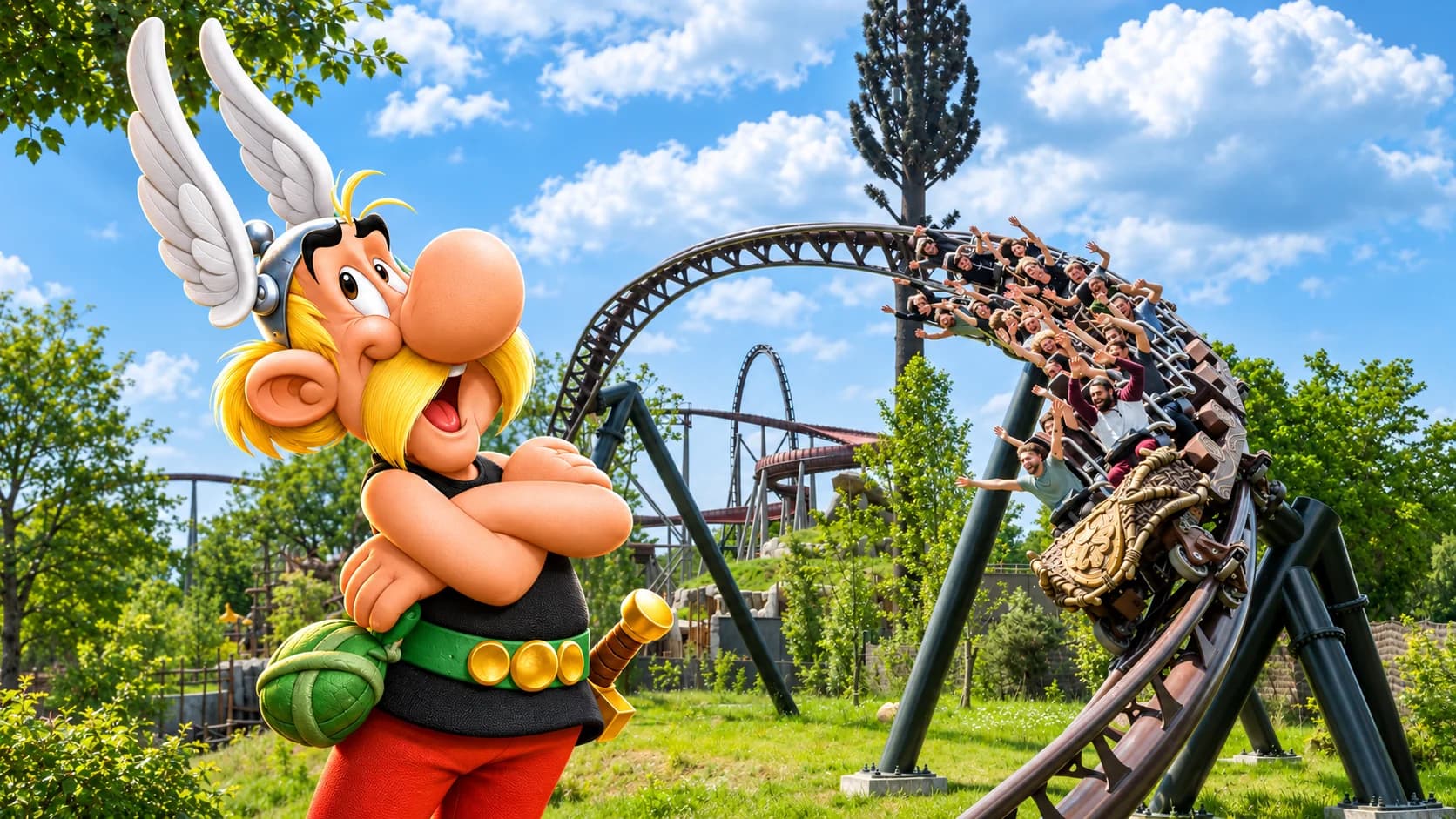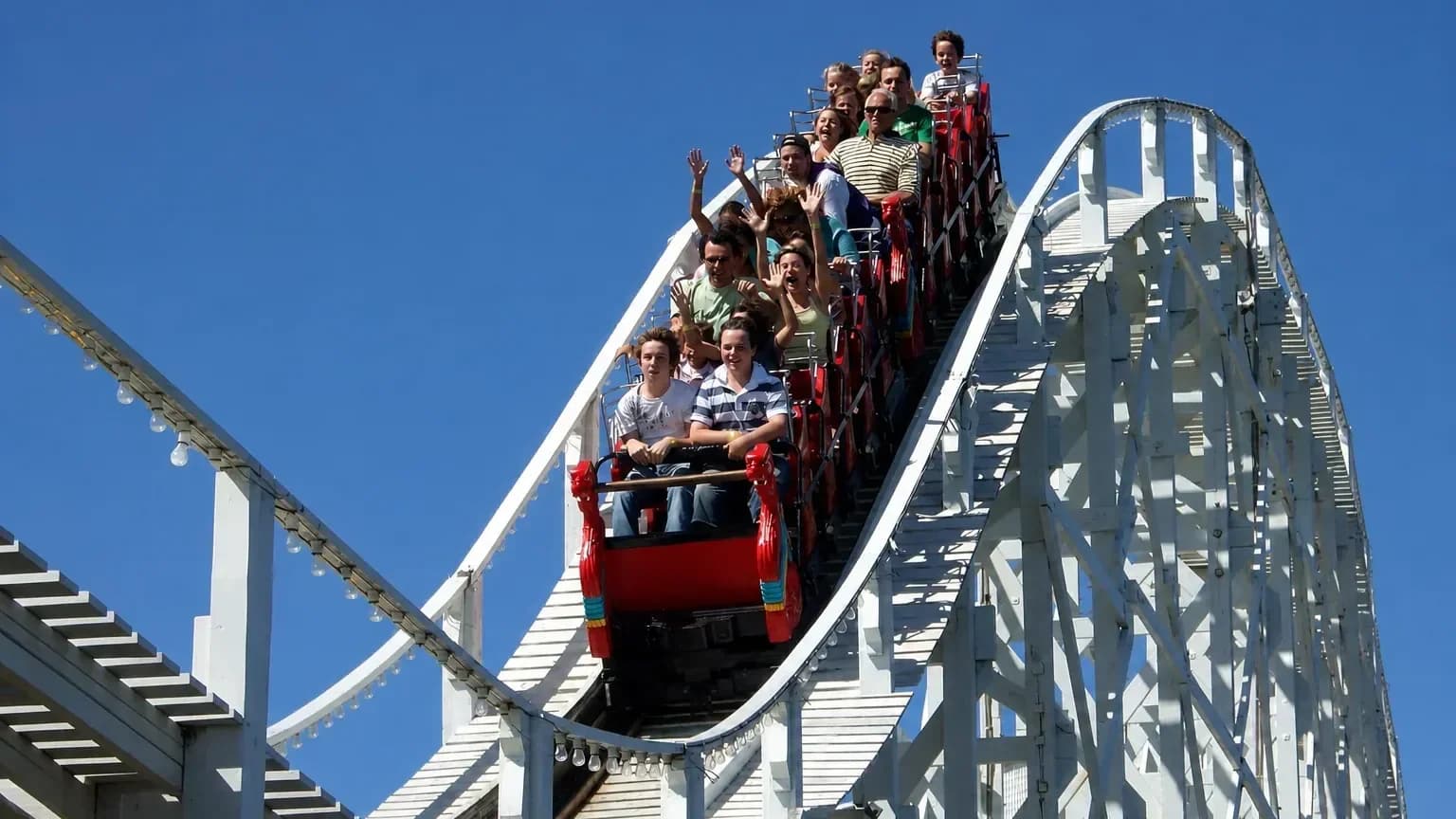
When a roller coaster stops mid-circuit, the train comes to a halt on a section designed to hold it, harnesses locked. Operators first attempt a controlled restart. If that fails, a team climbs up to reach you via the service walkways and the staircase built into the structure. It's often 20 to 30 minutes before you're back on solid ground.
Second 0: the stop is deliberate, not a failure
A train that stops at the top of the lift hill hasn't broken down: this is safety doing its job. A roller coaster's circuit is divided into sections, and a train only enters the next one if it's clear. At the slightest doubt from a sensor, the system freezes everything.
The international theme park association, IAAPA, sums it up like this: in the event of a power cut or other external event, vehicles come to rest in a safe position. They stay there until passengers are evacuated according to a plan drawn up in advance.
Minutes 1 to 5: silence, then the voice over the loudspeaker
The first shock is the quiet. No more music, no more clanking chain. At the control panel, the operator can see on their screens which zone triggered the stop and where every train is.
Very quickly, an announcement over the tannoy asks you to stay seated and keep your arms inside. The park closes the queue entrance, and maintenance technicians are called in.
Minutes 5 to 15: why it doesn't restart straight away
This is the question everyone up there is asking themselves. The answer comes down to one rule: you never restart a machine without understanding why it stopped.
Technicians check the position of every train, the state of the sensor involved, and that there's no obstruction on the track. A simple loose connection can be sorted out in a few minutes and the train sets off again, under control, back to the station. If the diagnosis drags on, the call is made: evacuate.
Minutes 15 to 30: the team climbs up to get you
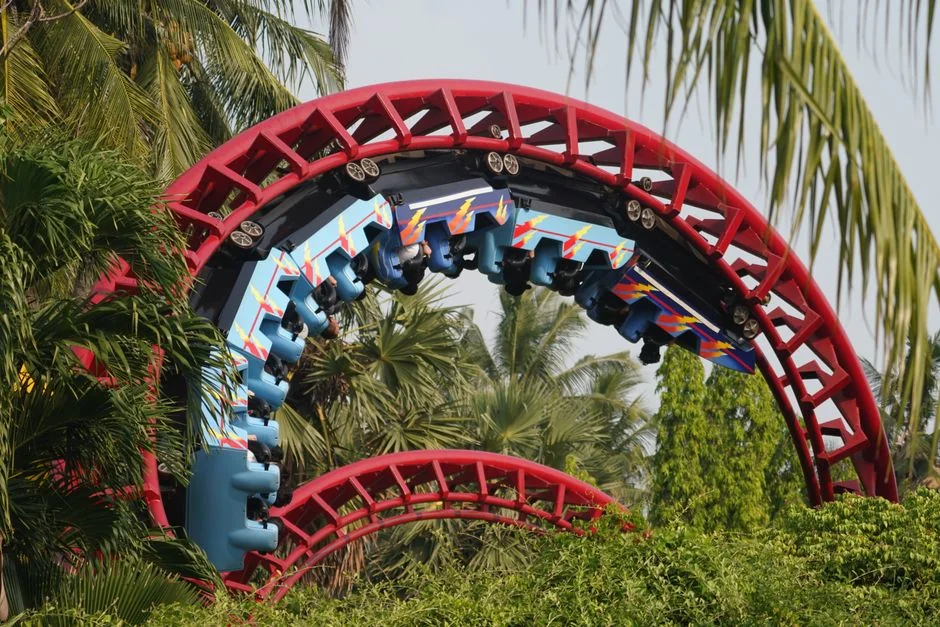
Look next time you walk past the bottom of a roller coaster. Running alongside the lift hill, almost always, there's an emergency staircase or a mesh walkway: it's the exit route built in from the design stage.
Park operators climb up onto it, then unlock the harnesses one by one, row by row. Each passenger is escorted out and walks down, hand on the rail. In the United States, in 2023, passengers stranded near the top of a 60-metre coaster in Ohio estimated they waited between 20 and 30 minutes before walking down the steps. The park described it as a "standard stop".
Why you're told not to move
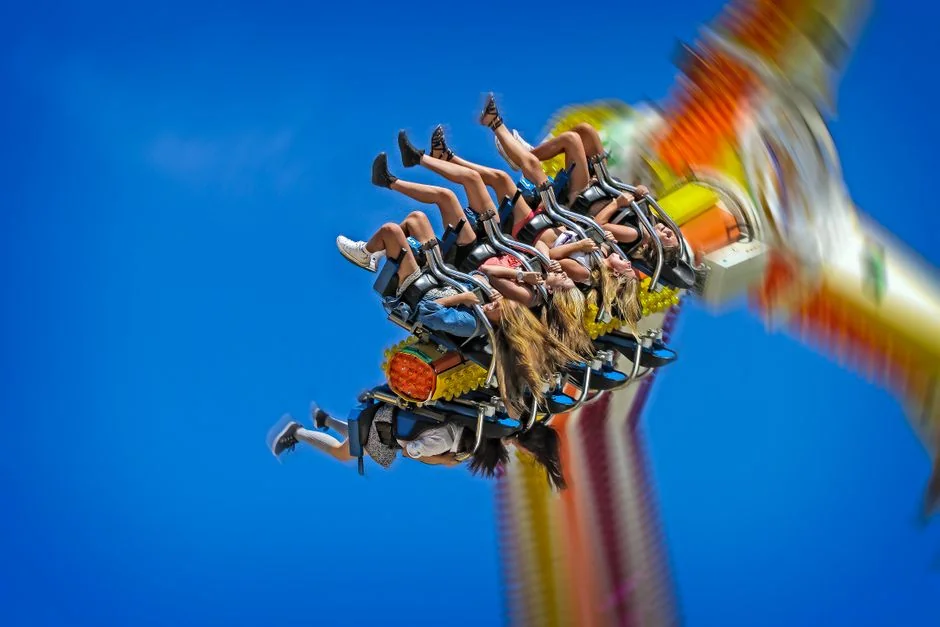
Your harness is your best protection for as long as no one is there beside you. Unlocking it yourself, or leaning out to film, means ending up free-moving on a structure that isn't designed to be walked without a guide.
When the train is stopped out of reach of the staircase, firefighters step in with a turntable ladder or a cherry picker. In that case, the process is even slower: in California, they fit each passenger with an individual harness before releasing the one on the ride. This slowness is deliberate.
In France, a written, inspected protocol
None of this is improvised. Since the law of 13 February 2008 and the decree of 30 December 2008, every ride undergoes a technical inspection by an approved body, carried out yearly for thrill rides. The date of the last inspection must be displayed at the entrance.
The European standard EN 13814, which governs the operation of fairground and amusement rides, sets out the framework for passenger evacuation, and operators apply it ride by ride. The staff who guide you down the staircase are trained for this exact scenario: for them, it's a procedure, not a first.
Planning your next visit to Parc Astérix with your children or to Disneyland Paris? If a coaster suddenly shuts down, it's often this protocol running behind the scenes: check the live waiting times and come back an hour later. And if one day the train stops with you in it, enjoy the view: you're among the lucky few to see the park from up there, perfectly safely.
Your questions, answered
How long do you stay stuck on a ride that's broken down?
Most often, somewhere between twenty minutes and half an hour before you leave the train, while the team attempts a restart and then organises the evacuation. When the train is stopped very high up or far from a staircase and firefighters need to step in with a ladder, the operation can take much longer, since each passenger comes down one by one, clipped in. This delay doesn't signal danger: it's safety setting the pace.
Why does the harness stay locked when the ride is stopped?
Because a passenger free to move around on a structure high in the air would face far greater risks than one strapped into their seat. The harness or restraint bar only opens once a crew member is right beside you, on the walkway or staircase, ready to guide you. During ladder evacuations, rescuers even fit you with an individual harness before releasing the one on the ride.
Are roller coasters inspected in France?
Yes. Since the law of 13 February 2008 and its decree of 30 December 2008, every ride undergoes an initial technical inspection followed by periodic ones, carried out or verified by a body approved by the State. For thrill rides, this happens yearly. Operators are also required to display the date of the last inspection at the ride's entrance: a sign worth looking out for in the queue.