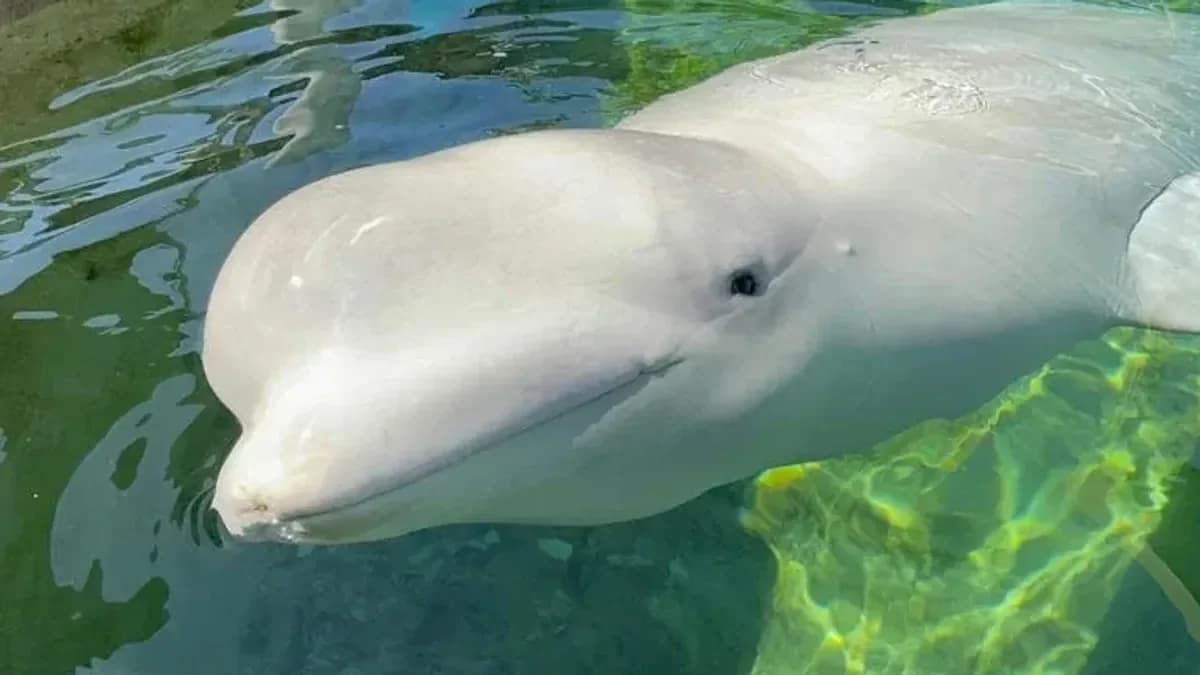
Cyprus, a nine-year-old beluga rescued from the Marineland park in Niagara Falls, Canada, has died at SeaWorld San Diego, the aquarium has announced. According to the receiving facilities and the Canadian press, this is at least the seventh Marineland cetacean to die following the mass transfer in the summer of 2026.
Cyprus: another death at SeaWorld San Diego
Cyprus, a nine-year-old male beluga, had arrived at SeaWorld San Diego on 22 August 2026. He stopped feeding on Friday, and an ultrasound scan revealed that his digestive tract was no longer functioning normally, CBC/Radio-Canada reports. The aquarium says he had been eating and interacting with his keepers since his arrival, while noting that belugas often mask their pain. A full necropsy is planned.
"Our commitment to the health, welfare and care of these belugas, as with any animal we rescue, continues."
Marineland Niagara: a shuttered park forced to evacuate its cetaceans
It all stems from the closure of Marineland in Niagara Falls, Ontario. Running out of money, the park admitted it could no longer care for its last cetaceans. It then moved thirty belugas and four dolphins to five destinations over the summer of 2026. Not to be confused with Marineland in Antibes, France, which closed in early 2025: this is the separate Canadian park.
A heavier toll, from Chicago to València
Cyprus is far from an isolated case. At Chicago's Shedd Aquarium, four Marineland belugas have died: Peekachu, Rain, Osiris, and then Caspian, a twenty-seven-year-old female, according to Global News and the Chicago Sun-Times. At the Oceanogràfic in València, Spain, the beluga Jelly Bean and the dolphin Echo met the same fate. That brings the number of Marineland cetaceans to die since their relocation to at least seven.
Belugas already ill, early autopsies suggest
Necropsies carried out at Shedd on Peekachu and Rain found pre-existing chronic conditions. For Osiris, early findings point to liver disease. This doesn't let the parks off the hook, however: it's a reminder that these animals, worn down by years in a tank, were especially vulnerable to the stress of relocation.
What these successive deaths reveal
Moving long-term captive belugas remains an extremely high-risk operation: stress, refusal to feed and digestive problems crop up in almost every case. Above all, these deaths point to the dead end that is cetacean captivity, which no emergency transfer can truly fix. Rather than tanks, watching whales and dolphins in the wild remains the encounter that costs them nothing. Our selection of aquariums in France highlights venues focused on local wildlife and education.
Seven deaths in a matter of weeks: Marineland's rescue operation has become a chilling reminder of the true cost of a life in captivity.
Your questions, answered
How many Marineland cetaceans have died after being transferred?
At least seven as of mid-October 2026: six belugas (Peekachu, Rain, Osiris and Caspian at Chicago's Shedd Aquarium, Jelly Bean in València, and Cyprus at SeaWorld San Diego) and one dolphin, Echo, in València. The toll remains provisional and could still rise: several transferred animals remain under close observation at their host aquariums.
Why did Marineland have to move its whales and dolphins?
The Niagara Falls park, in Ontario, said it had run out of money and could no longer care for its remaining cetaceans. Over the summer of 2026, thirty belugas and four dolphins were transferred to five facilities in Canada, the United States and Spain. This unprecedented large-scale relocation was meant to give them better conditions.
Are Marineland Canada and Marineland Antibes the same park?
No. The deaths concern Marineland in Niagara Falls, Canada. Marineland in Antibes, on the French Riviera, is a separate French park that closed to the public in early 2025. The two sites share a similar name and a history as criticised dolphinariums, but they are separate venues with no shared management.